Part 2: What We Should Actually Build
Maternal-Fetal Medicine Specialist & Founder, CodeCraftMD
Listen to this post
Part 2: What We Should Actually Build
On this page 30 sections
The Physician-Developer’s Blueprint for Rural AI That Works
By Chukwuma Onyeije, MD, FACOG
Maternal-Fetal Medicine Specialist & Founder, CodeCraftMD

In Part 1, I showed you the math: $50 billion for AI “transformation” while cutting $137 billion from rural Medicaid. A textbook bait-and-switch where vendor-built “avatars” replace actual clinical capacity.
But physician-developers don’t just identify broken systems. We build the alternatives.
So here’s the technical counter-narrative. If we genuinely have $10 billion annually to transform rural healthcare, here’s what we should actually code—and why it matters more than a talking head on a screen.
The Core Principle: Amplify, Don’t Replace
The avatar model starts from a fundamentally broken premise: that the limiting factor in rural healthcare is access to medical conversation.
That’s not the problem. The problem is clinical capacity, diagnostic capability, and administrative overhead crushing small practices into closure.
Every line of code we write should answer one question: Does this extend what a rural provider can do, or does it justify their absence?
Let’s build tools that pass that test.
Solution 1: Intelligent Remote Patient Monitoring (Not Passive Data Collection)
The Problem with Current RPM
Right now, most remote patient monitoring is glorified data hoarding. A patient with gestational diabetes uploads 120 glucose readings per month. A nurse manually reviews them during a 15-minute phone call. High-risk patterns get missed. Low-risk patients get over-contacted.
This scales terribly in rural settings where one nurse might cover 200 patients across three counties.
What We Should Build Instead
AI-powered trend analysis that acts as a clinical early warning system.
Here’s the architecture:
Patient Data Layer (CGM, BP monitors, weight scales)
         ↓
Local Edge Processing (privacy-preserving inference)
         ↓
Trend Analysis Engine (time-series ML models)
         ↓
Risk Stratification API
         ↓
Provider Dashboard (flagged patients only)
The Clinical Implementation
Imagine a rural family medicine physician managing 50 patients with Type 2 diabetes. Instead of reviewing 1,500 glucose readings weekly, an ML model:
-
Identifies the 3 patients whose fasting glucose is trending upward despite stable carb intake
-
Flags the 1 patient showing postprandial spikes suggesting medication non-adherence
-
Generates differential prompts: “Consider dose adjustment vs. dietary recall vs. intercurrent illness”
The physician reviews 4 actionable alerts instead of 1,500 data points.
This is force multiplication, not replacement.
The Maternal-Fetal Medicine Use Case
In my practice, we monitor high-risk pregnancies with conditions like gestational diabetes, chronic hypertension, and preeclampsia. A pregnant patient in rural Georgia might be 90 miles from the nearest MFM specialist.
Current model: Patient checks BP twice daily. Calls if >140/90. Often calls too late.
AI-enhanced model:
-
Continuous home BP monitoring with edge device
-
ML model trained on preeclampsia progression patterns
-
Alerts trigger at trend changes (rising baseline, loss of nocturnal dip, increasing variability)
-
Provider gets: “Patient X showing early preeclampsia hemodynamic signature. Current BP 138/88. Recommend urgent lab work and specialist consultation.”
This catches the disease at stage 0, not stage 3.
Why This Beats an Avatar
Avatar approach: Patient asks, “Is my blood pressure too high?” AI responds, “Let me connect you to a provider.”
Intelligence approach: System detects hypertensive pattern three days before patient notices symptoms. Provider intervenes before end-organ damage.
Cost comparison:
-
Enterprise avatar licensing: $500-800 per patient annually
-
Edge ML inference on consumer devices: $50-120 per patient annually
-
Outcome difference: One prevents ER visits. The other documents them.
Solution 2: AI-Assisted Point-of-Care Diagnostics
The Specialist Access Problem
Rural patients don’t need more conversations with generalists. They need specialist-level diagnostic capability delivered locally.
In maternal-fetal medicine, I routinely see patients who drove 3+ hours for a level II ultrasound that revealed normal anatomy. The referring provider simply lacked the imaging interpretation expertise to rule out abnormalities locally.
What We Should Build
AI-augmented point-of-care ultrasound (POCUS) that gives rural providers “specialist vision.”
Technical stack:
Handheld Ultrasound Device
         ↓
Real-time Image Acquisition
         ↓
Computer Vision Model (trained on labeled pathology)
         ↓
Probability Heat Maps + Differential Guidance
         ↓
Local Provider Decision Support
The Clinical Workflow
A rural family medicine physician sees a 28-week pregnant patient with mild abdominal pain. Standard care: refer to MFM 100 miles away for placental location assessment.
AI-enhanced workflow:
-
Provider performs bedside ultrasound (10 minutes)
-
CV model analyzes in real-time:
-
Placental location: Fundal, 4.2cm from internal os
-
Amniotic fluid index: Normal
-
Fetal presentation: Cephalic
-
Confidence scores provided for each measurement
-
-
AI suggests: “Low clinical suspicion for placental abruption or previa. Consider GI workup before MFM referral.”
-
Provider orders appropriate labs, avoids unnecessary 200-mile round trip
Result: Appropriate care delivered locally. Specialist referrals reserved for actual pathology.
The Counter-Argument (And Why It’s Wrong)
“But AI can miss things! You need a specialist!”
True. And specialists will still exist for complex cases. But here’s the current reality:
Status quo: Patient can’t access specialist at all due to distance/cost/wait times. Goes untreated or presents emergently.
AI-augmented model: Local provider catches 85-90% of pathology locally. Refers true positives appropriately. Prevents unnecessary specialist burden on low-risk cases.
Perfect is the enemy of good. And “good” is infinitely better than “nothing.”
Solution 3: Administrative Automation That Prevents Clinic Closure
The Hidden Rural Healthcare Crisis
Here’s what most AI enthusiasts miss: Rural clinics don’t close because they lack patients. They close because administrative overhead makes them financially unviable.
The average rural family medicine practice spends:
-
16 hours/week on prior authorizations
-
12 hours/week on billing/coding reconciliation
-
8 hours/week on insurance claim denials/appeals
-
10 hours/week on clinical documentation
That’s 46 hours of administrative work per week for a 2-physician practice. At locum rates, that’s $400K+ in lost clinical productivity annually.
What We Should Build
Not an avatar. An administrative AI agent that eliminates pajama time.
Here’s what CodeCraftMD does (and what rural-focused versions should do):
1. Ambient Documentation That Works Offline
The problem with current AI scribes: They require high-bandwidth internet. Rural clinics often have 5-10 Mbps connections that drop during storms.
The solution:
Local Speech-to-Text Model (Whisper or equivalent)
         ↓
Edge Processing for Clinical Note Generation
         ↓
Batch Upload to EMR when connectivity available
         ↓
Local LLM for ICD-10/CPT extraction
Technical implementation:
-
Deploy on-premise server with GPU (one-time $5-8K)
-
Local models (Whisper + LLaMA fine-tuned on clinical notes)
-
Zero cloud dependency for core functionality
-
Sync to EMR when bandwidth available
Financial impact: Saves 8-10 hours/week of documentation time. ROI in 6-8 months.
2. Intelligent Prior Authorization Automation
Current process: Physician or staff manually:
-
Checks payer requirements (15-30 min)
-
Gathers clinical documentation
-
Fills out authorization forms
-
Faxes/portals to insurance
-
Follows up on status
-
Appeals denials
Total time per PA: 45-90 minutes
Rural practice volume: 30-50 PAs weekly
Physician time lost: 22-75 hours weekly
AI-automated workflow:
# Pseudo-code for PA automation agent

def process_prior_auth(patient_id, medication, diagnosis):
    # Extract patient clinical context
    clinical_data = emr.get_patient_summary(patient_id)

    # Identify payer requirements
    payer_rules = insurance_db.get_criteria(
        payer=patient.insurance,
        drug=medication,
        diagnosis=diagnosis
    )

    # Generate justification using clinical AI
    justification = llm.generate_medical_necessity(
        clinical_data=clinical_data,
        payer_criteria=payer_rules,
        evidence_base=uptodate_api.get_guidelines(diagnosis)
    )

    # Auto-populate and submit PA form
    pa_form = payer_api.fill_form(justification)
    submission = payer_api.submit(pa_form)

    # Track and escalate if denied
    if submission.status == "denied":
        appeal_agent.initiate_appeal(submission)

    return submission.tracking_number
Financial impact: Reduces PA time from 60 min to 5 min. Saves 15-20 hours weekly. This is the difference between a viable rural practice and closure.
3. Smart Billing Code Optimization
The revenue cycle problem: Small practices leave 15-25% of revenue on the table due to:
-
Undercoding (using 99213 when 99214 justified)
-
Missing secondary diagnoses
-
Incomplete documentation for complexity levels
AI solution:
-
Real-time clinical note analysis
-
Suggest appropriate E/M levels based on documented elements
-
Flag missing documentation for higher complexity codes
-
Identify billable diagnoses mentioned but not coded
Example output:
Current coding: 99213 (Level 3 office visit)
AI recommendation: 99214 (Level 4 office visit)

Rationale:
✓ Detailed history documented
✓ Detailed exam documented
✓ Moderate complexity MDM (3 diagnoses addressed)
✓ >25 minutes documented

Missing element for 99215: None required

Potential revenue recovery: +$75 per visit
Annual impact (2000 visits): +$150,000
This isn’t about gaming the system. It’s about getting paid appropriately for the work actually performed.
Solution 4: Asynchronous Specialty Consultation Platforms
The “Waiting for the Specialist” Problem
A rural patient with a complex obstetric finding doesn’t need a real-time video call with a maternal-fetal medicine specialist. They need expert interpretation of their diagnostic studies and evidence-based management recommendations.
The Platform Architecture
Rural Provider Workflow:
1. Upload clinical summary + imaging
2. Standardized intake form (AI-assisted)
3. Encrypted transmission to specialist pool

Specialist Workflow:
1. AI pre-screens and risk-stratifies cases
2. Presents cases in priority order
3. Specialist reviews and responds (24-48 hours)
4. AI formats response for EMR integration

Rural Provider Follow-up:
1. Receives structured consultation note
2. Implements recommendations locally
3. Escalates to synchronous consult if needed
Why This Works Better Than Synchronous Telemedicine
Traditional telemedicine: Both parties must be available simultaneously. Scheduling nightmare. Specialist time inefficiently used.
Asynchronous + AI workflow:
-
Specialist reviews 12-15 cases in 2 hours vs. 4-5 synchronous consults
-
Rural provider doesn’t wait on hold or deal with scheduling
-
AI handles intake, formatting, EMR integration
-
3x efficiency gain without sacrificing quality
The MFM Use Case
Scenario: 32-week pregnant patient in rural Alabama. Routine ultrasound shows possible fetal anomaly.
Current pathway:
-
OB refers to MFM (nearest: 180 miles away)
-
Patient schedules (2-3 week wait)
-
Drives 6+ hours round trip
-
Level II ultrasound performed
-
Results: Normal variant, no intervention needed
Total cost: $800 (ultrasound) + $200 (gas/time) + anxiety + lost work
Total time: 3 weeks + 8 hours travel
AI-enhanced asynchronous pathway:
-
Rural OB uploads images to consultation platform
-
AI pre-analysis flags relevant anatomy, measurements
-
MFM specialist reviews within 24 hours
-
Response: “Normal variant. Recommend routine follow-up.”
Total cost: $150 (specialist review)
Total time: 24-48 hours
Patient travel: Zero
Outcome: Same clinical endpoint. 80% cost reduction. 90% time reduction. Zero patient burden.
The Real Cost Comparison
Let’s put actual numbers on this.
The “Avatar” Allocation (Current RHTP Model)
For a rural clinic serving 5,000 patients:
| Line Item | Annual Cost |
|---|---|
| Enterprise AI Avatar Platform | $500/patient × 5000 = $2.5M |
| Implementation Services | $300K |
| Training & Change Management | $150K |
| Ongoing Licensing | $200K |
| Total | $3.15M |
Clinical capacity added: Zero physicians, zero nurses
Hospital beds added: Zero
ER closures prevented: Zero
The Physician-Built Alternative
Same $3.15M budget, different priorities:
| Solution | Annual Cost | Clinical Impact |
|---|---|---|
| AI-Enhanced RPM (5000 patients) | $600K | Prevents 200+ ER visits annually |
| Administrative Automation Suite | $400K | Saves 40 hrs/week physician time |
| AI-Assisted POCUS Platform | $250K | Reduces unnecessary specialist referrals 30% |
| Asynchronous Consult Network | $300K | Provides specialist access for 800+ cases/year |
| Part-time Rural Physician Subsidy | $1.2M | Actual human clinical capacity |
| Rural Nurse Practitioner Team (2 FTE) | $400K | Extended primary care hours |
| Total | $3.15M | Actual healthcare delivery |
Notice the difference? The second model keeps clinicians employed, extends diagnostic capability, reduces administrative burden, AND provides direct patient care.
That’s transformation. The first model is just expensive performance art.
A Call to Action for MD-Coders
The Rural Healthcare Transformation Program applications are being drafted right now. State health departments are soliciting technical proposals. Vendors are positioning their avatar platforms.
We have a narrow window to influence this.
What You Can Do This Week
1. Build technical counter-proposals
-
Download your state’s RHTP application requirements
-
Submit white papers showing cost-effectiveness of physician-built alternatives
-
Provide concrete ROI analyses comparing avatars vs. augmentation tools
2. Connect with rural providers
-
Identify struggling rural clinics in your region
-
Offer to pilot administrative automation tools
-
Document outcomes: time saved, revenue recovered, satisfaction scores
3. Publish the alternatives
-
Write technical blog posts showing what could be built
-
Share cost breakdowns on LinkedIn, Twitter/X, physician forums
-
Make the invisible visible: force the comparison
4. Pressure your representatives
-
Contact state legislators reviewing RHTP applications
-
Provide physician-developer perspective on policy
-
Ask specific question: “Why are we funding avatars instead of augmentation?”
The Development Community’s Role
If you’re a physician-developer, this is your moment.
Not to build chatbots that simulate care. Not to create avatar interfaces that look impressive in demos. Not to enable the managed retreat from rural America.
Your job is to build tools that make it sustainable for physicians to practice in underserved communities.
That means:
-
AI that reduces documentation burden
-
ML that extends diagnostic capability
-
Automation that eliminates administrative waste
-
Platforms that facilitate specialist access
Code with purpose. Code for the humans who can’t be replaced.
What I’m Building
I’m putting my code where my convictions are.
CodeCraftMD is being rebuilt specifically for small practices and rural clinics:
-
Offline-first architecture - Works without high-speed internet
-
Privacy-preserving edge ML - Patient data never leaves the local network
-
Transparent cost structure - No per-patient enterprise licensing nonsense
-
Open-source core - Because rural providers deserve to own their tools
The MFM-specific modules I’m developing:
-
PreeclampsiaWatch: ML-powered early warning system for hypertensive disorders of pregnancy
-
GDM Intelligence Engine: Automated gestational diabetes trend analysis and intervention recommendations
-
Ultrasound Interpretation Assistant: Computer vision for fetal anatomy screening
None of these replace clinical judgment. All of them amplify clinical capability.
That’s the difference.
The Bottom Line
We’re at a fork in the road.
One path: $50 billion for vendor-built avatars that provide simulated healthcare while actual clinical infrastructure collapses.
The other path: Physician-built AI that extends what rural providers can do, keeps clinics financially viable, and maintains human-centered care.
The code you write in the next 12 months will determine which path we take.
Don’t build the avatar.
Build the bridge.
Build the tool that keeps a rural physician in practice.
Build the logic that catches disease early instead of documenting it late.
And build it now, because rural America doesn’t have time for another policy cycle.
Dr. Chukwuma Onyeije is a board-certified Maternal-Fetal Medicine specialist and the founder of CodeCraftMD. He builds AI tools that augment clinical capability rather than replace it. Connect with him at DoctorsWhoCode.blog or follow the development of physician-built healthcare AI tools on GitHub.
Tags
#RuralHealthcare #AIinMedicine #HealthcareAI #PhysicianDevelopers #ClinicalAI #HealthIT #MedicalInnovation #RemotePatientMonitoring #PointOfCareUltrasound #HealthcareAutomation #MaternalFetalMedicine #CodeCraftMD #HealthEquity #DigitalHealth #OpenSourceHealthcare #HealthcarePolicy #RuralMedicine #PriorAuthorization #ClinicalDecisionSupport #HealthcareTransformation
SEO Keywords
-
Rural healthcare AI solutions
-
Physician-built medical AI
-
Remote patient monitoring rural areas
-
AI-assisted point-of-care ultrasound
-
Medical practice administrative automation
-
Rural clinic financial sustainability
-
Asynchronous telemedicine platforms
-
Maternal-fetal medicine AI tools
-
Healthcare AI for underserved communities
-
Open-source clinical AI
-
Rural hospital closure prevention
-
Medical billing automation
-
Prior authorization AI
-
Clinical documentation automation
-
Physician developer healthcare solutions
“A maternal-fetal medicine specialist’s technical blueprint for rural healthcare AI that amplifies providers instead of replacing them. Real solutions.”
Title Tag (60 characters):
“What Rural Healthcare AI Should Actually Look Like”
Related articles
Part 1: The $50 Billion Bait-and-Switch
Maternal-Fetal Medicine Specialist & Founder, CodeCraftMD
The Future of Clinical Documentation: A Practical AI Tech Stack for Physicians Who Code
> Keywords: AI clinical documentation, ambient transcription, EvidenceMD, CodeCraftMD, physician automation, clinical workflow, medical billing automati...
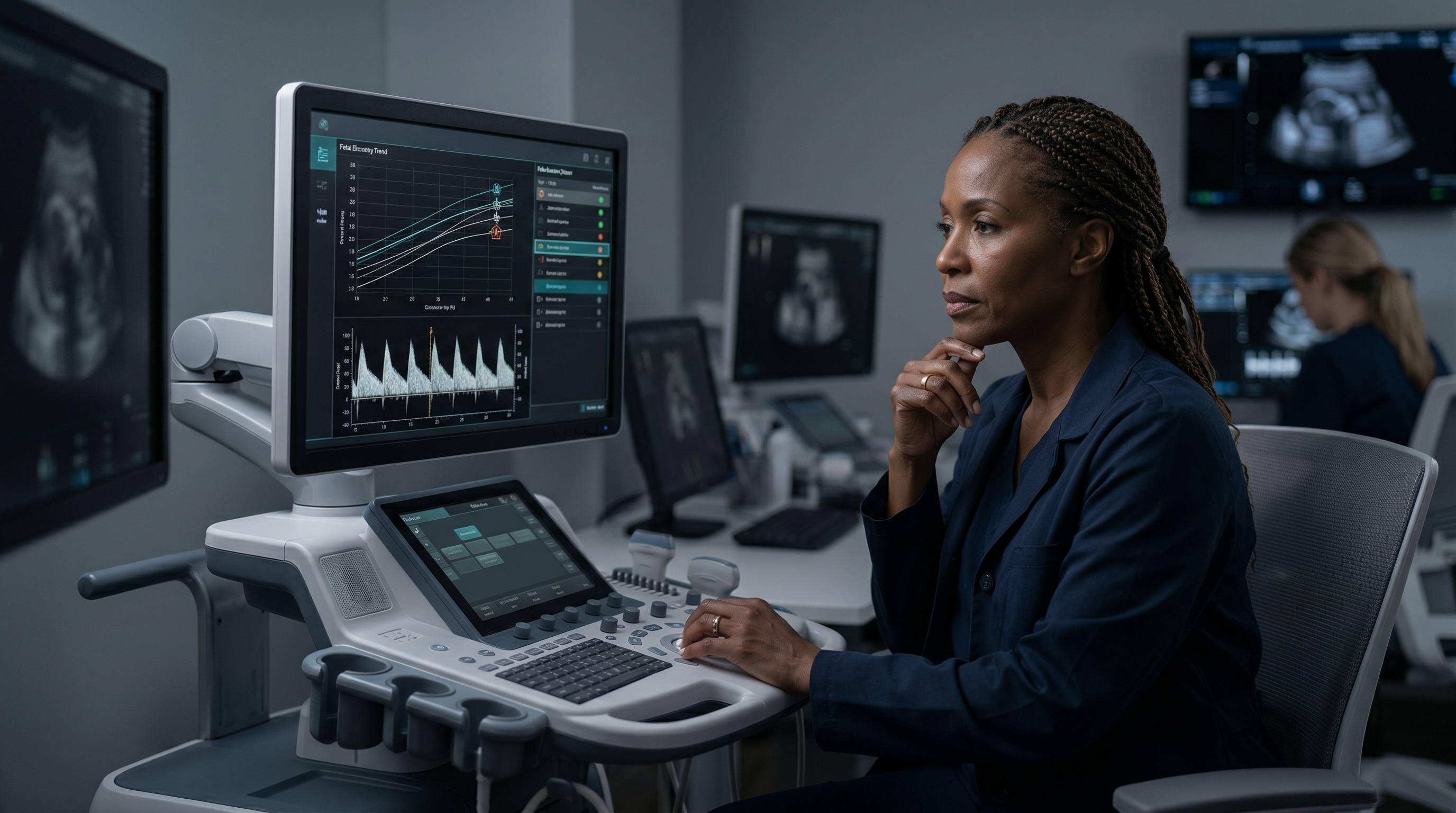
Clinical AI Should Help Us Find the Growth Restriction Cases We Miss
Fetal growth restriction is not just an ultrasound diagnosis. It is a longitudinal data problem. Clinical AI will not replace MFM judgment, but it can help surface the pregnancies whose risk is already visible in the record.

Maternal-Fetal Medicine Specialist