📊 Scalars and Vectors: The Building Blocks of Machine Learning in Medicine
When clinicians hear about artificial intelligence, we often jump straight to buzzwords like deep learning or neural networks. But behind every powe...
Listen to this post
📊 Scalars and Vectors: The Building Blocks of Machine Learning in Medicine
On this page 6 sections
Introduction
When clinicians hear about artificial intelligence, we often jump straight to buzzwords like “deep learning” or “neural networks.” But behind every powerful AI tool — from imaging diagnostics to predictive models in obstetrics — lies simple math.
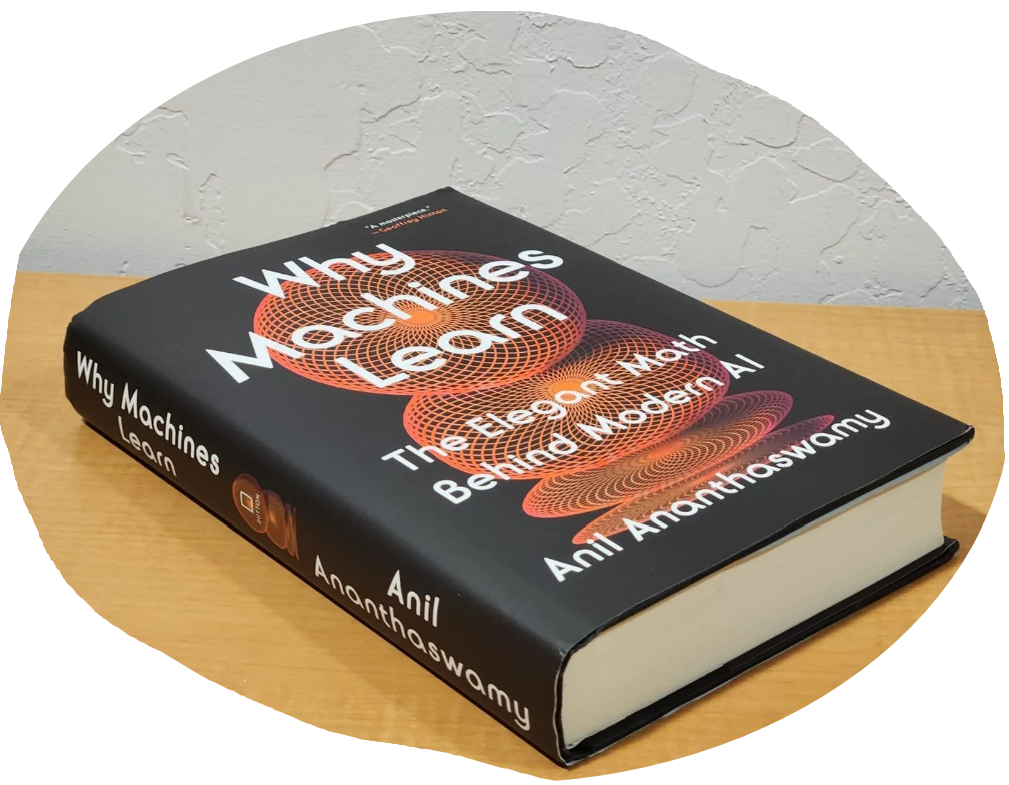
In Why Machines Learn, Anil Ananthaswamy begins by highlighting scalars and vectors as the foundation of machine learning. This post unpacks what they mean, why they matter, and how they connect to everyday medical practice.
1. Why Start with Scalars and Vectors?
Think of scalars and vectors as the alphabet of machine learning: simple units that form the words and sentences of advanced AI.
-
A scalar is just a single number.
-
A vector is an ordered set of numbers that describe something more complex.
In medicine, almost all patient data can be reduced to scalars and vectors before being transformed into the higher structures that AI models use.
📷 Figure 1: Scalar (Single Value)

A single patient temperature (98.6 °F) as a scalar — one number, one measurement.
2. Scalars in Medicine and AI
Scalars are single, standalone measurements. They may look simple, but they often carry enormous clinical weight.
Examples in healthcare:
-
A1c in diabetes management.
-
Hemoglobin concentration in anemia.
-
Maternal age as a predictor for chromosomal abnormalities.
In machine learning, scalars are inputs into algorithms that learn relationships — for instance, how maternal age (a scalar) relates to preeclampsia risk.
3. Vectors in Medicine and AI
A vector organizes multiple values in a fixed order, preserving meaning and context.
Examples in healthcare:
-
ECG signals: A sequence of voltages over time → a vector.
-
Lab panels: Sodium, potassium, creatinine, glucose → a vector of metabolic health.
-
Vital signs: Blood pressure, heart rate, temperature → a snapshot of a patient as a vector.
📷 Figure 2: Vector of Vitals

A patient’s vital signs grouped into a vector: [SBP, DBP, HR, Temp].
📷 Figure 3: ECG as a Vector

An ECG strip represented as a vector of voltage samples over time.
📷 Figure 4: Lab Panel as a Vector

A metabolic panel becomes a vector of values: [Na, K, Creatinine, Glucose].
Vectors capture patterns, not just isolated values. This is critical because illness is rarely revealed by one number alone.
4. From Vectors to Patients: Why Patterns Matter
Doctors rarely make decisions on a single measurement. Instead, we look at how different numbers interact.
-
In preeclampsia, the diagnosis depends on the pattern of elevated blood pressure, abnormal liver enzymes, and proteinuria.
-
In gestational diabetes, glucose patterns across time matter more than one reading.
-
In fetal growth restriction, interpreting ultrasound data as a vector of biometrics and Dopplers gives the full picture.
📷 Figure 5: Pattern Recognition

Comparing two vectors: Patient A (normal) vs. Patient B (preeclampsia-like). Machine learning models detect these patterns at scale.
Machine learning excels at recognizing these patterns in vectors, spotting signals too subtle for humans to detect.
5. Why This Matters for Doctors Who Code
Understanding scalars and vectors is not about becoming a mathematician — it’s about literacy in the language of AI.
For clinicians, this means:
-
Interpretability: Knowing how AI uses your patient’s data.
-
Safety: Recognizing when inputs are incomplete or misleading.
-
Trust: Explaining AI results confidently to colleagues and patients.
By grasping scalars and vectors, doctors step closer to the “source code” of AI in healthcare.
Conclusion
Scalars and vectors may look simple, but they are the entry points into understanding how machine learning reshapes medicine. They turn patient data into structures that algorithms can learn from, setting the stage for more complex mathematical objects like matrices and tensors.
This is the foundation of AI in healthcare — and the reason clinicians should take notice.
👉 In the next post, we’ll explore how matrices allow AI to “see” medical images and uncover patterns at an entirely new scale.
Tags
machine learning, AI in medicine, scalars, vectors, medical data, why machines learn, doctors who code
Chuck
Related articles
What Is Machine Learning?
Ive recently started reading Why Machines Learn by Anil Ananthaswamy, a book that traces the elegant mathematics behind modern artificial intelligence....

Why I Rebuilt Doctors Who Code
Doctors Who Code began as a blog encouraging physicians to learn programming. It is now a learning platform for physicians who want to use AI with judgment and build clinical tools that improve care.

I Gave an AI Agent 94 Skills and Let It Help Run My Clinical, Coding, and Theology Workflows
Three weeks into running Hermes Agent in production, I can say this: the real value is not the model. It is the workflow ecosystem wrapped around it. Here is what 94 specialized skills looks like in a real physician-developer stack.

Maternal-Fetal Medicine Specialist