Codex on Mobile Solves the Async Doctor Problem
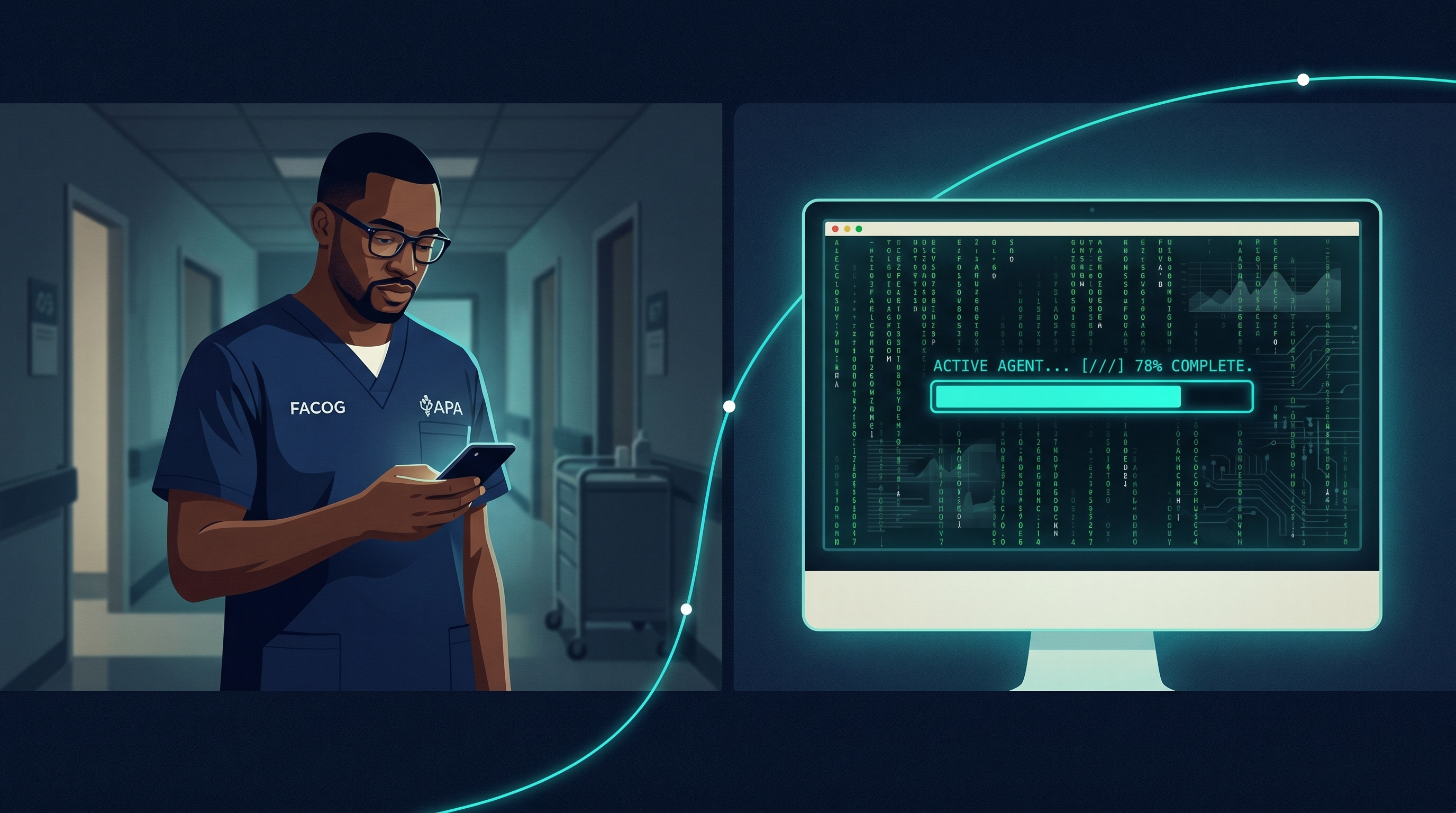
OpenAI bringing Codex into the ChatGPT mobile app is not about coding on a phone. It is about supervising agentic work when your clinical day refuses to give you uninterrupted time.
Listen to this post
Codex on Mobile Solves the Async Doctor Problem
On this page 9 sections
I have lost more coding time to five-minute interruptions than to actual lack of hours.
That sentence will make sense to any physician who builds software. We do not usually lack ideas. We do not even always lack total time. We lack contiguous time. We live inside a schedule built from rounding, results, consults, calls, documentation, family, commuting, and the strange administrative weather system that follows every modern physician.
This is why OpenAI bringing Codex into the ChatGPT mobile app matters.
Not because anyone should be writing production code on a phone while standing in a hospital hallway. That is the wrong frame. Codex on mobile matters because agentic coding has created a new bottleneck: the human supervisor.
The agent can keep working. The physician often cannot stay seated long enough to keep the agent unblocked.
What Actually Launched
On May 14, 2026, OpenAI began rolling out Codex access inside the ChatGPT mobile app on iOS and Android. Paul J. Lipsky has a useful hands-on walkthrough of the setup flow in Codex Is Now on Mobile, and the major technical press summaries line up with the core point: this is remote supervision, not a local coding environment on your phone.
That distinction matters.
The phone is not where your code runs. The phone is the control surface. Codex keeps running on the machine where your project lives: a laptop, a Mac mini, a devbox, or a managed remote environment. The ChatGPT mobile app becomes the way you review threads, approve commands, change direction, and start new work while away from the main development machine.
Engadget described the architecture clearly: files, credentials, and permissions stay on the machine where Codex is running, while the mobile app relays updates, screenshots, test results, and prompts. TechCrunch also reported that the feature is in preview across plans on iOS and Android, with users able to review outputs, approve commands, change models, and begin new tasks from the phone.
This is not mobile development.
This is mobile command.
The Setup Is Boring in the Right Way
Based on Lipsky’s walkthrough, setup is QR-code based. You open the Codex desktop app, scan the pairing code from the ChatGPT mobile app, and the phone loads the active Codex environment: threads, approvals, project context, and connected capabilities.
That is exactly how this should work.
No new mobile coding app. No separate account ceremony. No awkward attempt to make a phone pretend to be an IDE. Just a phone-shaped window into the agentic work already running somewhere more appropriate.
The first-day experience was not flawless. Lipsky reported connection issues, and that should not surprise anyone using a preview feature on launch day. Rollouts are uneven. Regions differ. Plans differ. Enterprise workspaces may require admins to enable the right remote-control permissions.
Still, the product direction is right.
The computer remains the workstation. The phone becomes the pager.
Why This Is Different for Physicians
Most software developers already understand async work. They leave a build running. They wait for CI. They come back to a pull request review. Their day may be fragmented, but the job itself is still organized around the machine.
Clinical work is different.
The physician-developer lives in two operating systems at once. One is technical. One is clinical. The technical system wants long stretches of uninterrupted attention. The clinical system breaks attention by design because patients do not arrive in neat deterministic batches.
That mismatch is the real problem.
Agentic coding tools like Codex, Claude Code, Cursor, and GitHub Copilot Workspace are trying to move more software work into longer-running background loops. You describe the task. The agent reads the codebase. It edits files. It runs tests. It reports back. Sometimes it needs permission. Sometimes it needs architectural judgment. Sometimes it needs you to say, “No, that path is wrong. Use the existing API shape instead.”
The agent can wait.
Your project cannot afford to wait every time you step away.
For a physician, the approval loop is where many agentic workflows die. You start a refactor before clinic. Codex gets halfway through, needs permission to run a migration, and pauses. You do not see the pause until lunch. You approve it. It hits a test failure twenty minutes later. Now you are back in clinic. The task that should have been async becomes a stop-start ritual.
Mobile oversight changes that.
You can approve the command between cases. You can skim the test output while waiting for a meeting to start. You can redirect a thread during a commute. You can tell Codex to keep the change scoped instead of expanding into a refactor you did not ask for.
This is the async doctor problem.
The physician-developer does not lack coding time. She lacks reliable continuity. Mobile Codex is a continuity tool.
What I Would Use This For
I would not use this to write delicate clinical logic from a phone.
I would use it to keep the machine moving.
That means approving safe commands during a longer refactor. It means asking Codex to summarize where it got stuck. It means reviewing test output, screenshot results, and proposed diffs. It means starting a contained task before leaving the desk, then nudging it forward during the gaps that already exist in a clinical day.
This fits the way physician-built projects actually happen.
OpenMFM does not grow because I find eight uninterrupted hours and politely ask the world to leave me alone. It grows because I build in fragments, convert clinical friction into architecture, and keep improving the system between the other responsibilities that define my life.
CodeCraftMD is the same pattern. A billing workflow does not become software in one grand heroic sprint. It becomes software through a series of decisions: one schema, one parser, one interface, one deployment, one validation pass.
Agentic coding tools help because they can hold technical context while I move through clinical context. Mobile oversight makes that bargain more realistic.
The agent keeps the workspace warm. I stay in the loop without being chained to the workstation.
The Security Model Matters
The most important technical detail is also the least flashy: no code runs on the phone.
That is good.
Physicians handle sensitive context. Even when a project is not using protected health information, physician-developers often build near clinical workflows, institutional policies, referral logic, billing patterns, research data structures, or private prototypes. The last thing we need is a casual mobile coding experience that encourages people to scatter credentials and local project state across devices.
Codex mobile appears to make the safer tradeoff. The trusted machine remains the execution environment. The phone gets a supervised relay into that environment. OpenAI describes this as a secure relay layer that keeps trusted machines reachable across devices without exposing them directly to the public internet, while keeping session state synced where the user is signed into ChatGPT.
That does not eliminate governance questions.
Enterprise users still need to understand workspace controls, data retention, training settings, connector permissions, compliance logs, and who can access which Codex surfaces. OpenAI’s Help Center notes that Codex access and related plugin controls can apply across ChatGPT web, Atlas, ChatGPT mobile, and Codex. That matters for hospitals, medical schools, startups, and any group where one enthusiastic builder can accidentally become an unofficial integration architect.
But the base product decision is sensible.
The phone should supervise. The workstation should execute.
OpenAI Is Not First
We should be honest about the competitive landscape.
OpenAI is catching up here. Anthropic has been moving aggressively with Claude Code and remote-control style workflows. Many developers have already used Claude Code as a persistent agentic teammate, with mobile oversight becoming part of the broader expectation for serious coding agents.
That does not make OpenAI’s launch unimportant.
It means the category is maturing.
The interesting shift is not that one vendor added a mobile screen. The interesting shift is that agentic development tools are becoming cross-device command centers. The desktop is the compute and permission environment. The phone is the human-in-the-loop controller. The browser, IDE, terminal, and mobile app are becoming surfaces around the same underlying work graph.
That is the direction this entire category is moving.
For physicians who code, this is bigger than a vendor comparison. The future workflow is not “sit at a desk and code for four hours.” The future workflow is “orchestrate technical systems responsibly across a fragmented professional life.”
That is a very different skill.
What To Watch Before You Depend On It
I would not build a critical workflow around launch-day mobile Codex without testing it under real conditions.
Preview features are preview features. Lipsky’s connection issues are worth taking seriously. If you are trying this immediately, expect uneven behavior. Test the pairing flow. Test notifications. Test what happens when the desktop sleeps. Test whether mobile approvals arrive reliably. Test it on your actual network, not just your best-case home Wi-Fi.
Also pay attention to platform support. As of the May 14 launch coverage, the mobile supervision flow is available through the ChatGPT app on iOS and Android, with Windows support for desktop-to-mobile connection still coming. That means Mac users are likely to have the cleanest early experience.
Finally, do not confuse convenience with governance.
If you work in an enterprise, academic medical center, or regulated environment, ask the boring questions early. Which workspace controls apply? Are plugins enabled? Are connectors allowed? Are compliance logs available? Are local files staying local? Are you operating inside the right account?
The boring questions are how professionals keep useful tools from becoming future remediation projects.
The Takeaway
Codex on mobile is not about becoming the kind of person who writes TypeScript on a phone.
It is about becoming the kind of physician-developer who can supervise intelligent work without pretending clinical life is built for uninterrupted software development.
That is the real shift.
The first generation of physician-developer tools assumed we would become part-time software engineers in the leftover corners of the day. The next generation should assume something more realistic: we are clinicians with technical agency, operating inside fragmented schedules, building systems that need continuity even when we cannot personally provide constant presence.
Mobile Codex is one piece of that architecture.
It will not make bad code good. It will not replace judgment. It will not remove the need to read diffs, understand permissions, and test what ships.
But it does solve one real problem.
It lets the physician stay in the loop while the work keeps moving.
That is how agentic coding becomes useful in medicine: not by replacing the builder, but by respecting the builder’s actual life.
Sources
Related articles
Delivery Date AI and the Meaning of a Due Date
What ultrasound-based delivery prediction means for clinical care, and how physician-developers can preserve its meaning in the medical record.
Your First Agentic Workflow: Delegate a Small, Verifiable Project
A physician-developer's practical guide to giving an AI agent one bounded software assignment and requiring a plan, tests, review evidence, and a stopping condition.

The Harness Is the Workplace: Choosing Where an AI Agent Works
Claude Code, Codex, Antigravity, OpenClaw, Hermes, and Omarchy illustrate a durable lesson for physicians: choose the agent's workplace before delegating the work.

Maternal-Fetal Medicine Specialist