The Disappearing Note: How Automation Is Rewriting Clinical Documentation
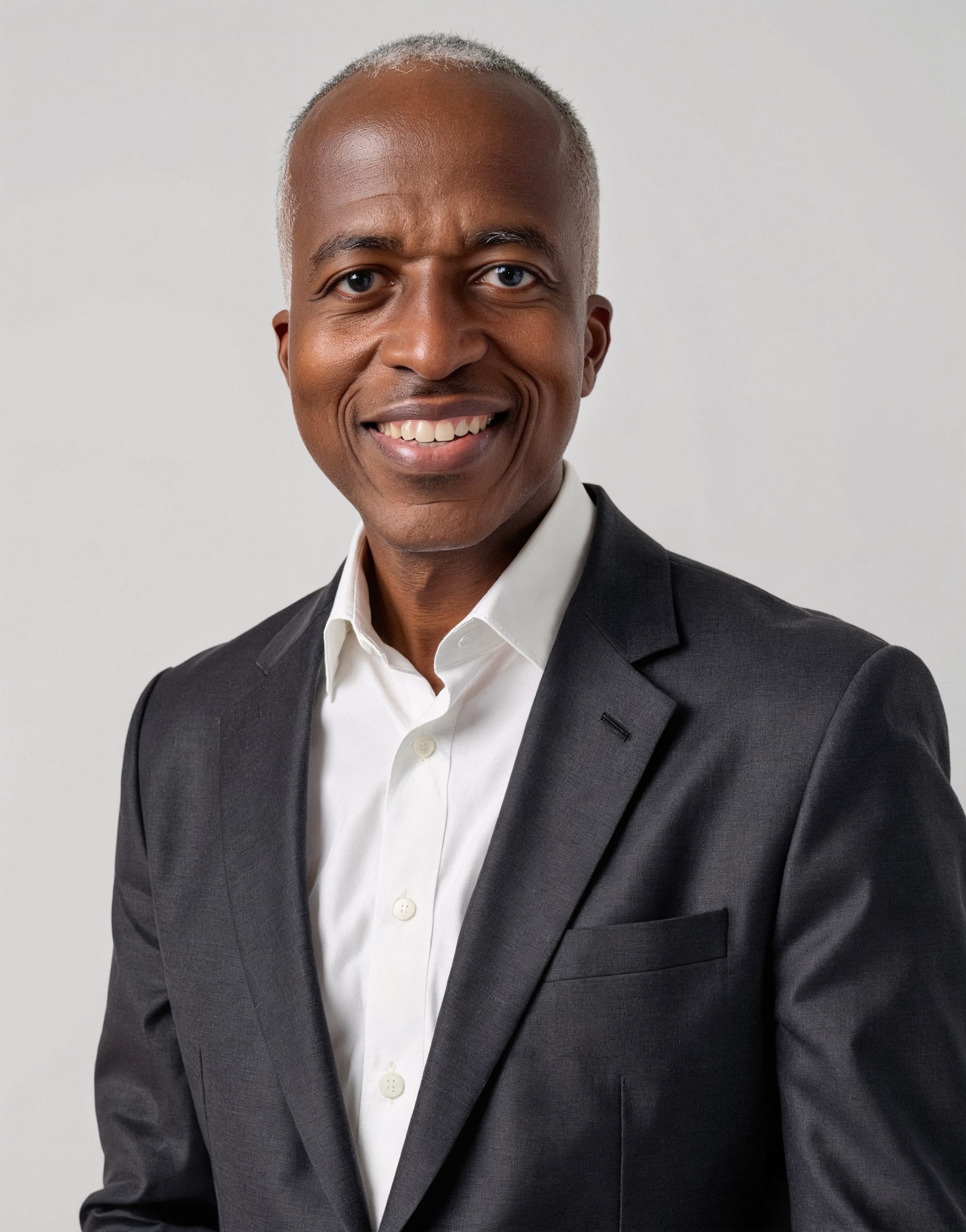
By Dr. Chukwuma Onyeije | MaternalFetal Medicine
Listen to this post
The Disappearing Note: How Automation Is Rewriting Clinical Documentation
On this page19 sections
By Dr. Chukwuma Onyeije | Maternal–Fetal Medicine
Founder, CodeCraftMD and Doctors Who Code
Introduction: The Note Is Vanishing Before Our Eyes
For over a century, the medical note has been the primary artifact of clinical reasoning. It is the record, the legal document, the billable asset, the clinician’s cognitive trail.
But in the last five years, something remarkable has happened.
The note is quietly disappearing.
Ambient transcription, real-time summarization, AI-derived differentials, and automated coding tools are gradually taking over the slow, manual process of turning patient encounters into structured documentation.
We are entering an era where the physician may no longer be the author of the note — only the editor. And eventually, not even that.
This shift is not about convenience. It is about abstraction — the same phenomenon that replaced stethoscope-based murmur detection with echocardiography, and X-ray “chest pain interpretations” with CT angiograms.
When better tools emerge, the old layers fall away.
Clinical documentation is no exception.
The Forces Driving the Disappearance of Manual Charting
1. Economic Pressure
Hospitals lose billions annually due to incomplete notes, missing elements, under-coding, and inconsistent documentation.
Automation solves that:
-
Notes are completed in real time
-
Coding is consistent
-
Billing is accurate
-
Compliance improves
Administrators don’t need to be convinced. The ROI is obvious.
2. Cognitive Pressure
Physicians spend 30–50% of their day documenting. No clinician believes this is sustainable.
Ambient scribes, auto-summaries, and structured templates remove the cognitive burden and allow the clinician to operate at the top of their license ⏤ interpreting, deciding, counseling.
3. Technological Maturity
We now have:
-
High-fidelity speech-to-text
-
LLMs capable of clinical summarization
-
Reasoning models that structure documentation
-
Tools like EvidenceMD that can justify decisions
-
Billing automation platforms like CodeCraftMD that can extract CPT/ICD-10
These technologies create a complete pipeline.
Once the pipeline works, manual documentation becomes unnecessary.
The New Documentation Layer: Invisible, Automatic, Ambient
Historically, documentation required:
-
A keyboard
-
A dictaphone
-
A scribe
-
A template
-
A late-night “pajama time” session
The new workflow? Just talk to the patient.
Everything else happens automatically:
-
Ambient audio capture extracts dialogue
-
LLMs summarize the encounter
-
Clinical models structure the assessment
-
Billing automation extracts codes
-
The EMR is filled without typing
The physician’s role shifts from: creator → reviewer → confirmer → overseer
Each step is one layer further removed from authorship.
This is the disappearing note.
What We Gain When Documentation Automates
Automation is not subtraction — it is multiplication.
1. More Patient Attention
Without typing, clicking, or scripting, clinicians return to the skills that matter:
-
Listening
-
Observing
-
Counseling
-
Building trust
This is the “first mile” of care — the part AI will never replace.
2. Higher-Quality Notes
AI writes consistently, objectively, and legibly:
-
No typos
-
No missing sections
-
No incomplete ROS/PE
-
No fragmented narratives
Structured data becomes the default, not the exception.
3. Better Billing and Compliance
Automated extraction reduces:
-
Undercoding
-
Overcoding
-
Missed modifiers
-
Incomplete documentation
Physicians are protected. Hospitals are reimbursed appropriately.
4. Less Burnout
The emotional weight of documentation — that constant sense of “unfinished work” — finally begins to lift.
Clinicians get evenings back. Families get time back. Sleep returns.
What We Lose — and Why It Matters
The disappearing note is not without cost.
1. Loss of the Physician Voice
Documentation has long been the place where a doctor’s reasoning is visible. As AI takes over drafting, the physician’s narrative risks becoming thinner, standardized, less reflective.
2. Skill Atrophy
Just as reliance on CT reduced bedside diagnostic skills, reliance on auto-notes may reduce:
-
Differential-building
-
Narrative reasoning
-
Clinical storytelling
These are subtle, but important.
3. Over-Trusting Automation
Automation bias is real.
If the model misunderstands the encounter or omits a crucial detail, the note may look perfect — but be wrong.
This is why oversight and technical literacy matter more than ever.
The Physician’s New Role: Architect, Not Author
As documentation disappears, the physician doesn’t downgrade — they upgrade.
Physicians become:
-
Workflow designers
-
Oversight experts
-
Editors of clinical reasoning
-
Auditors of AI output
-
Guardians of nuance
-
Proceduralists at the bedside
-
Counselors in uncertainty
This is a fundamentally different professional identity.
The physician of the future is not the “human transcription engine.” The physician is the clinical orchestrator — directing systems that gather, synthesize, and act on information.
This shift mirrors anesthesiology’s evolution: from hand-mixed gases and manual ventilations to highly automated systems overseen by experts.
Documentation will follow that same trajectory.
Why Technical Literacy Matters Now More Than Ever
Just as your Bot Manager Fallacy essay argued, physicians cannot assume they will simply “supervise” AI forever.
To stay relevant, clinicians must understand:
-
How LLMs fail
-
How hallucinations propagate
-
How hidden prompts shape outputs
-
How structured fields are auto-generated
-
How billing logic works
-
How EMR ingestion happens
This is why Doctors Who Code exists. It is not a programming club — it is a survival skillset.
The physician-architect must understand the system well enough to:
-
Detect errors
-
Modify workflows
-
Create guardrails
-
Audit documentation
-
Collaborate with vendors
-
Build or refine tools like CodeCraftMD
Technical literacy is the new clinical literacy.
Where We Go From Here
We are approaching a world where:
-
The note writes itself
-
The codes extract themselves
-
The EMR fills itself
-
The bill submits itself
This momentum is unstoppable.
But the physician remains essential — not as a data clerk, but as the interpreter of lives, the navigator of risk, the translator of hope, the guardian of human care.
Automation is not the end of the medical note. It is the beginning of documentation that finally serves the clinician instead of consuming them.
The note may be disappearing — but the physician is not.
We are becoming something new.
Coming Next in the Series
-
Empathy as the Last Mile: Why AI Doesn’t Win When It Ignores the Gut Feeling
-
Coding the Coder: Why Physicians Must Understand Their Own Algorithms
-
Procedure as Protection: How Hands-on Skill Becomes a Physician’s Moat
-
Teaching Tomorrow’s Doctors: A Curriculum for an AI-Augmented Clinical School
Related articles
Maternal-Fetal Medicine Specialist