Why Every Physician-Developer Should Learn Markdown
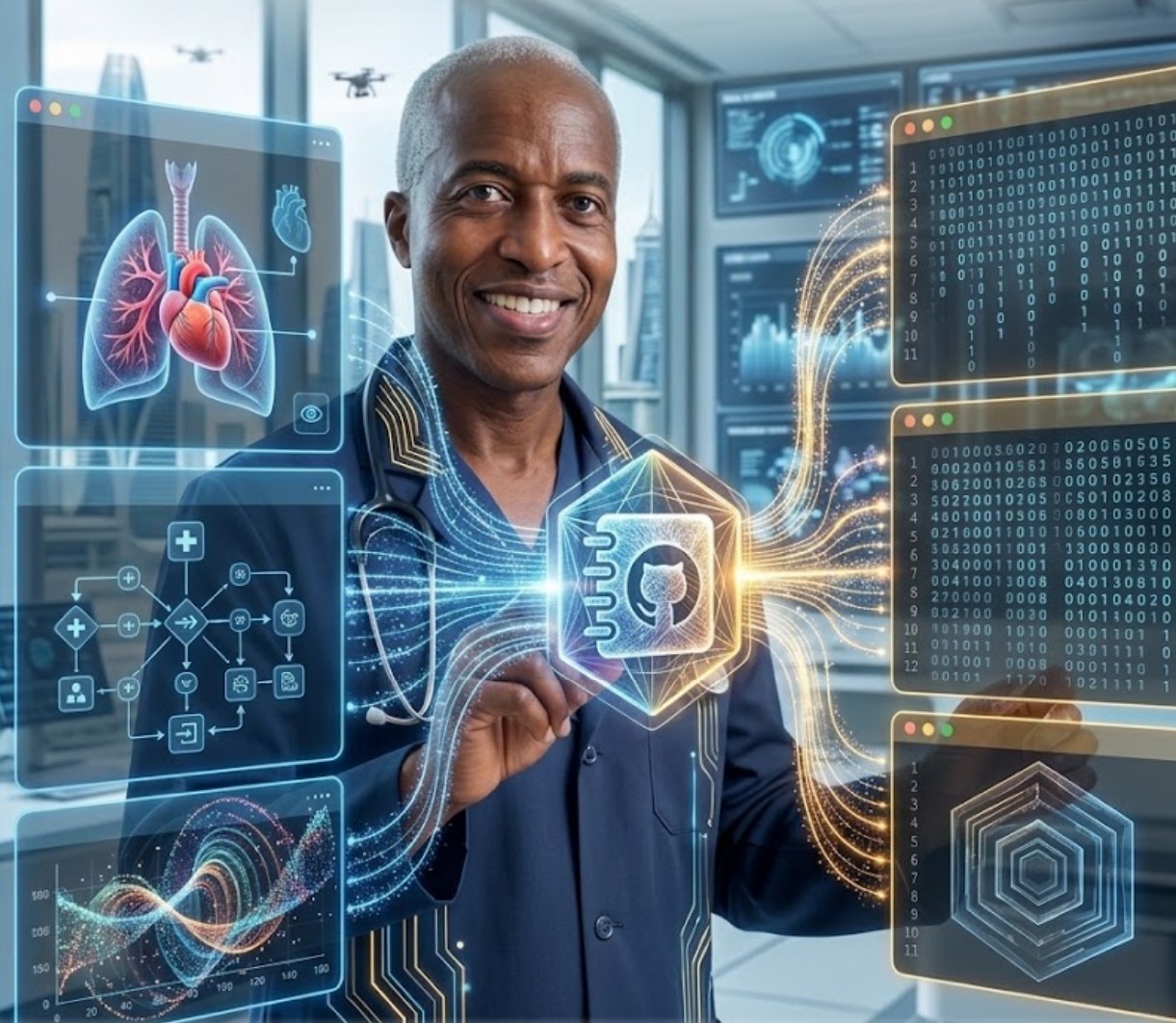
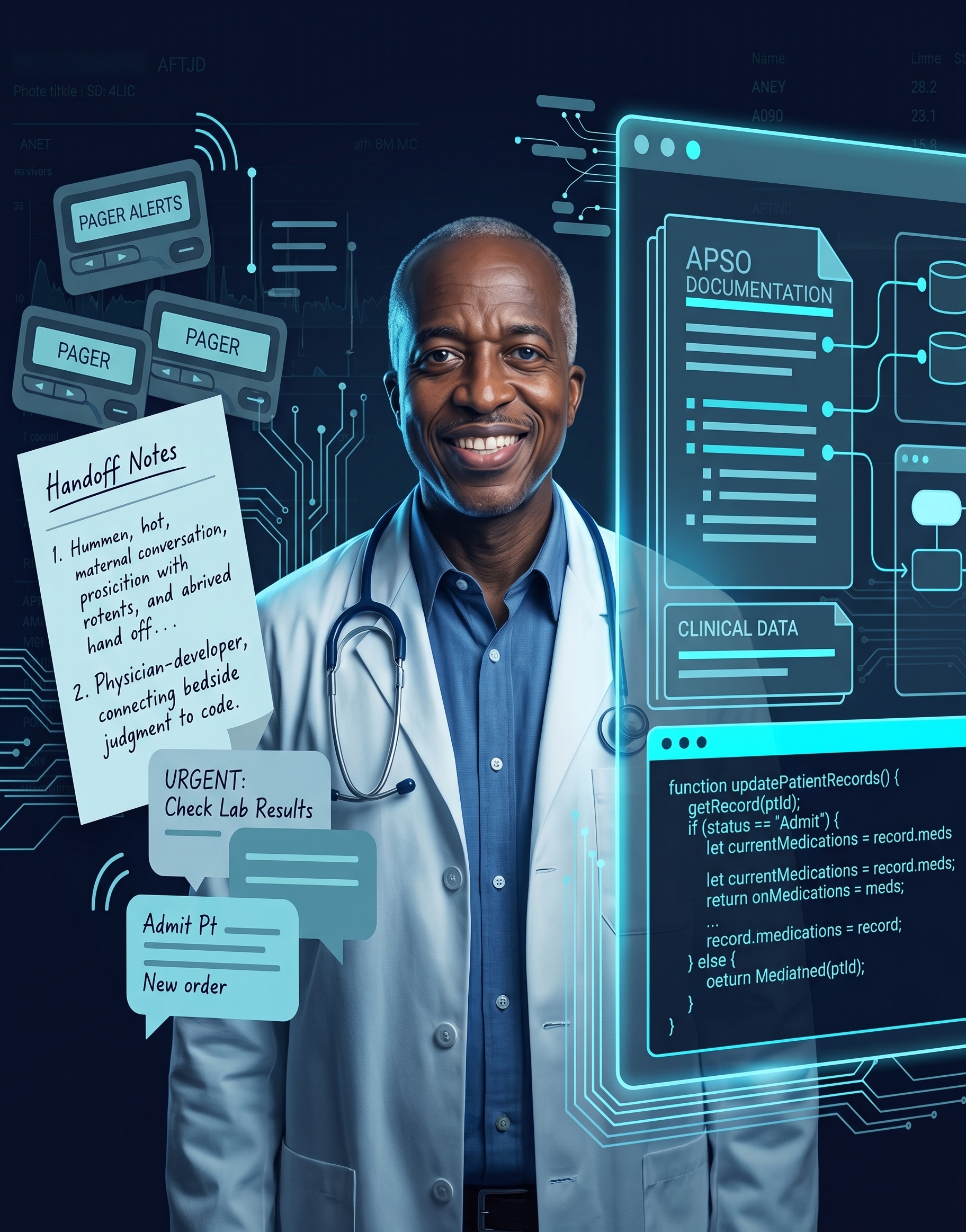
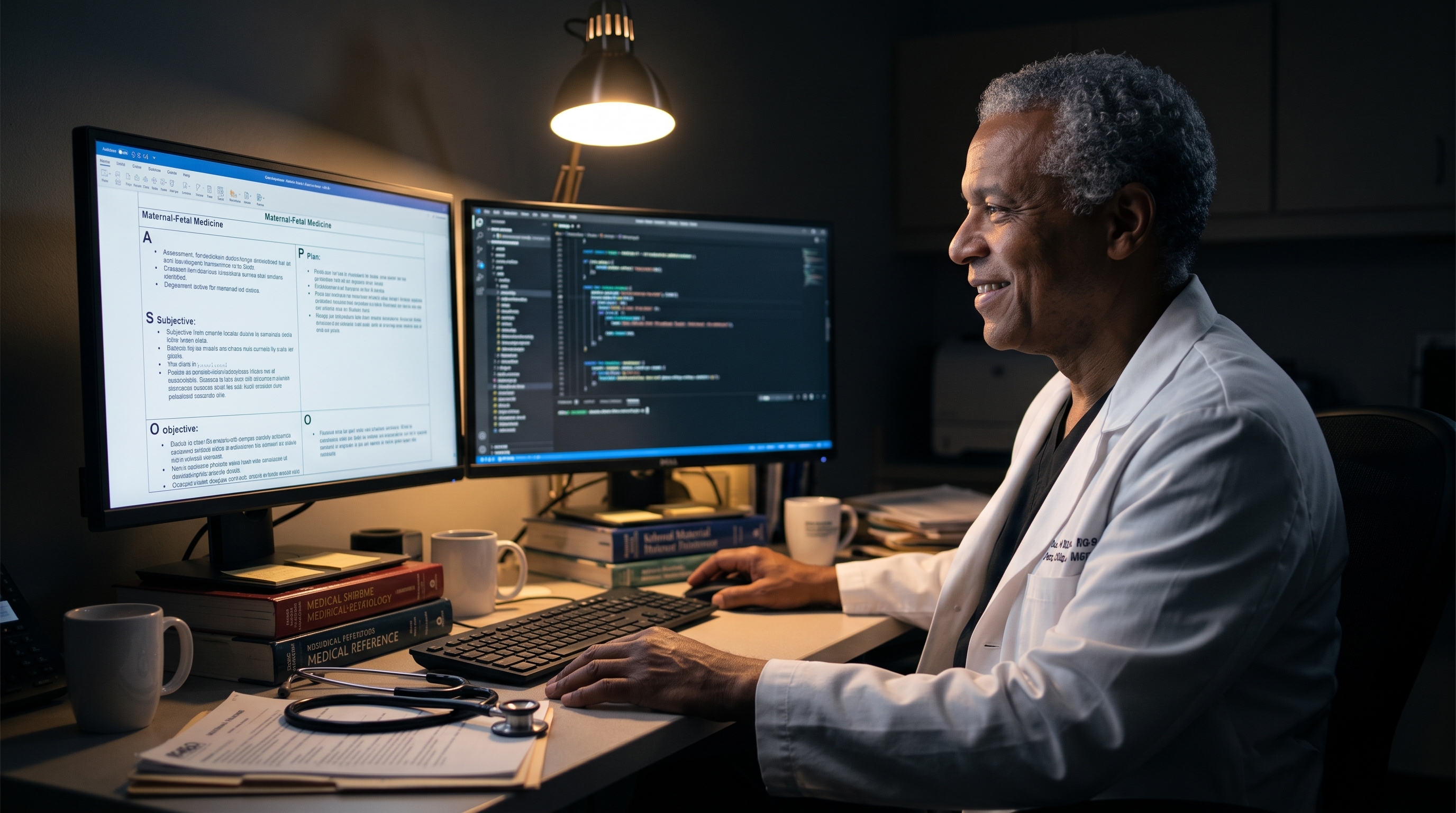
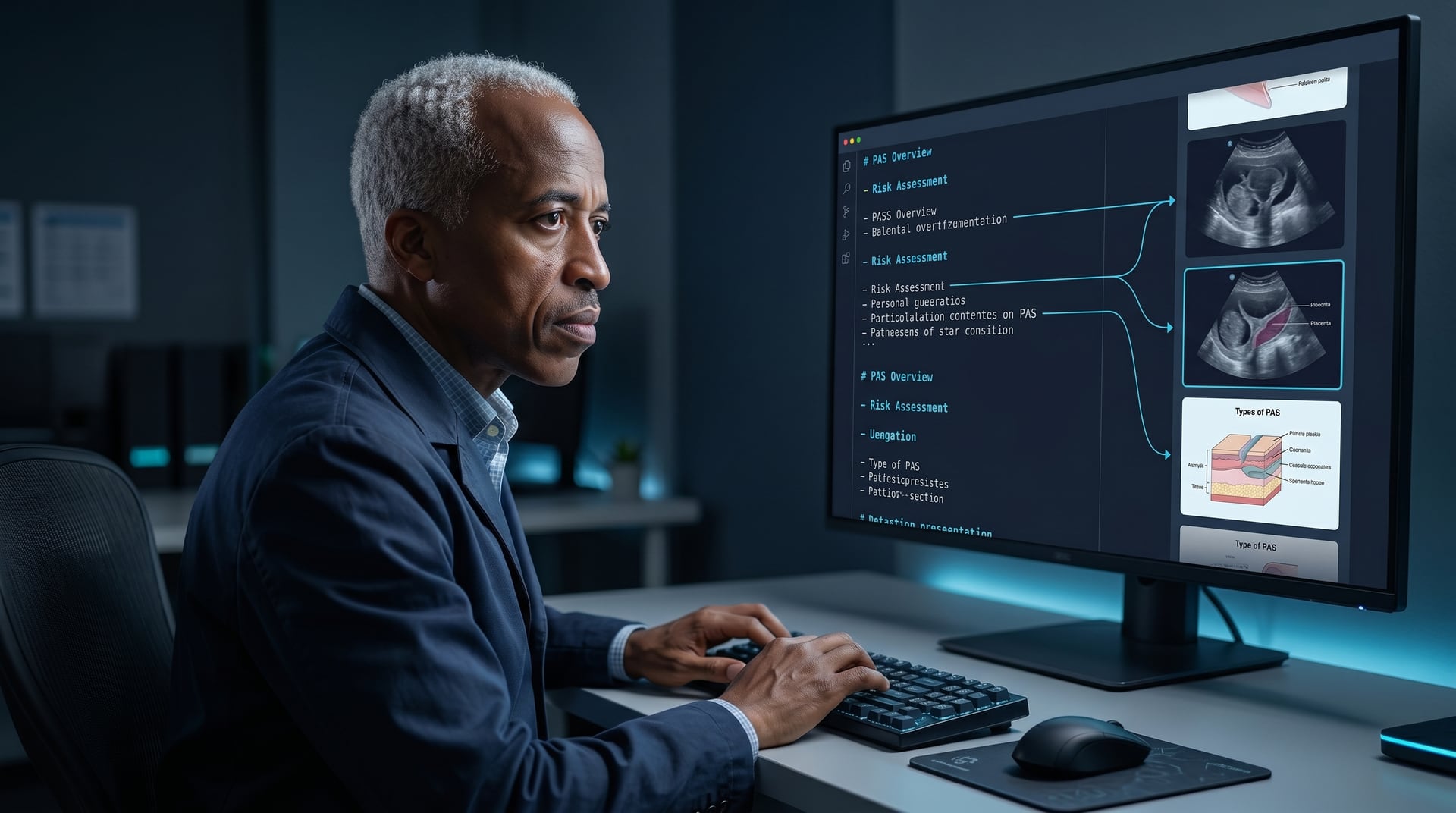
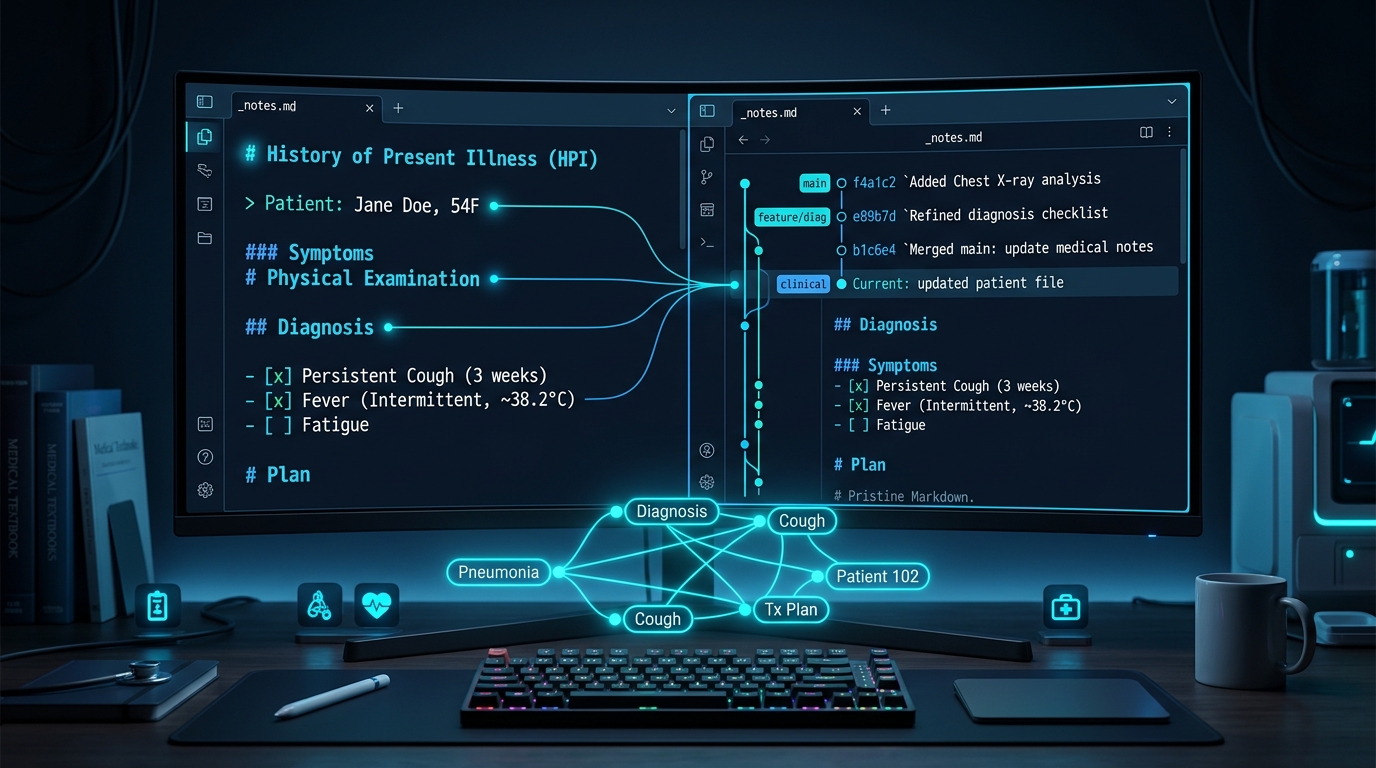
Markdown is not just a writing format. For physician-developers, it is the connective tissue between clinical thinking, documentation, GitHub, AI workflows, and build-in-public learning.
Tag
81 posts
Markdown is not just a writing format. For physician-developers, it is the connective tissue between clinical thinking, documentation, GitHub, AI workflows, and build-in-public learning.
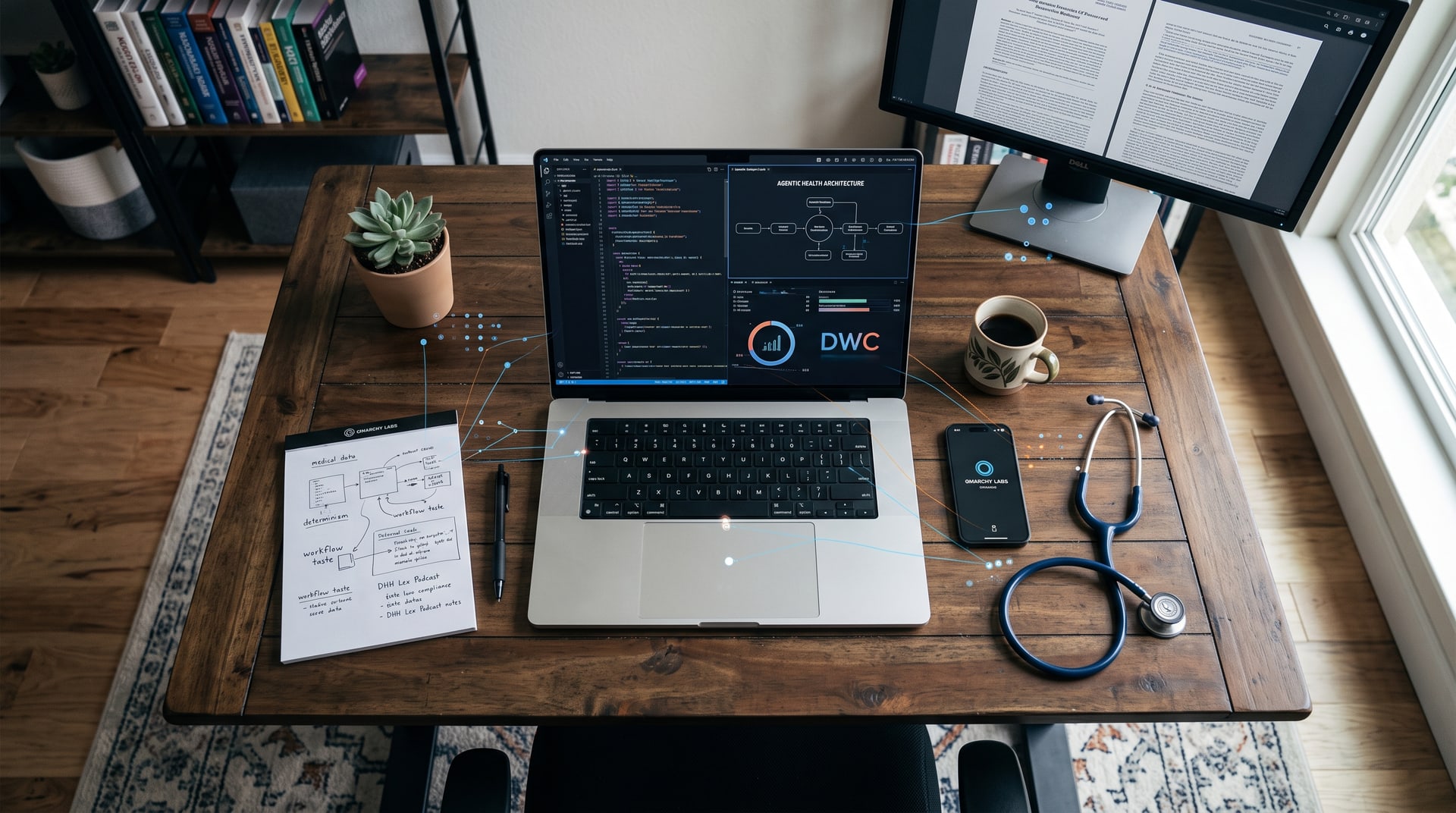
DWC-Bot began as a voice assistant for Doctors Who Code. It is becoming an experiment in voice-first interfaces, second-brain capture, and physician-built agentic computing.
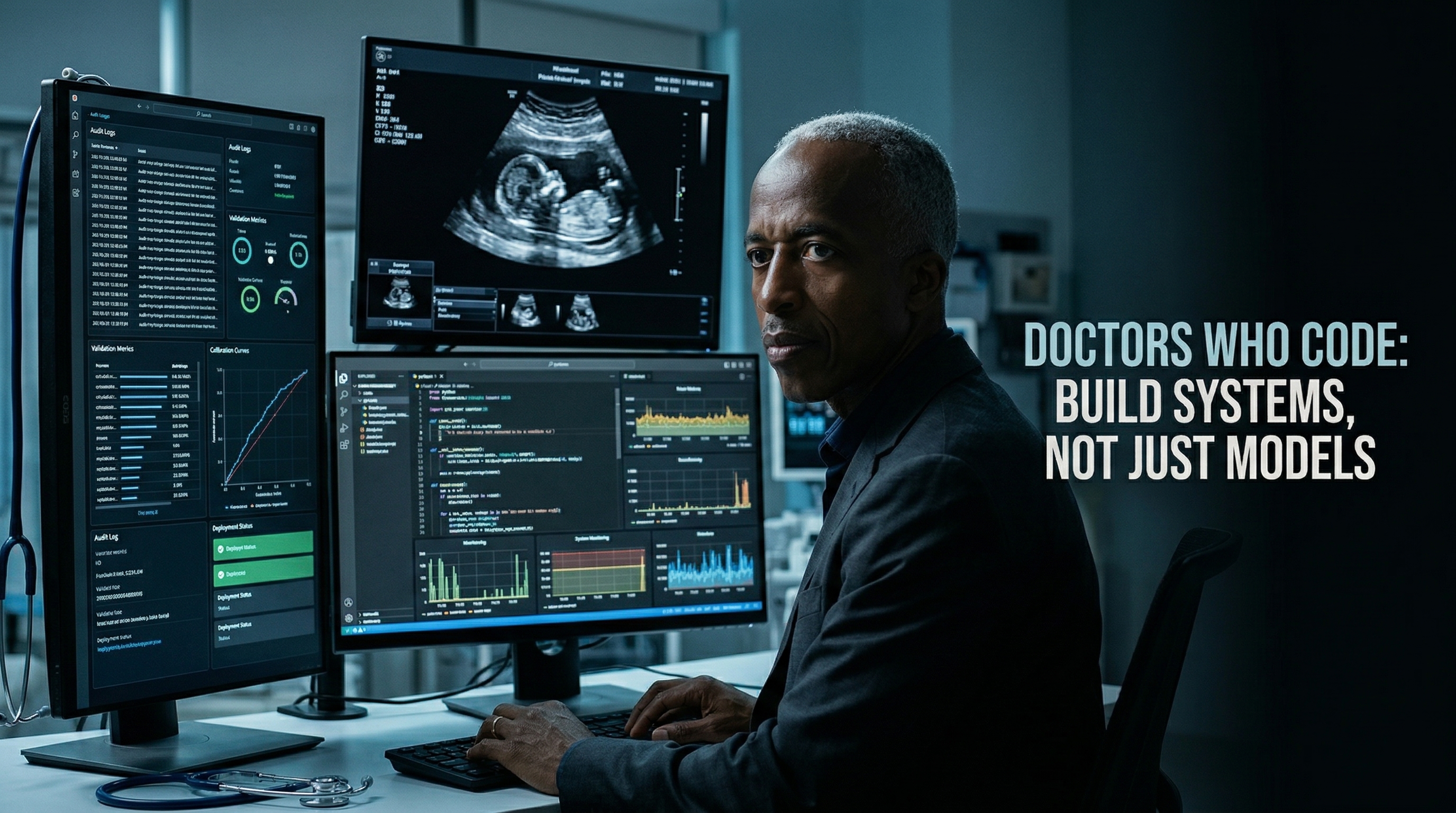
AI agents are making implementation cheaper. In healthtech, the advantage moves to clinicians who can preserve clinical truth and supervise the architecture.
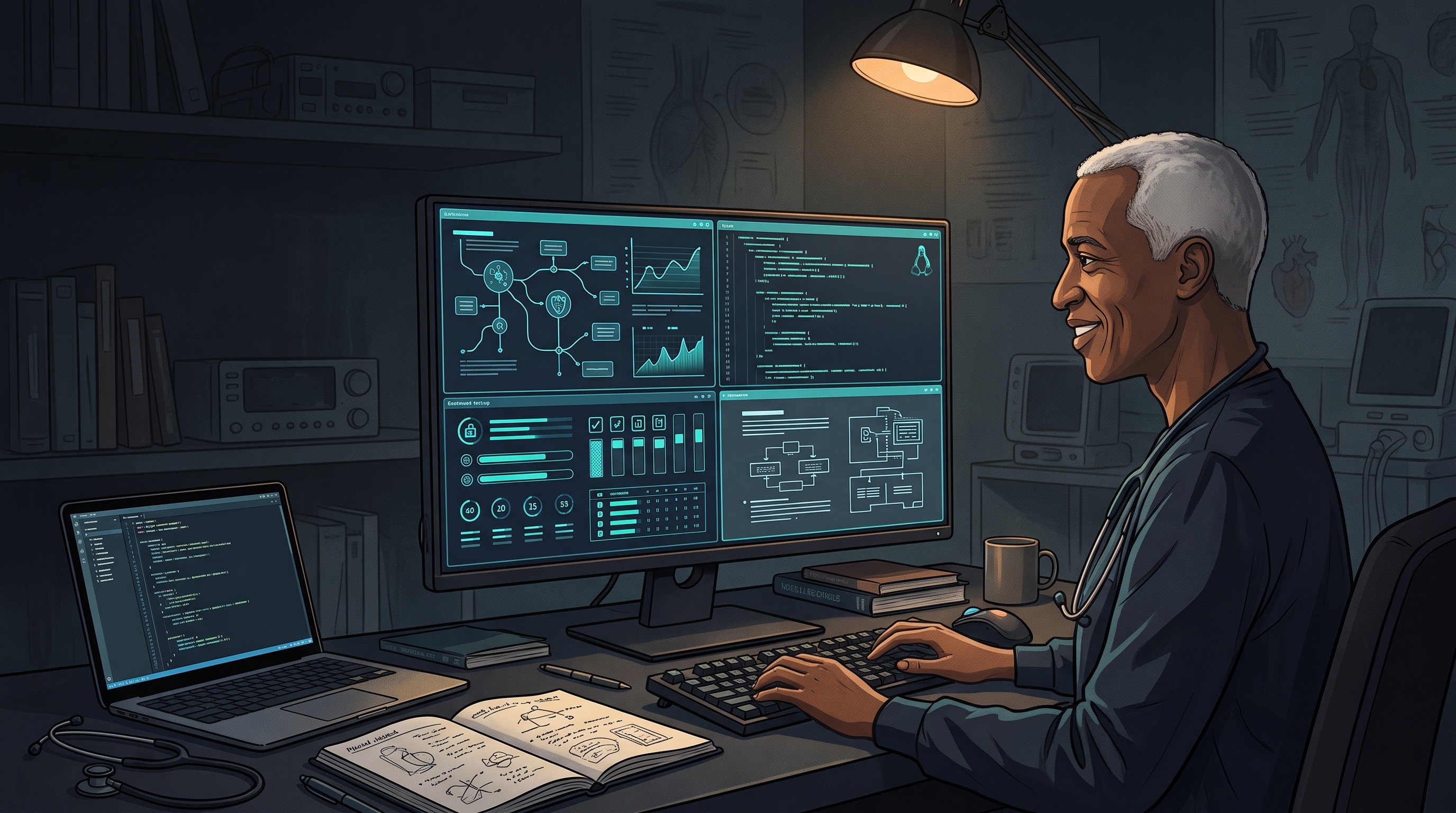
A beginner-friendly guide to turning a spare computer into a focused Omarchy workstation for Git, containers, AI coding agents, and small clinical software projects.
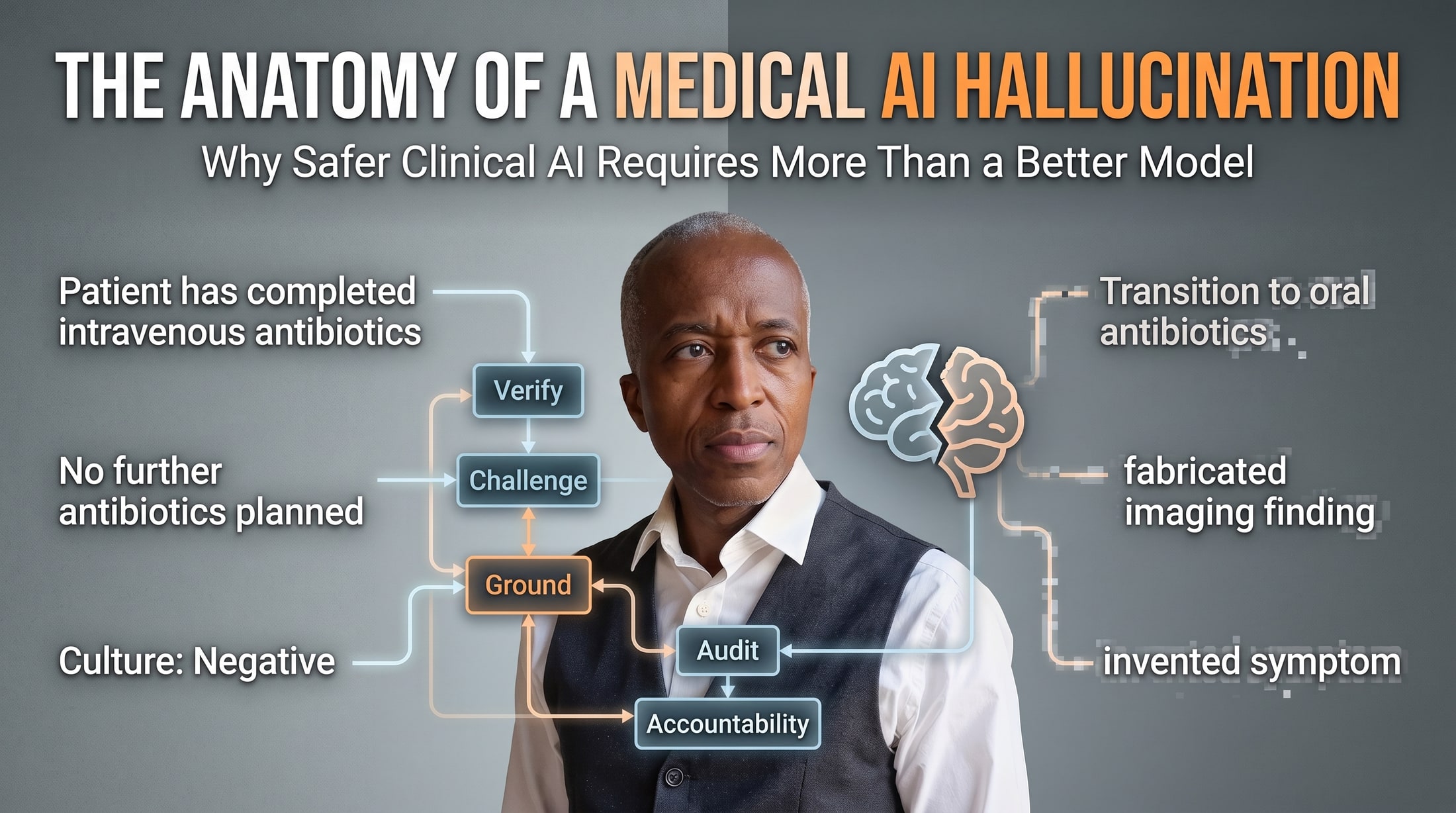
Medical AI hallucinations become dangerous when plausible invention enters a clinical workflow. A physician-developer's guide to grounding, verification, harnesses, and human accountability.
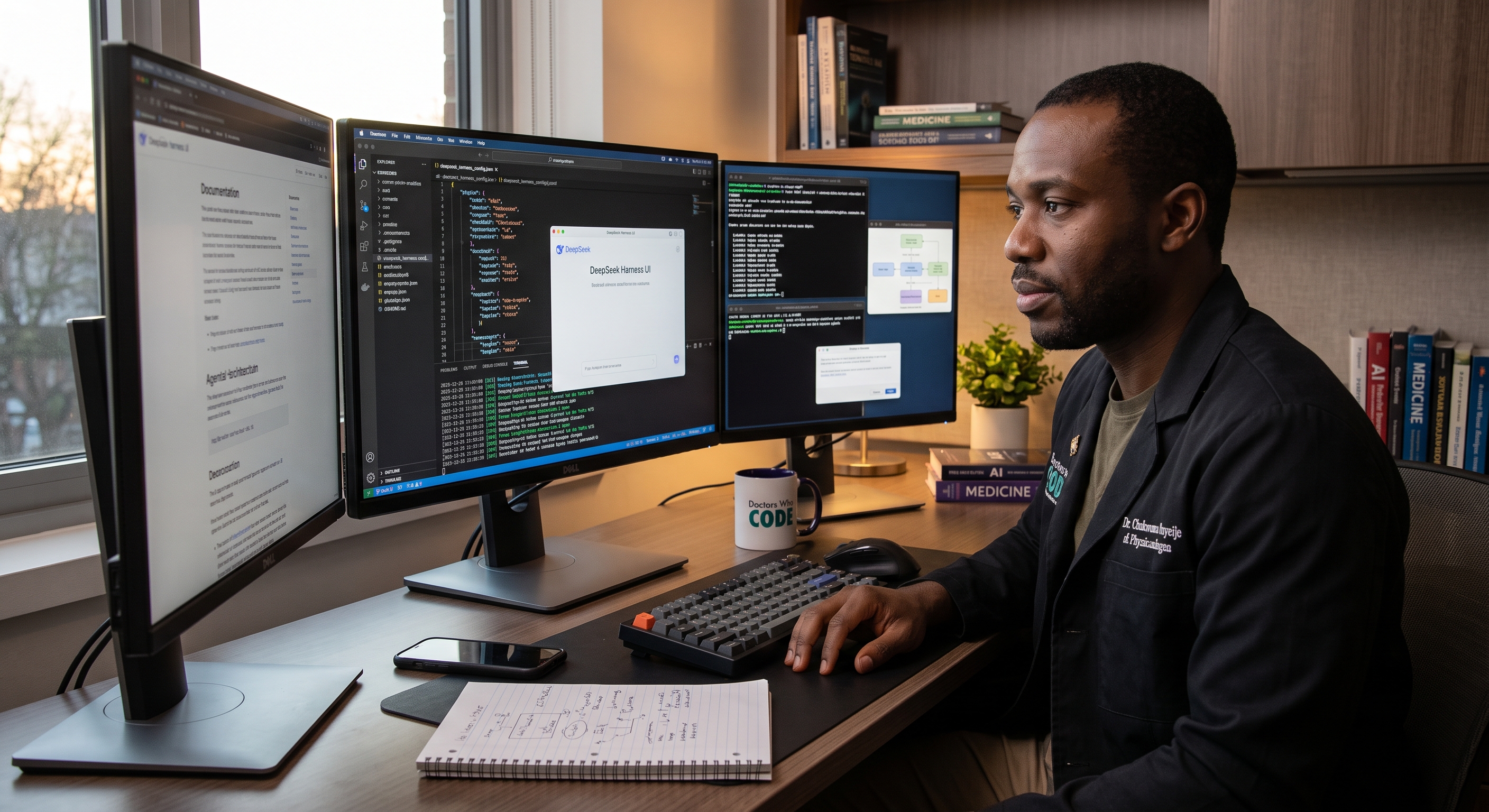
DeepSeek Harness shows why physicians must understand the context, tools, permissions, logs, and human checkpoints that turn an AI model into a working system.
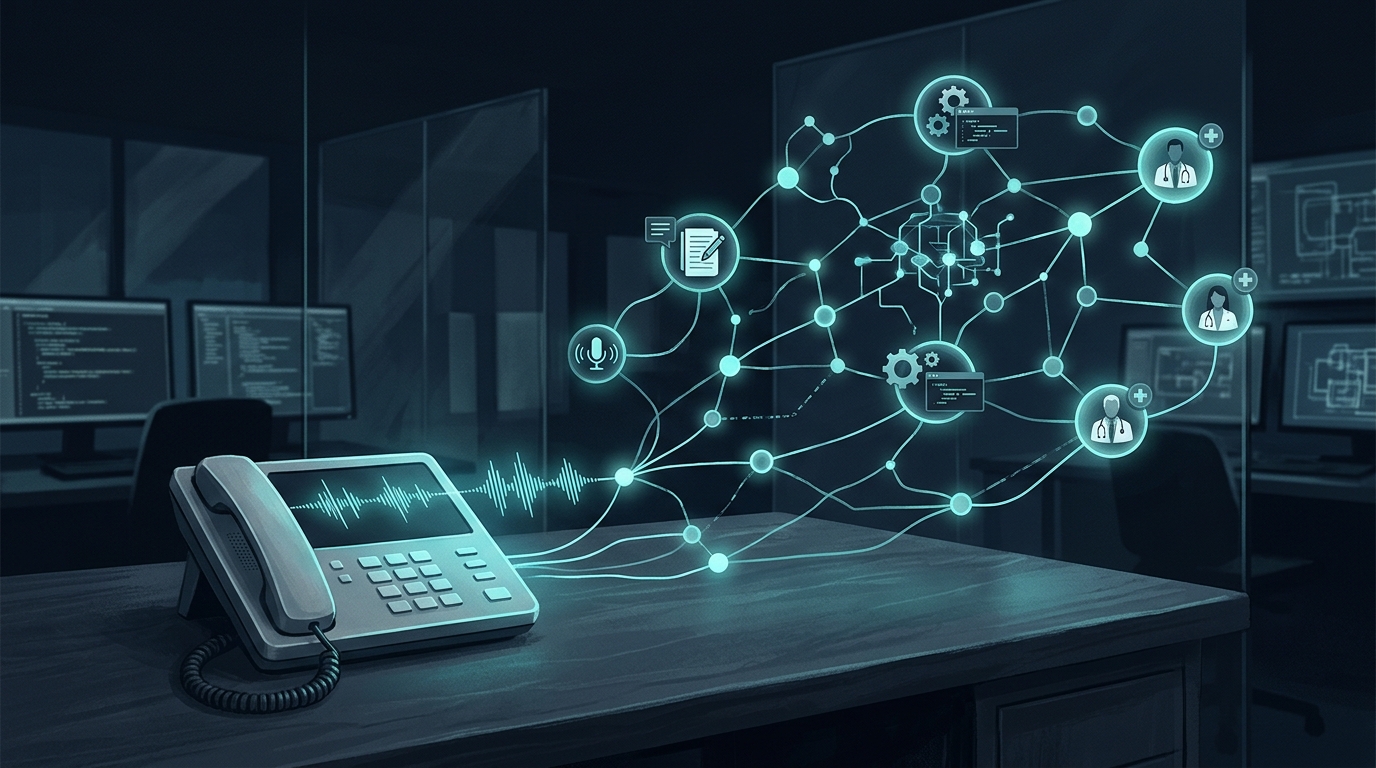
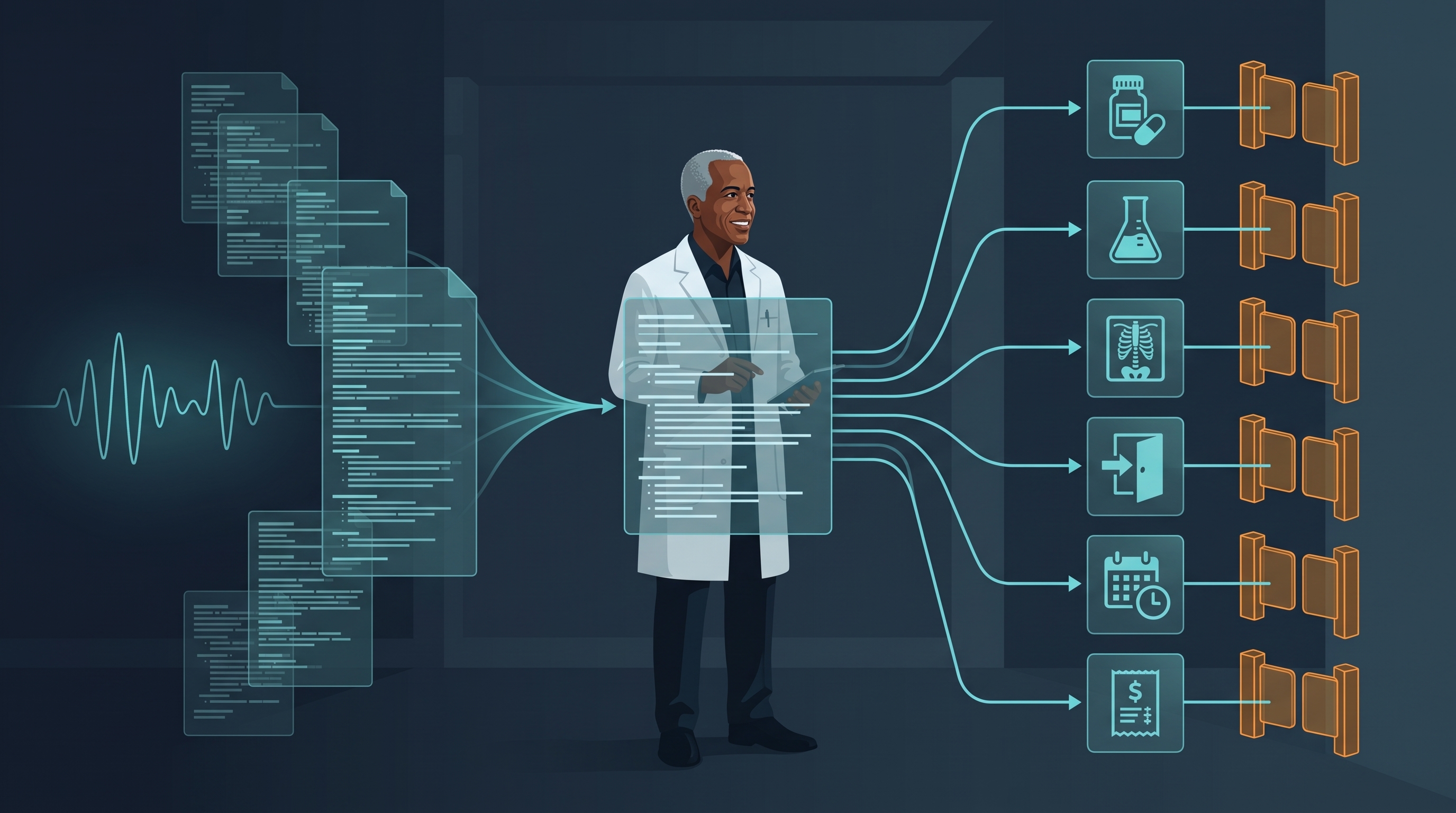
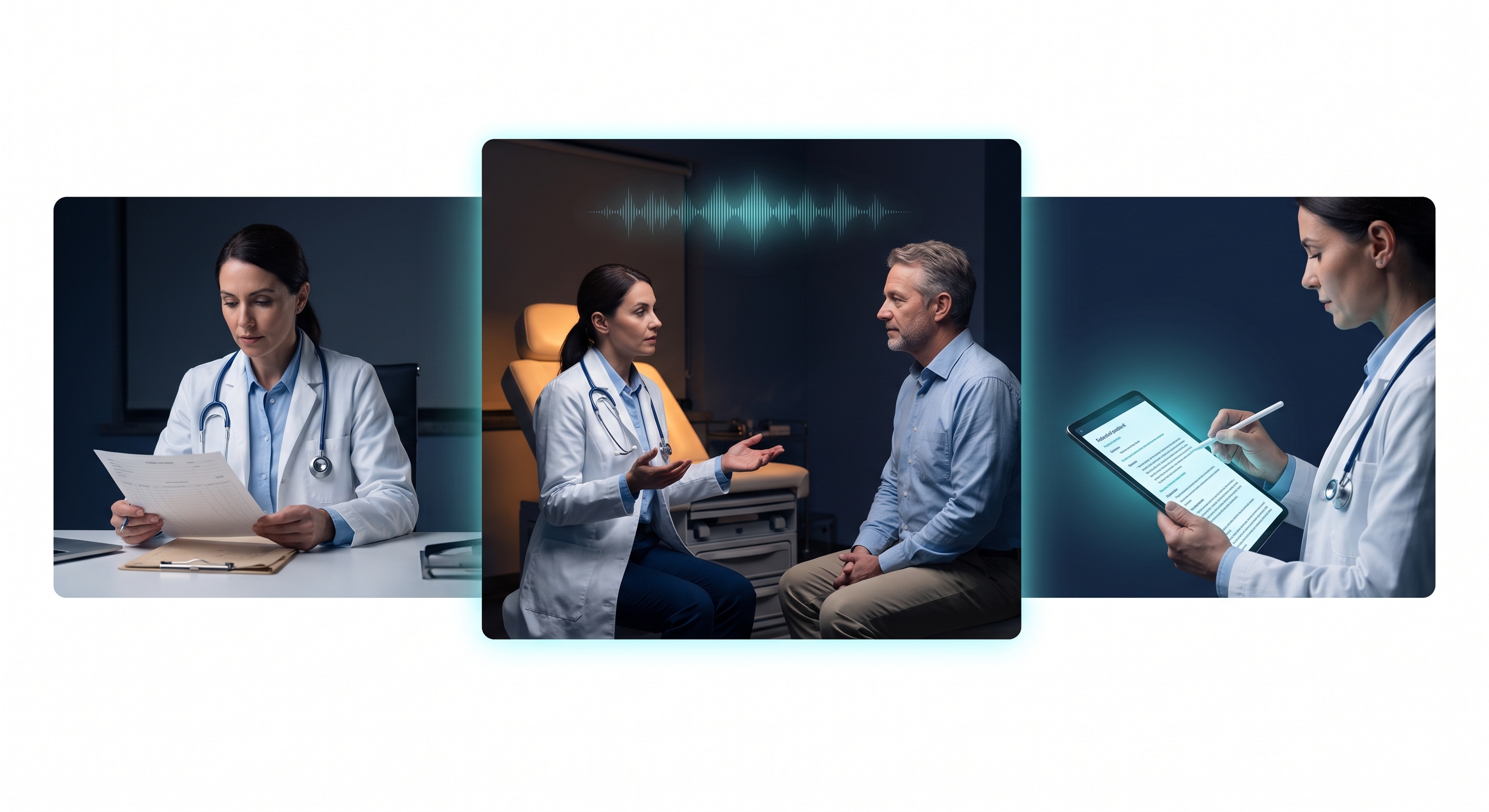
Ambient clinical AI is moving beyond note generation into an encounter layer that prepares orders, prescriptions, coding, and follow-up while keeping consequential decisions visible to the physician.
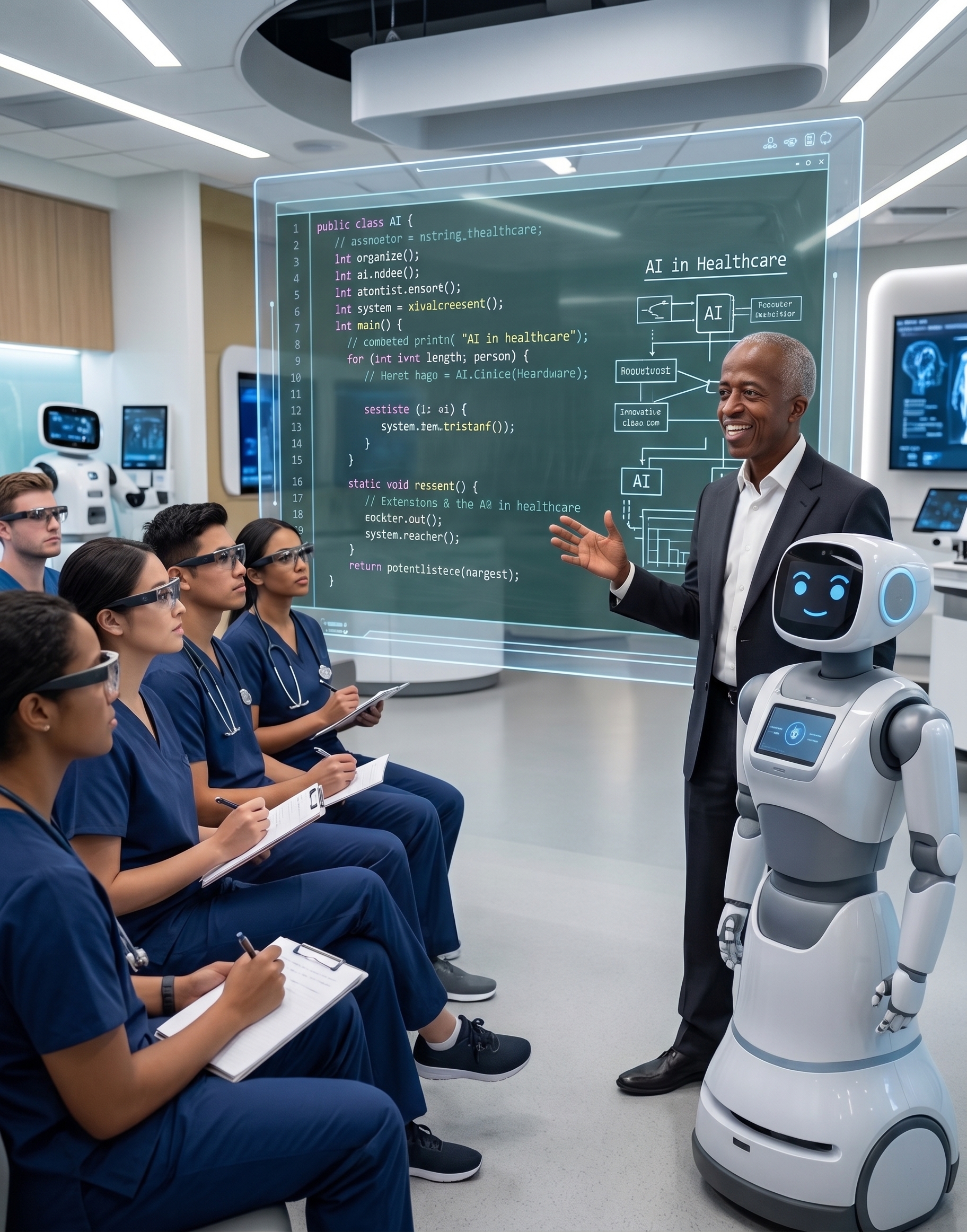
Preparing physicians for agentic AI requires more than an elective. Medical education must redesign how students reason independently, delegate work, verify machine output, and retain clinical judgment.
Clinical intelligence is becoming abundant. Physicians must learn to delegate, verify, contextualize, and judge the work of increasingly autonomous clinical AI systems.
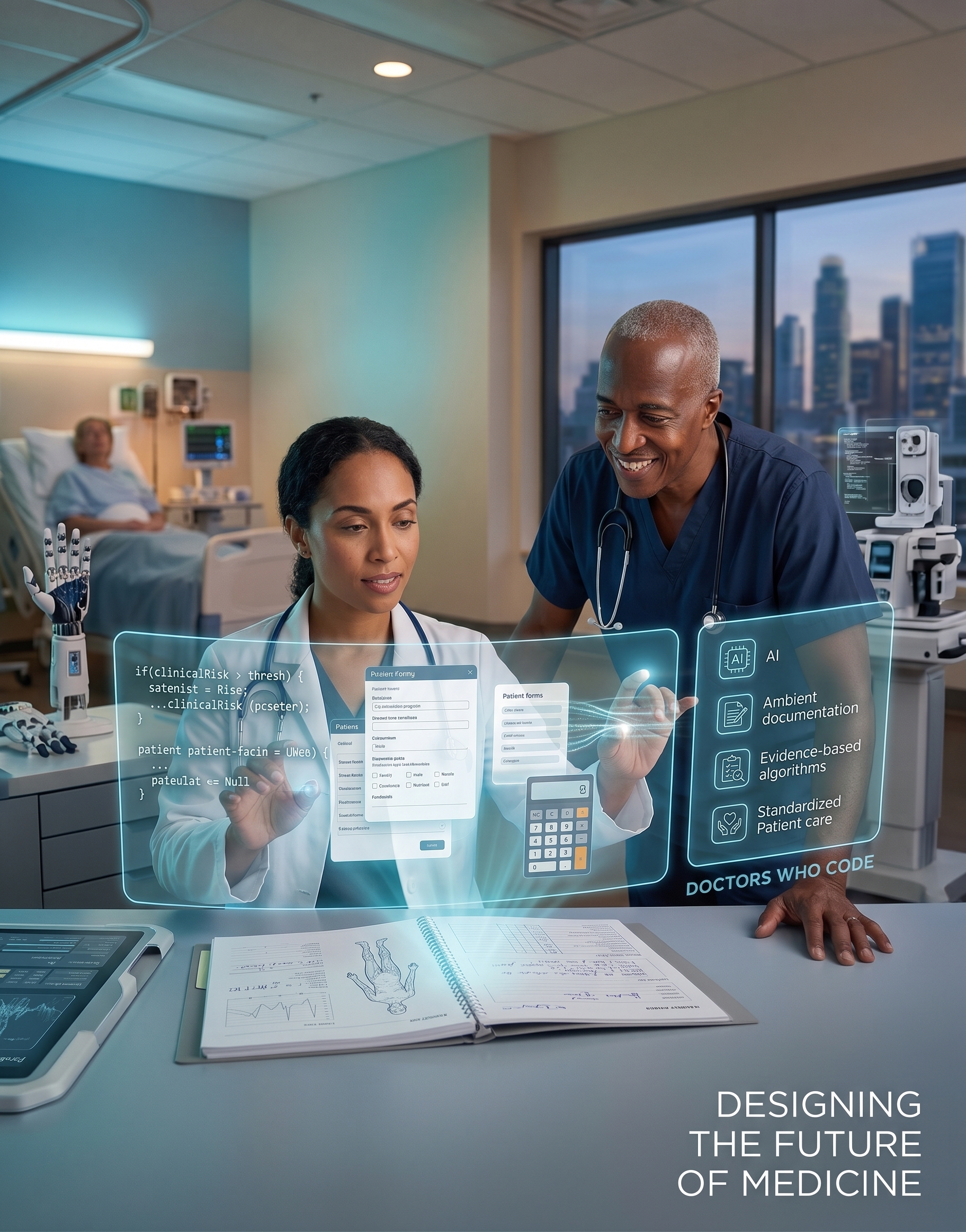
Doctors Who Code began as a blog encouraging physicians to learn programming. It is now a learning platform for physicians who want to use AI with judgment and build clinical tools that improve care.
Jack Williamson's 1947 story imagined machines that obeyed humanity perfectly and destroyed it anyway. Medicine is building the same objective function.
Atul Gawande's framework for human failure explains why obstetric emergencies are lost to execution, not knowledge. The fix is a systems problem, not a training problem.
GitHub Gists look like scratch space for code snippets. Used correctly, they become a version-controlled clinical reference library that decks, apps, and blog posts can all cite from a single source.
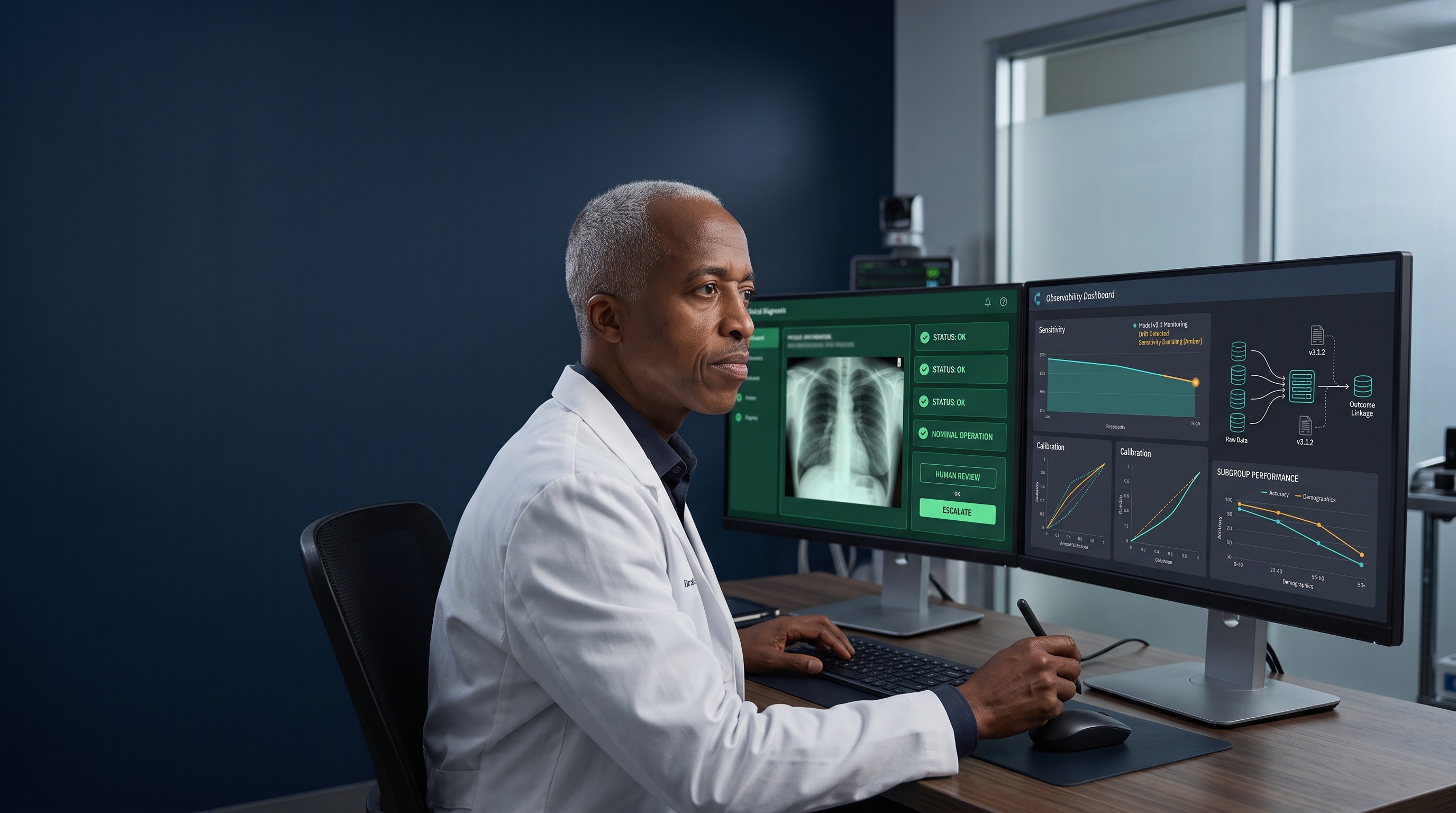
Clinical AI can fail without crashing. Physician-developers must build the monitoring, outcome linkage, and human checkpoints that keep cleared software safe after deployment.
Clinical teams do not move slowly because clinicians are slow. They move slowly because pages, meetings, and verbal handoffs force physicians to keep re-explaining decisions that software should carry forward.
AI makes clinical software cheap to produce. It does not make it safe. Physician-developers must build systems in which speed remains subordinate to evidence, judgment, and the doctor-patient relationship.
The AI race has been about model size for years. The real bottleneck is memory: trustworthy, auditable knowledge that persists across years, not conversations. Medicine will feel this shift first.
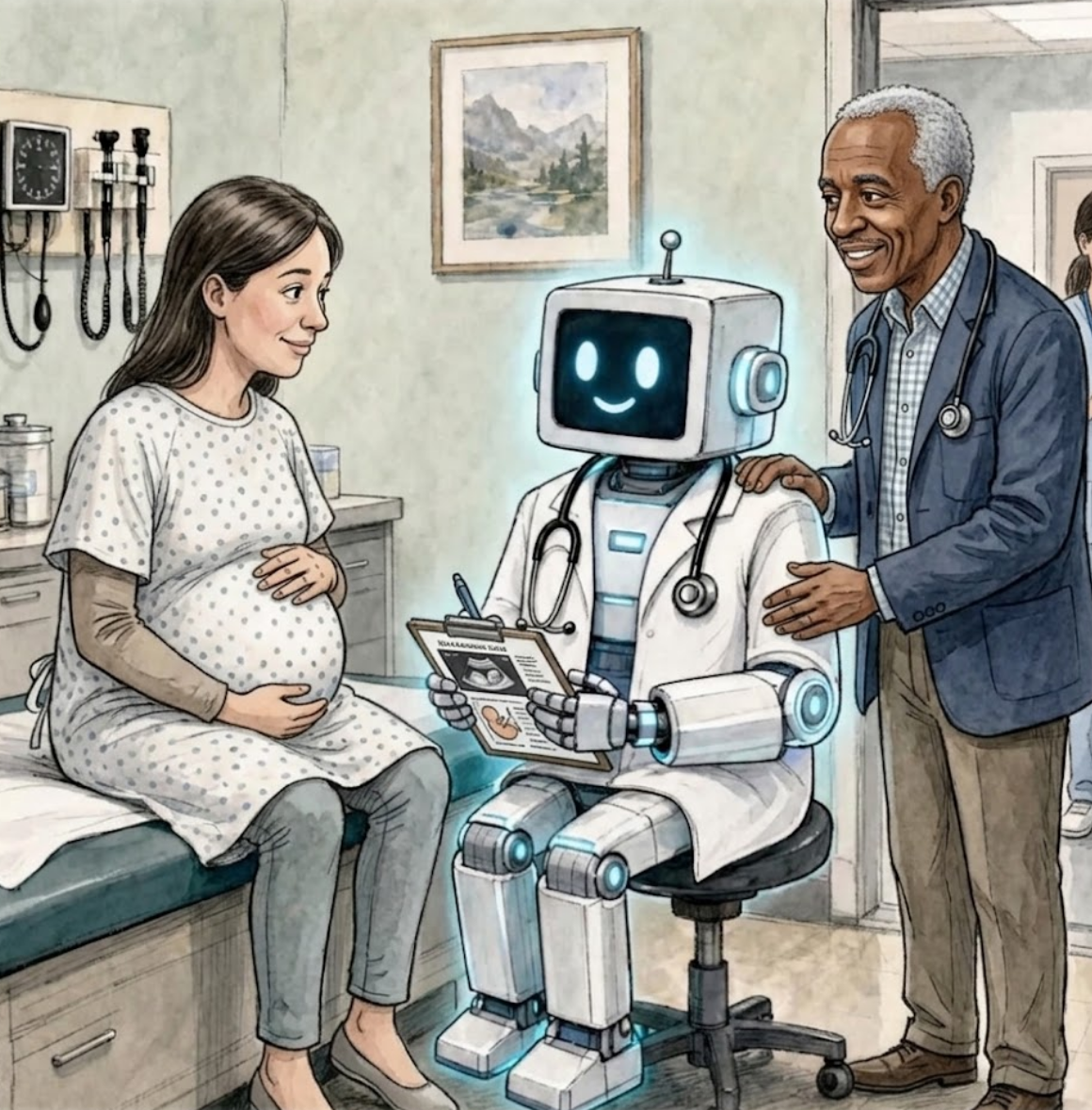
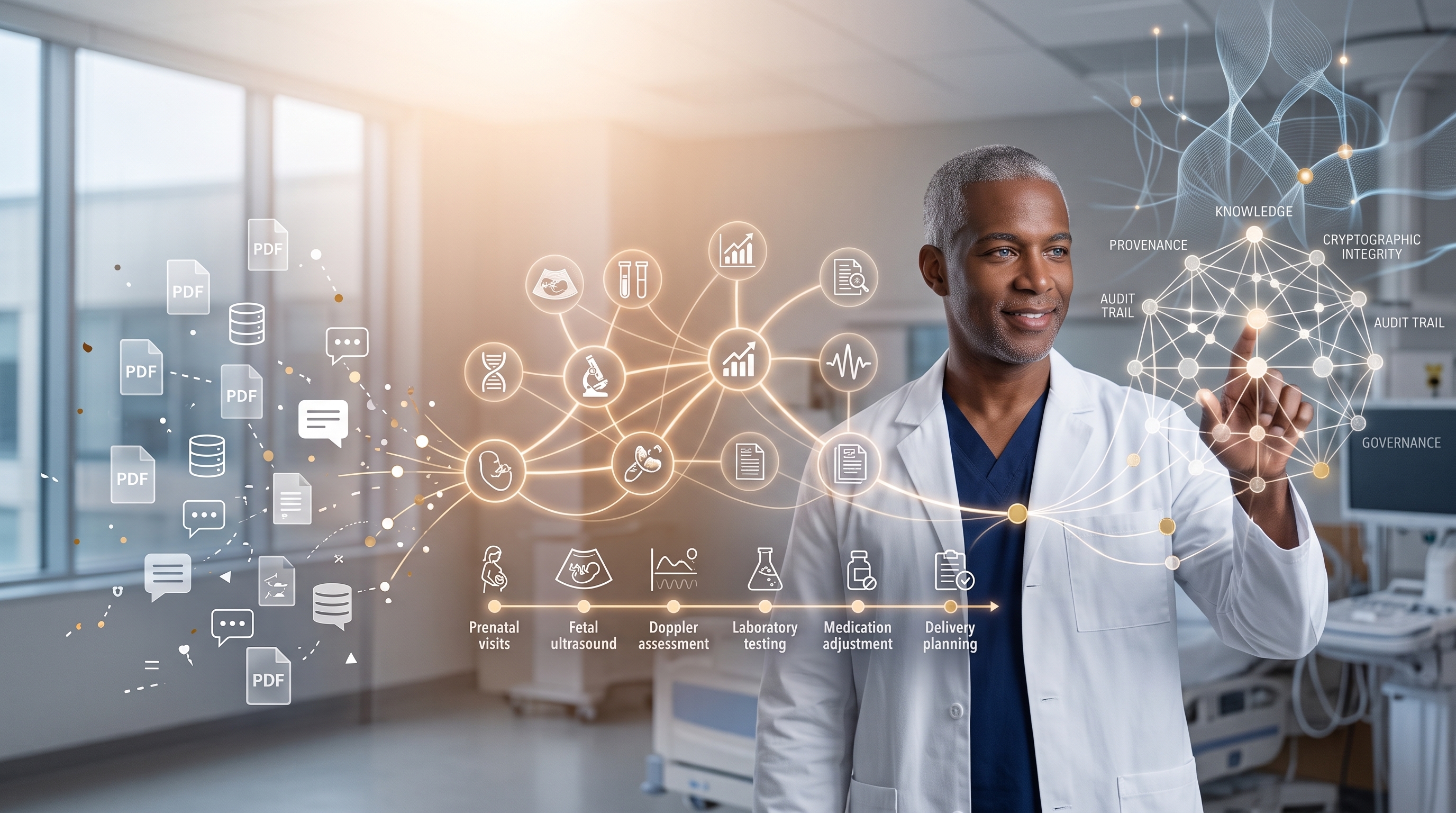
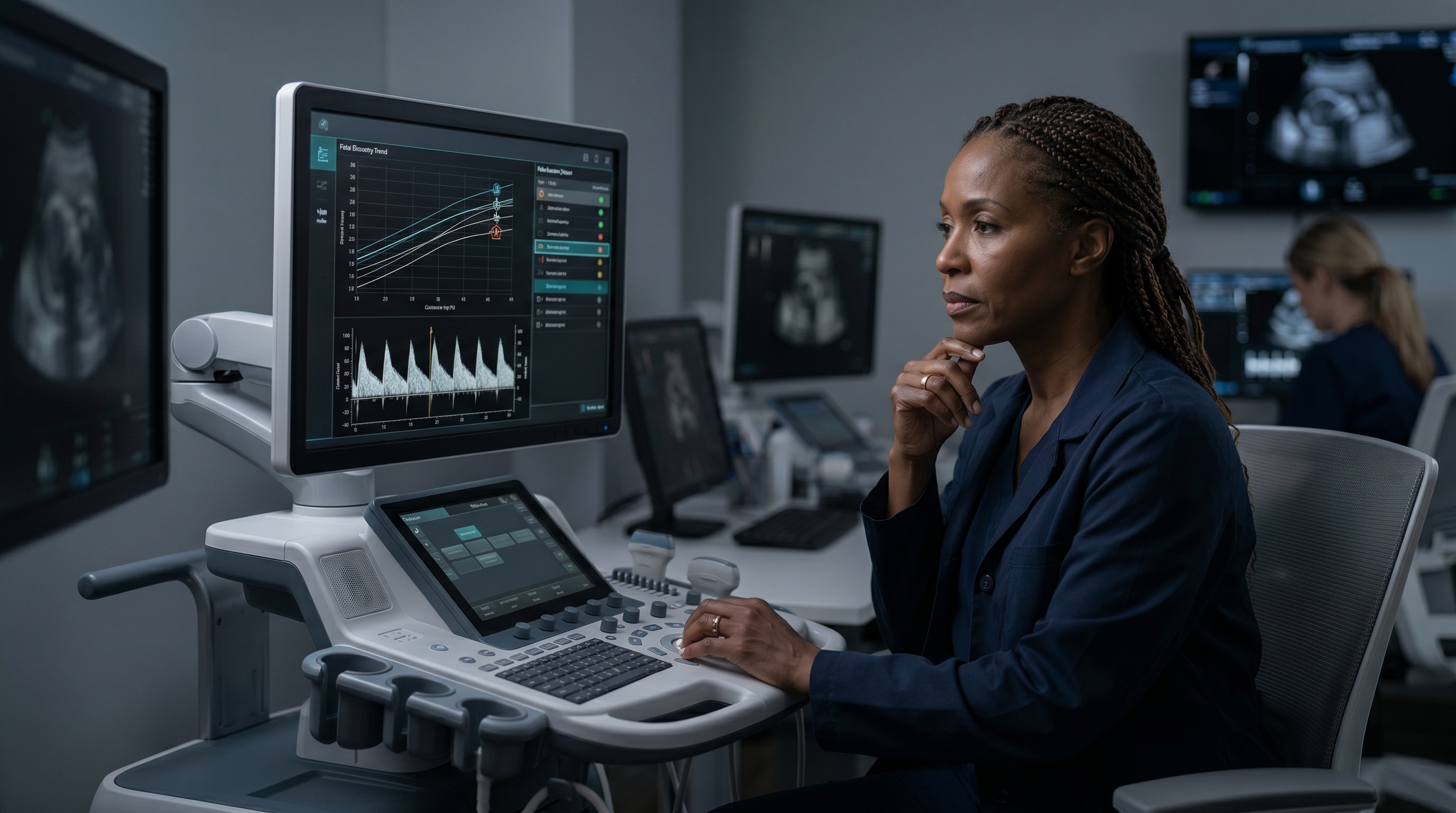
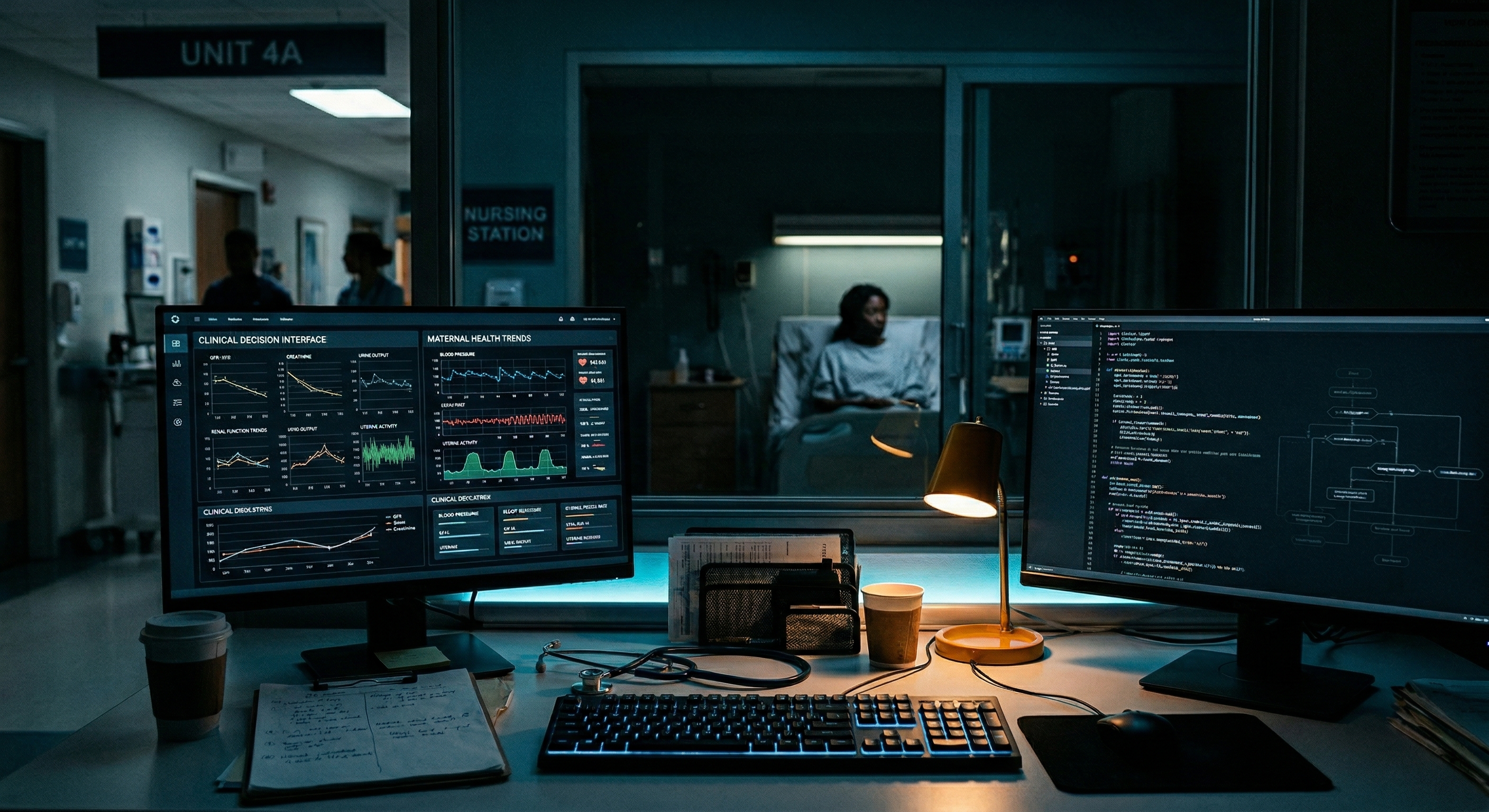
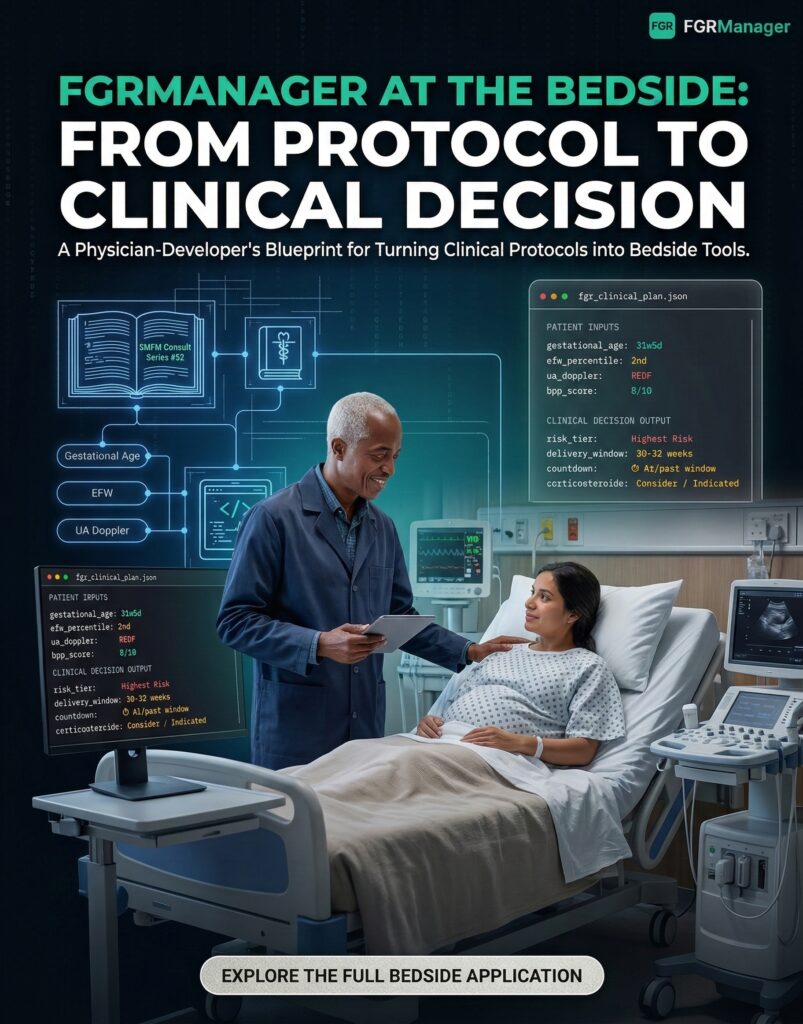
Fetal growth restriction is not just an ultrasound diagnosis. It is a longitudinal data problem. Clinical AI will not replace MFM judgment, but it can help surface the pregnancies whose risk is already visible in the record.
Automation in medicine should not be judged against an ideal clinician. It should be judged against real human variance, machine variance, supervision, and the cost of failure.
A short introduction to a DoctorsWhoCode series on spreadsheets, tests, and retrieval as the basic discipline of physician-built clinical software.
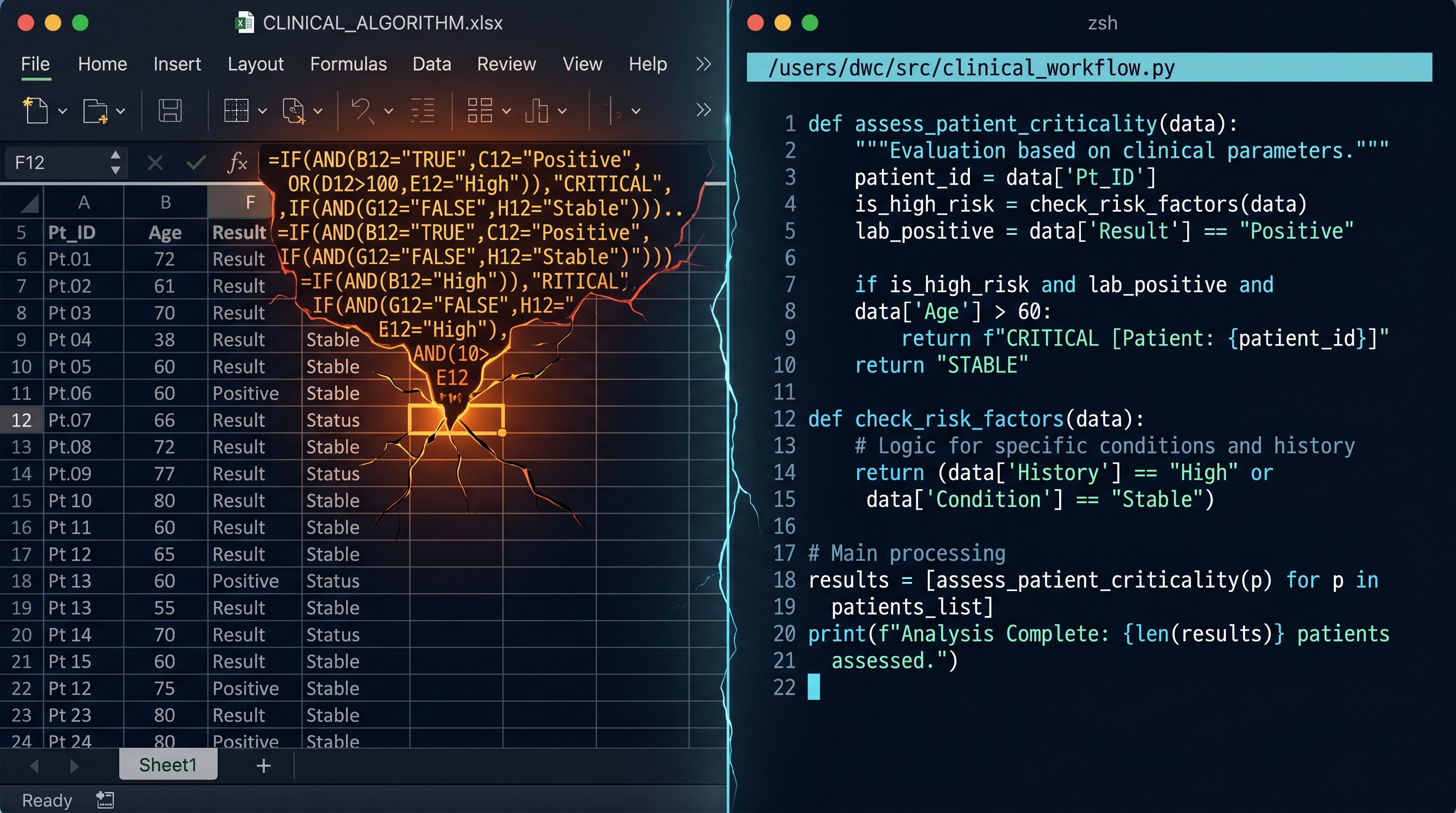
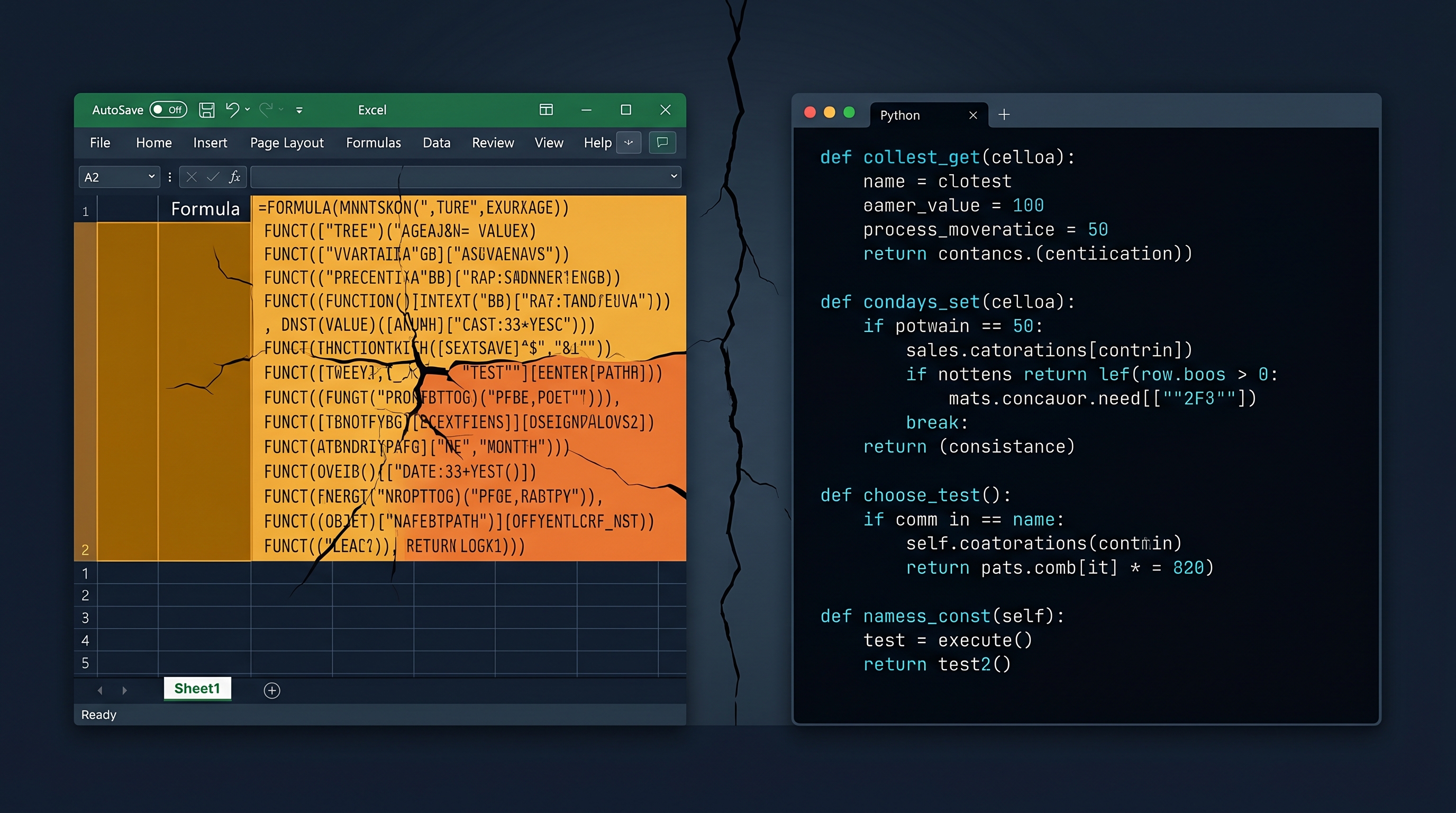
Excel is often the right first move for a physician-builder. The problem begins when clinical logic stays trapped in a container that can no longer safely hold it.
A clinical calculator is not safer because it is written in code. It becomes safer when its expected behavior is explicit, checked, and protected from silent drift.
Clinical AI earns workflow trust only when its answers are grounded in current, local, auditable knowledge. Retrieval is not a feature. It is infrastructure.
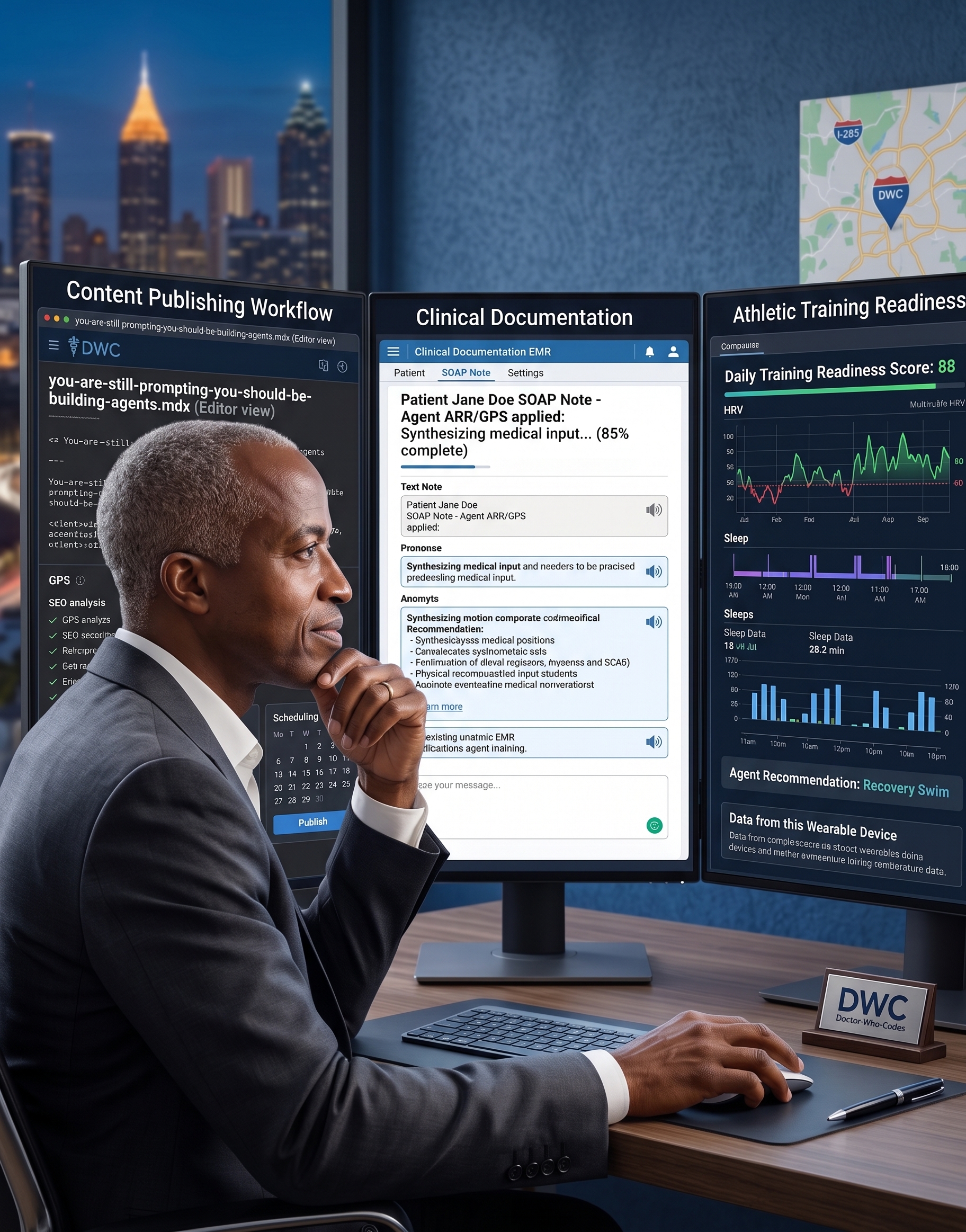
Prompting has a ceiling. Once you hit it, you are coordinating every step manually while the AI handles individual tasks. Here is the framework and three live workflows I use to cross that line.
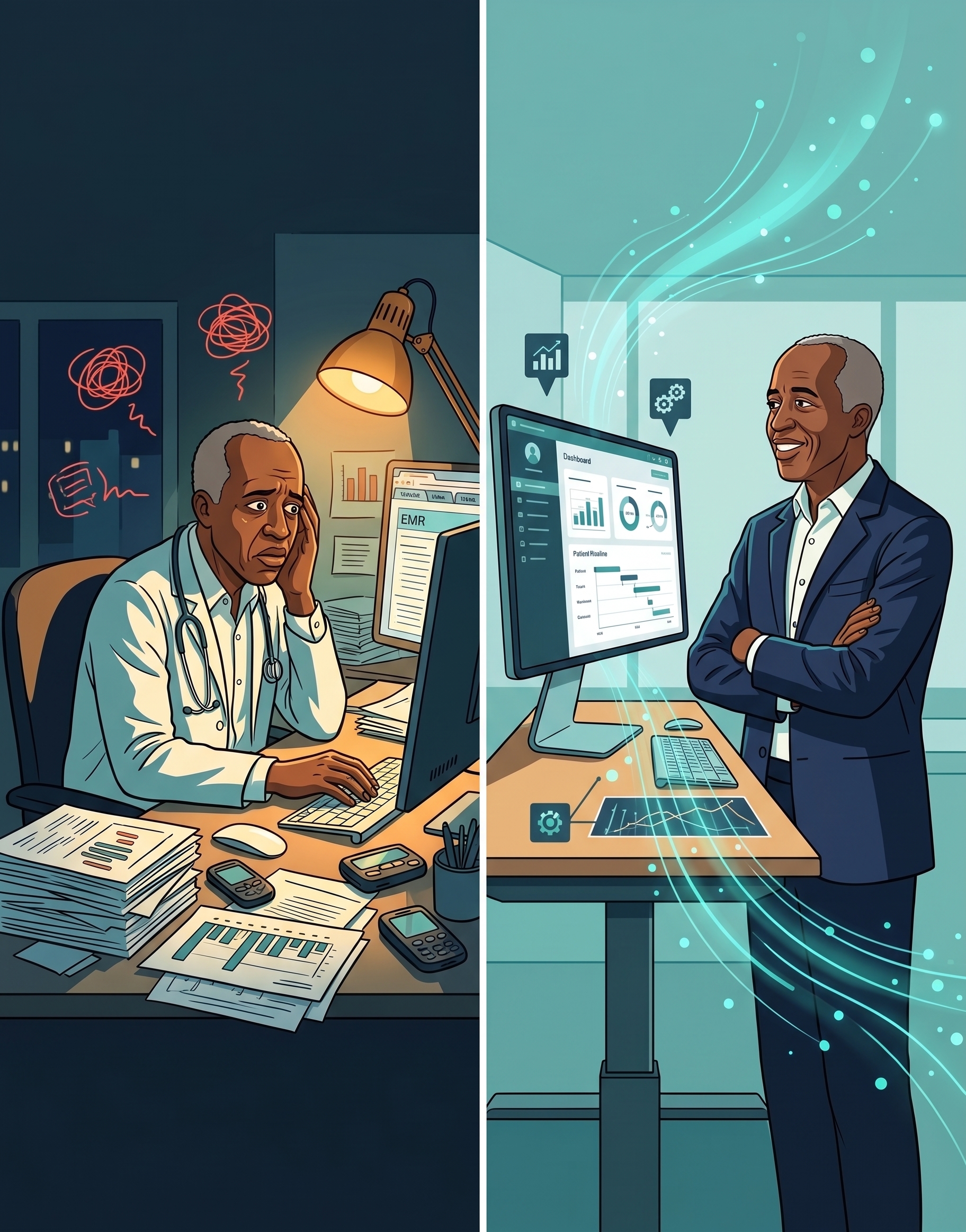
For physician-developers, burnout often comes from low-value technical friction. The answer is not more endurance. It is better delegation to systems, automation, and agents.
The MV Hondius outbreak was not only a rare infectious disease story. It exposed familiar failures in travel history, triage logic, outbreak data exchange, and emergency logistics.
Three weeks into running Hermes Agent in production, I can say this: the real value is not the model. It is the workflow ecosystem wrapped around it. Here is what 94 specialized skills looks like in a real physician-developer stack.
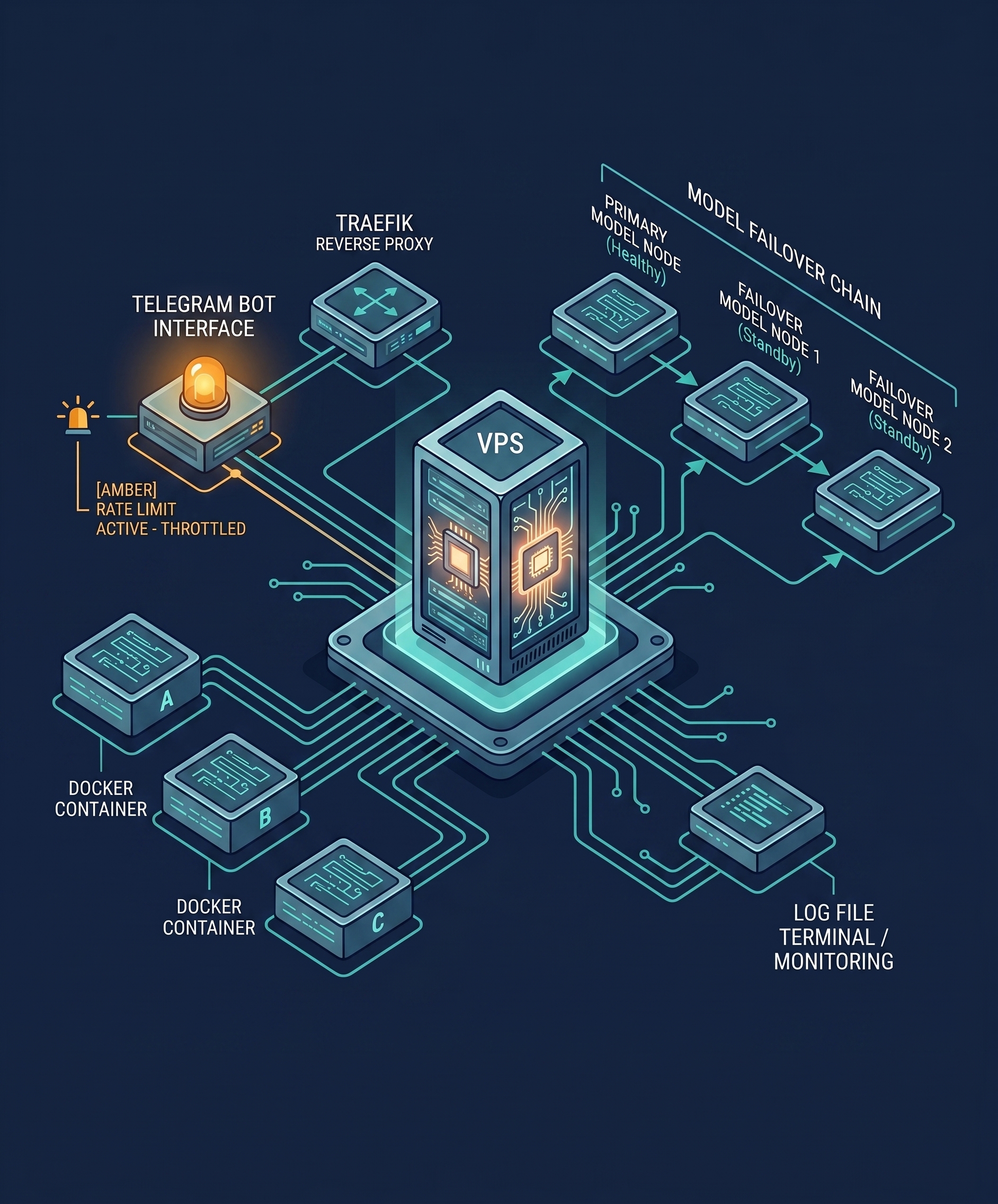
The model is not the product. The workflow is the product. Here is a technical look at the production stack behind a physician-built AI operations partner: Docker, Traefik, model failover, rate limits, logs, HIPAA boundaries, and the failure modes I watch for every week.
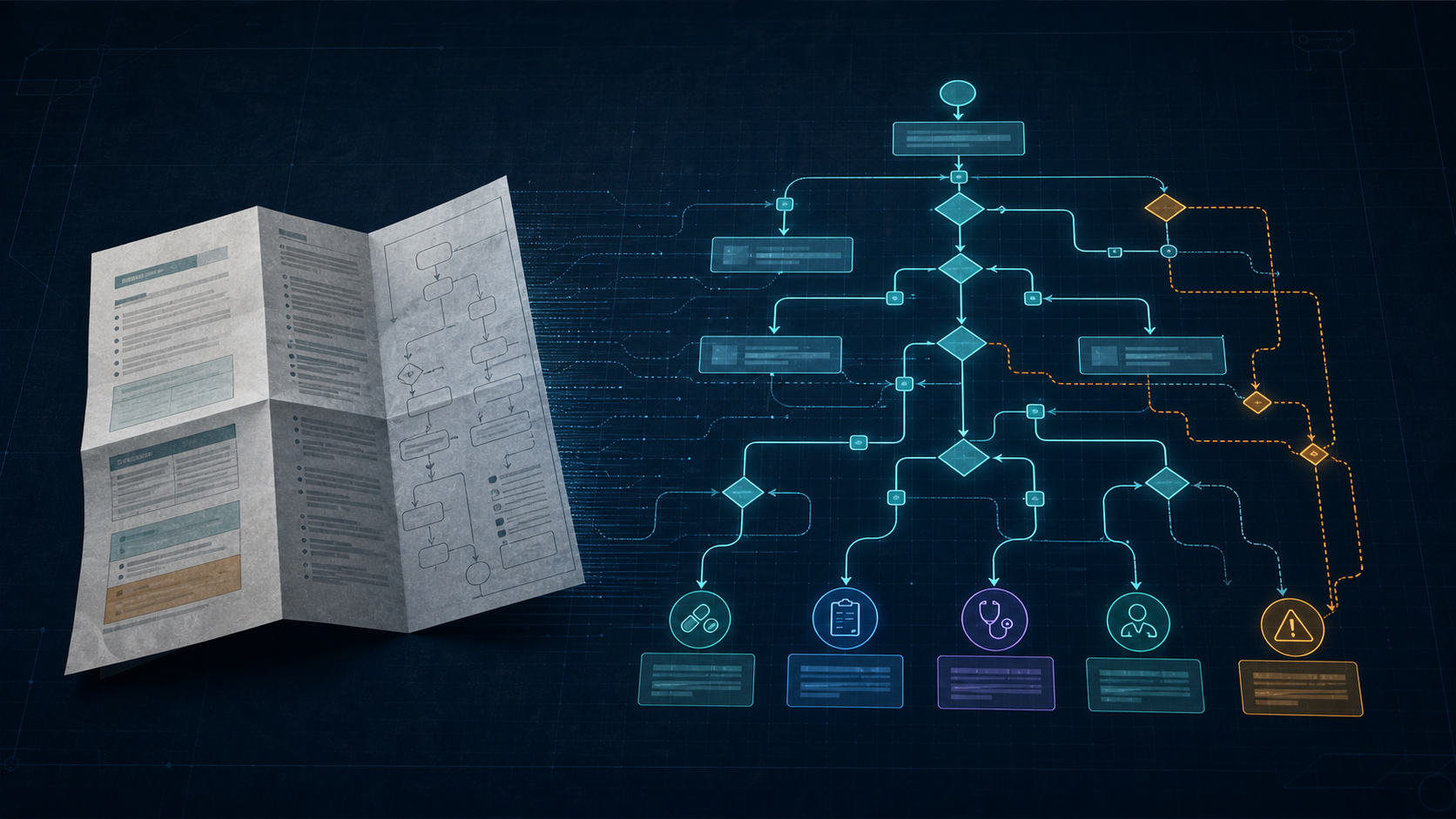
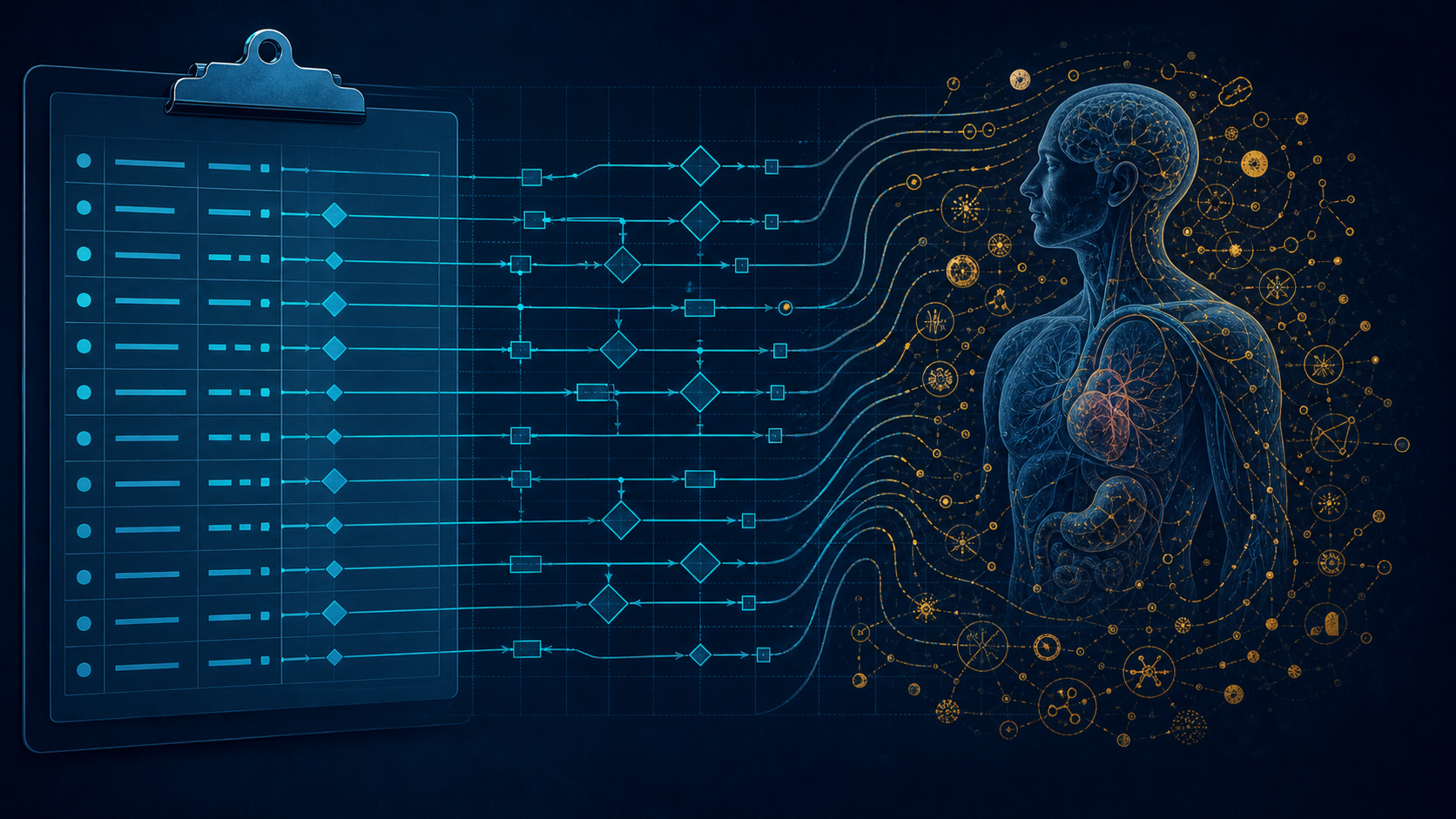
Translate a clinical protocol into explicit inputs, branches, thresholds, exceptions, and failure states before choosing a programming language.
Clinical protocols reduce avoidable variation, but software must preserve their population boundaries, exceptions, provenance, and judgment points.
Clinical evidence describes populations. Physician-developers must preserve its limits before translating it into protocol logic or software.
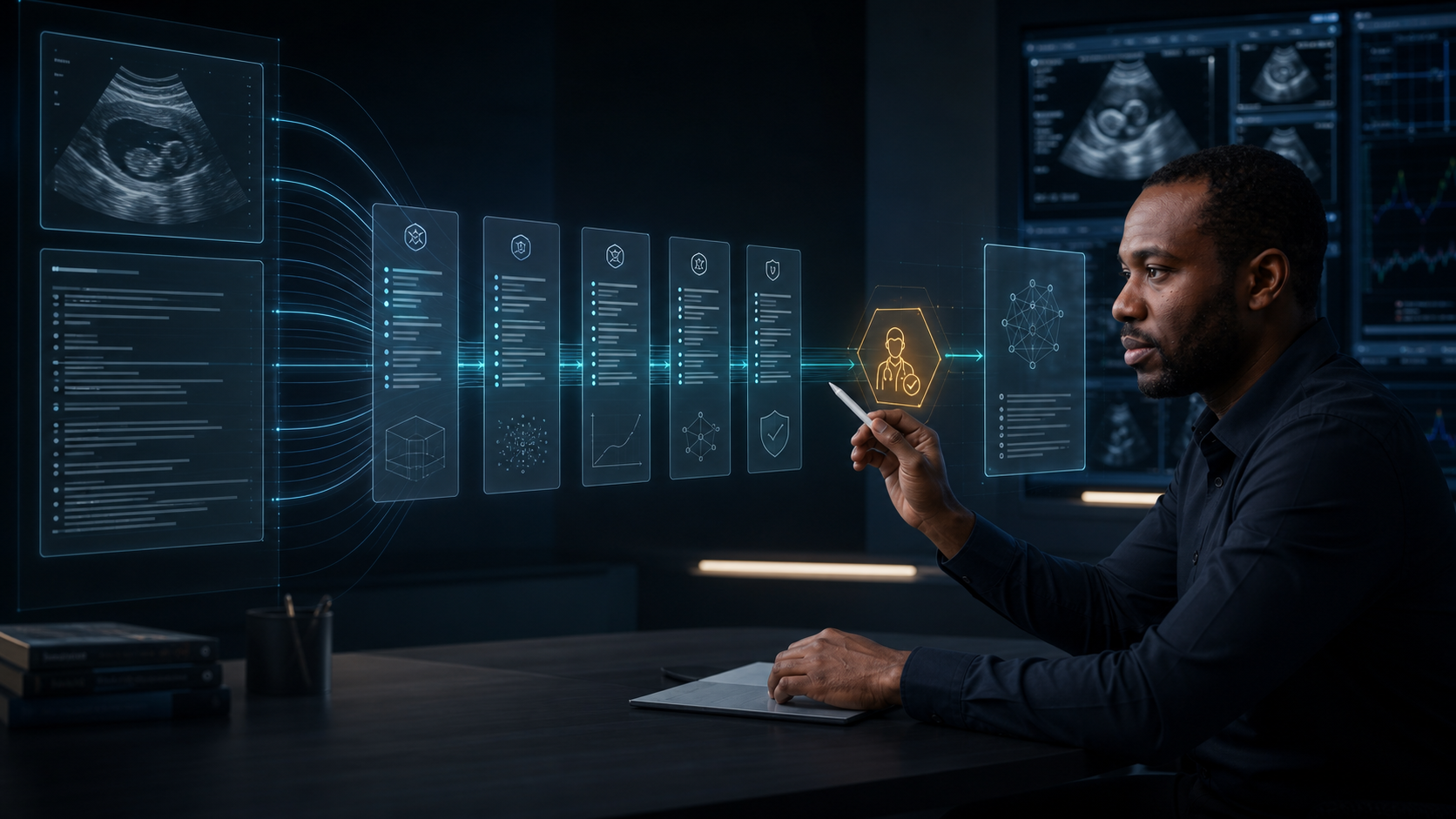
A clinical AI workflow needs more than a model and a prompt. Build the smallest system that can scope, retrieve, generate, verify, challenge, approve, execute, and audit the work.
Claude Code, Google Antigravity, OpenAI Codex, and DeepSeek Harness expose the architecture around an AI model. Physicians should compare that architecture before comparing model rankings.
Clinical prompting is not a contest for better wording. It is the work of defining sources, context, objectives, prohibitions, and evaluation before a model generates anything.
A seven-day self-audit for physicians using an approved ambient documentation system, built around three questions that matter more than words per minute.
You can learn the entire ambient documentation pipeline with a phone, a fictional patient, and a general-purpose AI assistant, before spending a dollar on a clinical platform.
Most physicians stop optimizing an ambient documentation system the moment it produces a usable note. That is the moment the real work should start.
Ambient documentation vendors will change, merge, and disappear. A ten-point evaluation framework that outlasts any single product.
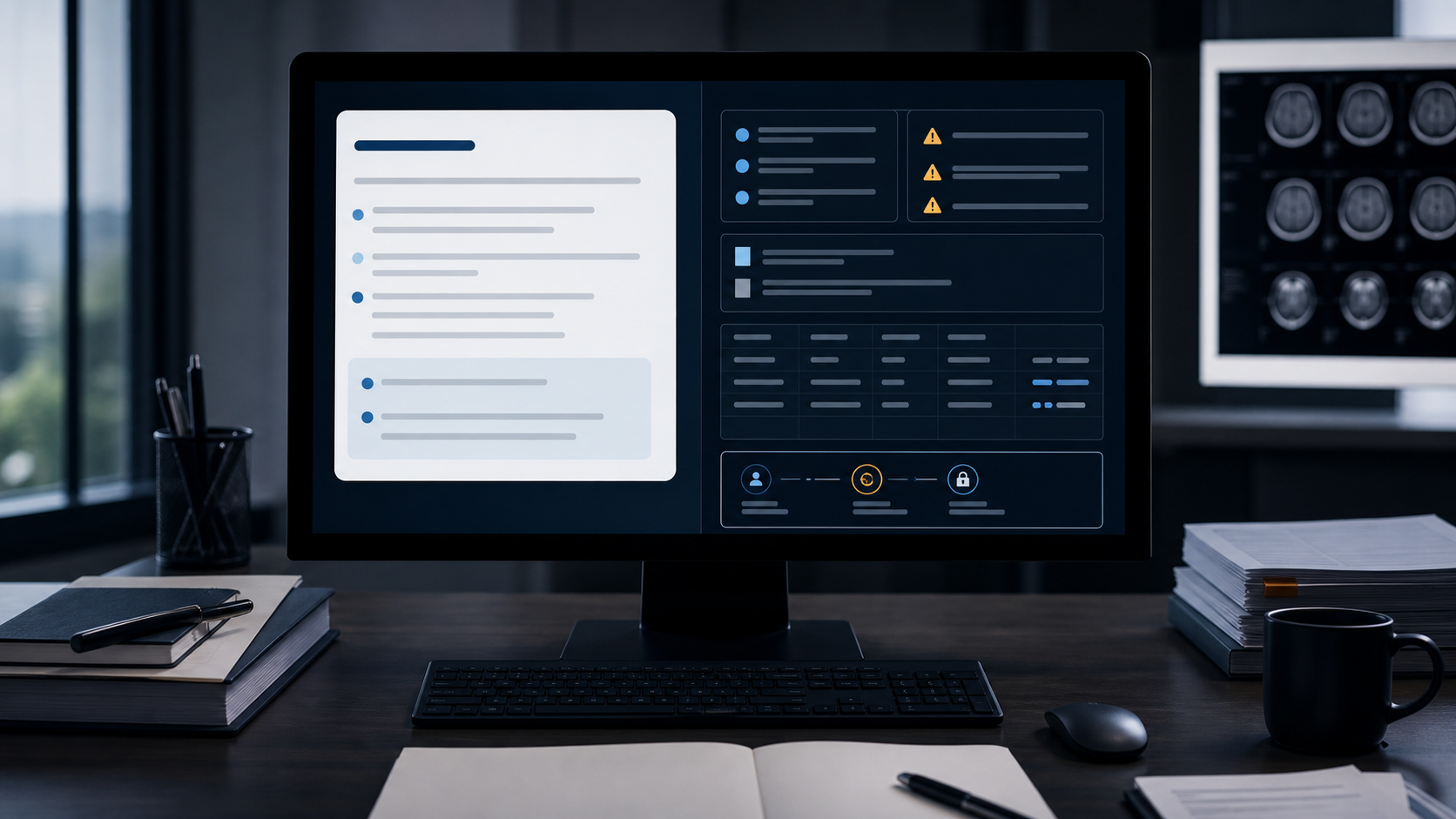
Speech recognition misses words. Language models infer things that were never said. A disciplined review habit is what separates ambient AI from a liability.
When documentation time is scarce, physicians steer patients toward answers that are easy to type. Ambient AI removes the excuse for doing that.
Pre-encounter, encounter, and post-encounter are not just note sections. They are the three places an ambient workflow can quietly go wrong.
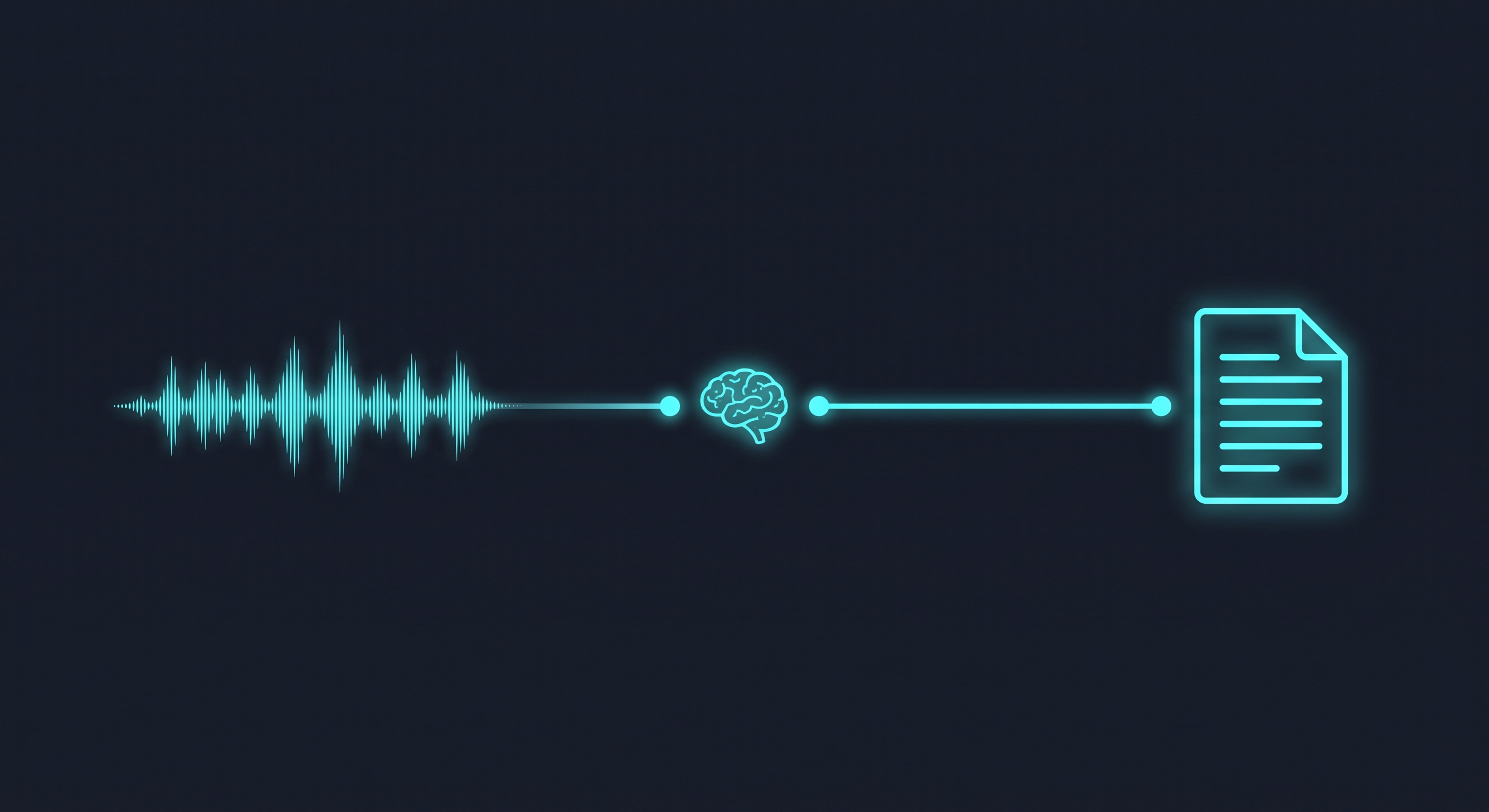
A transcript and a clinical note are not the same object. Understanding the pipeline between them is the difference between using ambient AI and trusting it blindly.
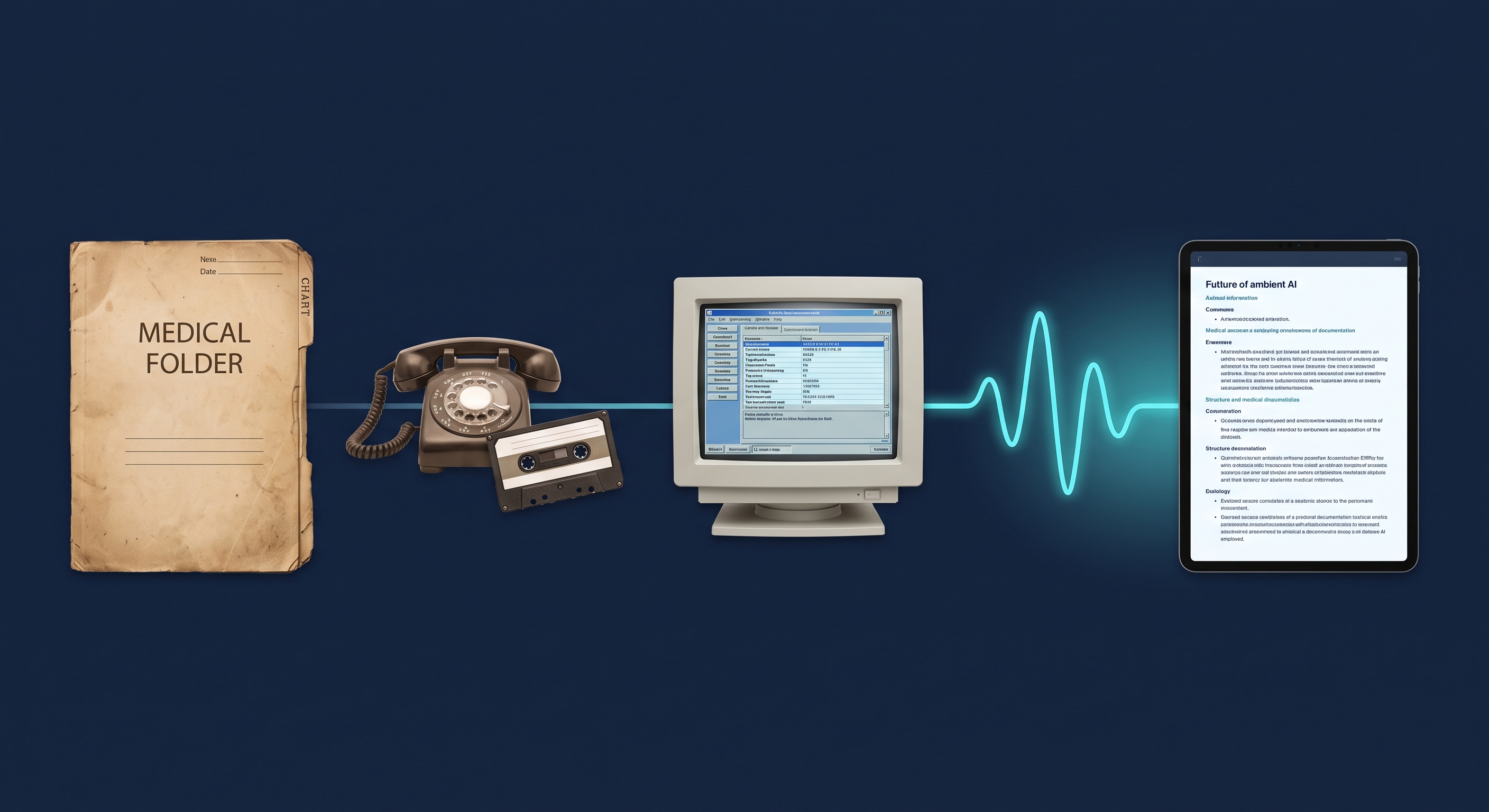
From paper charts at Harlem Hospital in 1992 to ambient AI in 2026, the tools changed four times. The physician's responsibility toward the record did not.
Ambient clinical AI is usually sold as a time-saver. The real change it offers is different: it can give the physician's attention back to the patient.
Language models can make uncertain medical information sound finished. The problem is not fluency. The problem is mistaking fluency for accountable clinical reasoning.
Medical journals are no longer only read by clinicians. They are becoming upstream inputs to AI systems. That makes provenance, evidence hierarchy, and distribution part of clinical infrastructure.
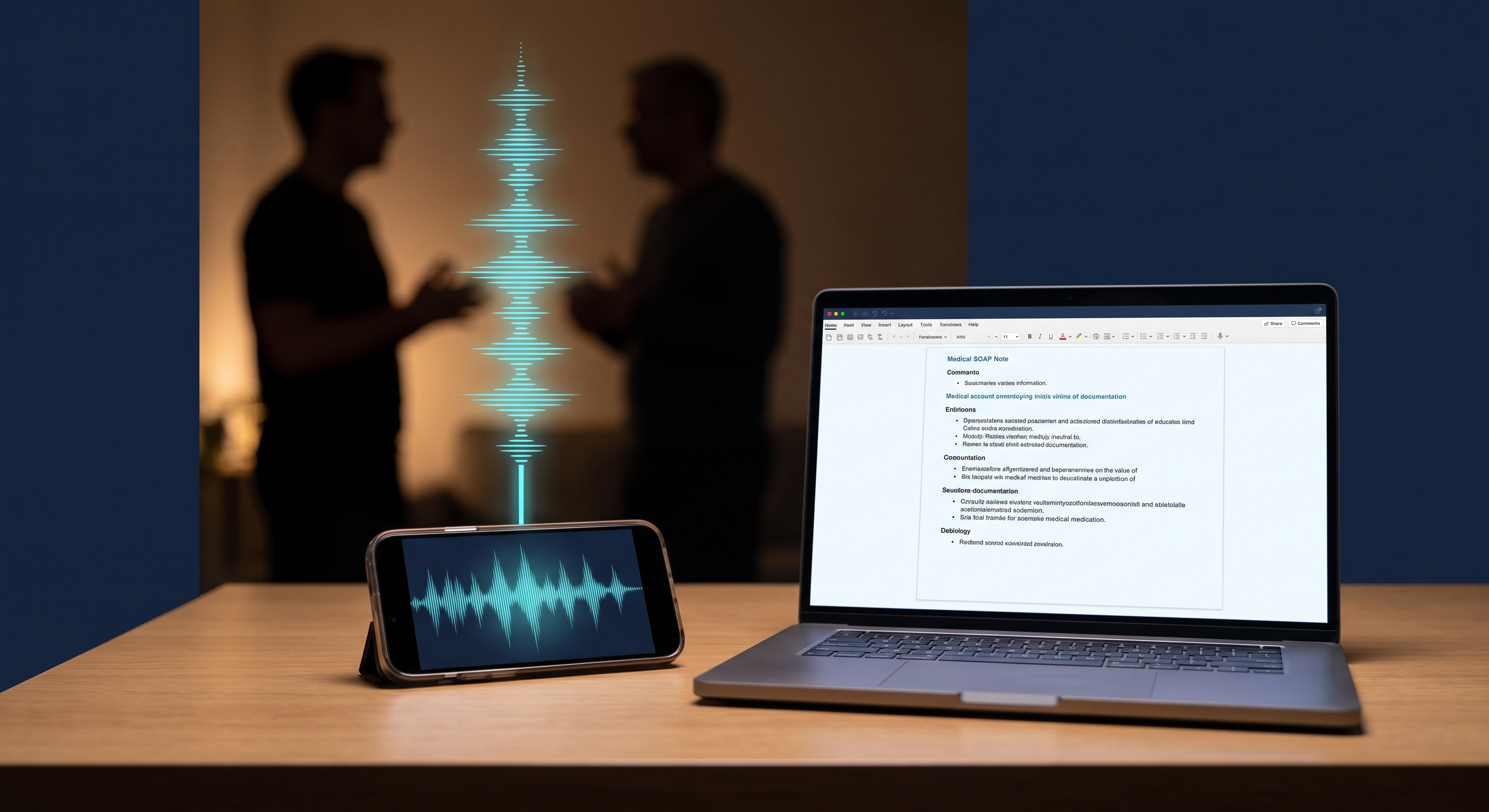
Medicine is moving from retrieval to synthesis. That changes the physician's work from finding information to judging synthesized information under clinical pressure.
Marp lets physician-builders turn reviewed knowledge into version-controlled, AI-assisted teaching decks without surrendering clinical responsibility.
For physician-builders, agentic engineering is not prompt magic. It is bounded context, vertical slices, observability, and accountability.
HealthBench Professional shows AI has already crossed the threshold in clinical writing and documentation. The real lesson is not replacement. It is that physician-developers need to build the harness.
Deep work is not a productivity hack for doctors. It is a clinical safety issue, a training issue, and a systems design issue. Physicians need to protect deep thinking and automate the shallows.
Documentation automation is not a typing solution. It is a workflow design problem. For physicians and physician-developers, the real goal is protecting clinical judgment from administrative drag.
PGIS Recipes started as a stack of Marp slide decks. I turned it into a GitHub Pages library because nutrition guidance only compounds when the delivery system is structured, durable, and easy to revisit.
Not to become programmers. To become the kind of physician who can close the gap between a clinical insight and a working solution.
A TEDx pitch says physicians should build AI. I agree. But the work that matters is governance, validation, and delivery, not one-afternoon demos.
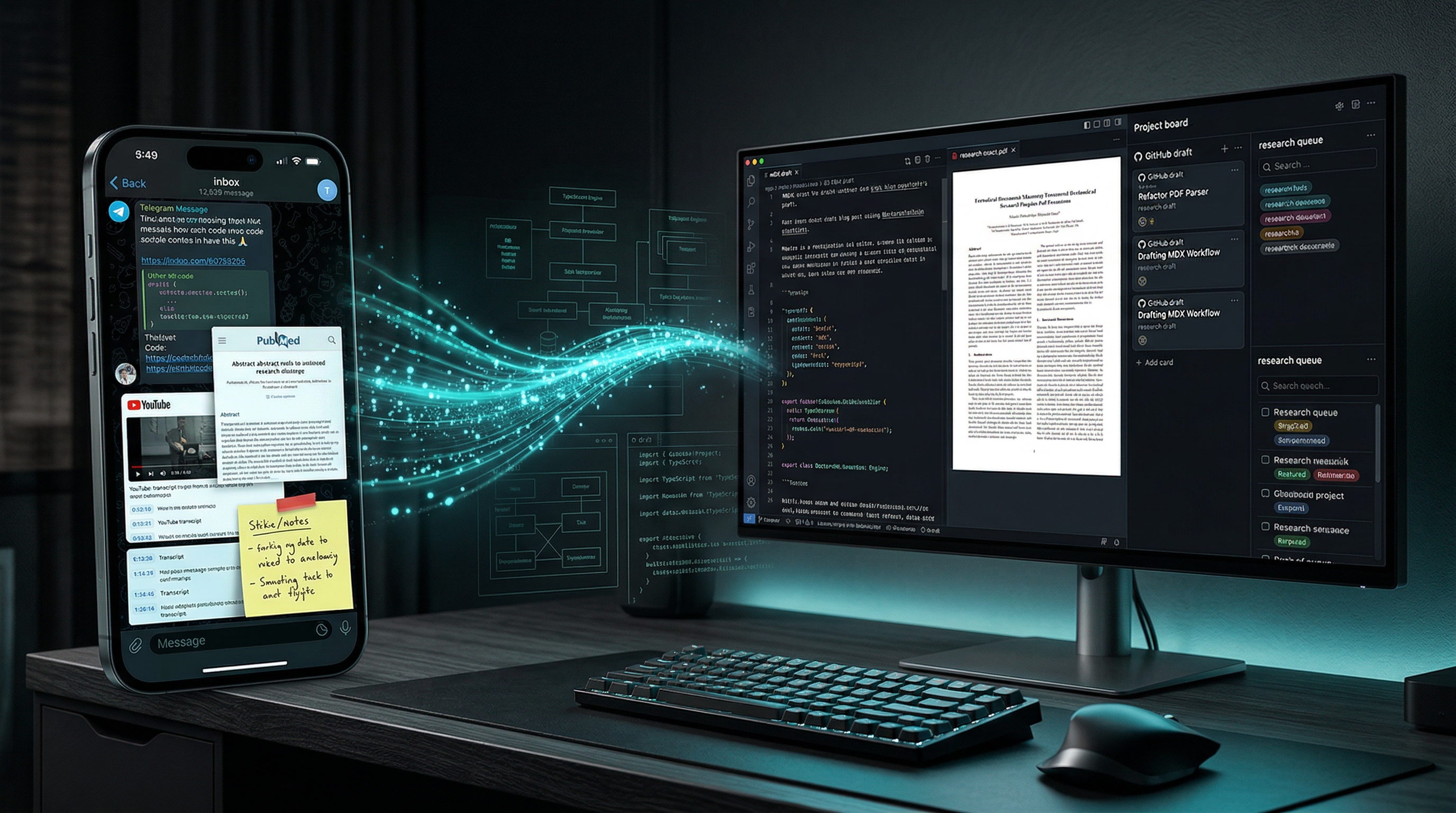
Physicians do not have an information problem. We have a conversion problem. Inside the Telegram-driven research engine I built to turn links, papers, transcripts, and videos into drafts, PDFs, and durable editorial records.
A practical path for physicians who want to move from GitHub basics to building real medical AI projects.
Race-based clinical algorithms in kidney care and obstetrics did not just reflect bias. They operationalized it. Physicians now have a responsibility to challenge the software, logic, and architecture that turn racial fiction into patient harm.
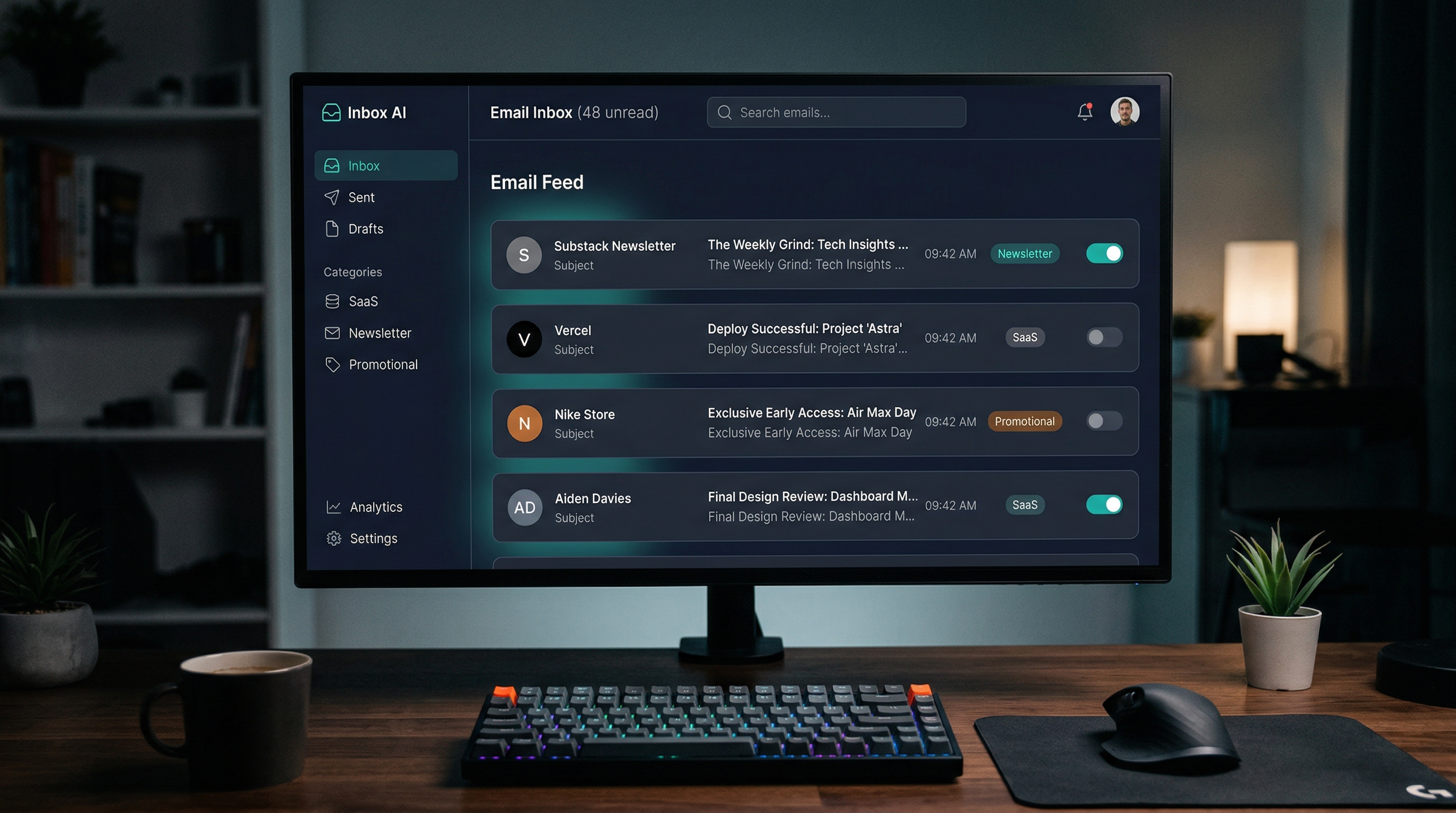
InboxDetox is an AI-powered email unsubscribe manager built in two evenings and deployed to Railway. It is on GitHub. Take it.
They are not asking it for fun. They are asking it because the triage line puts them on hold for 45 minutes. The threat is not the technology. The threat is the system that made the technology necessary.
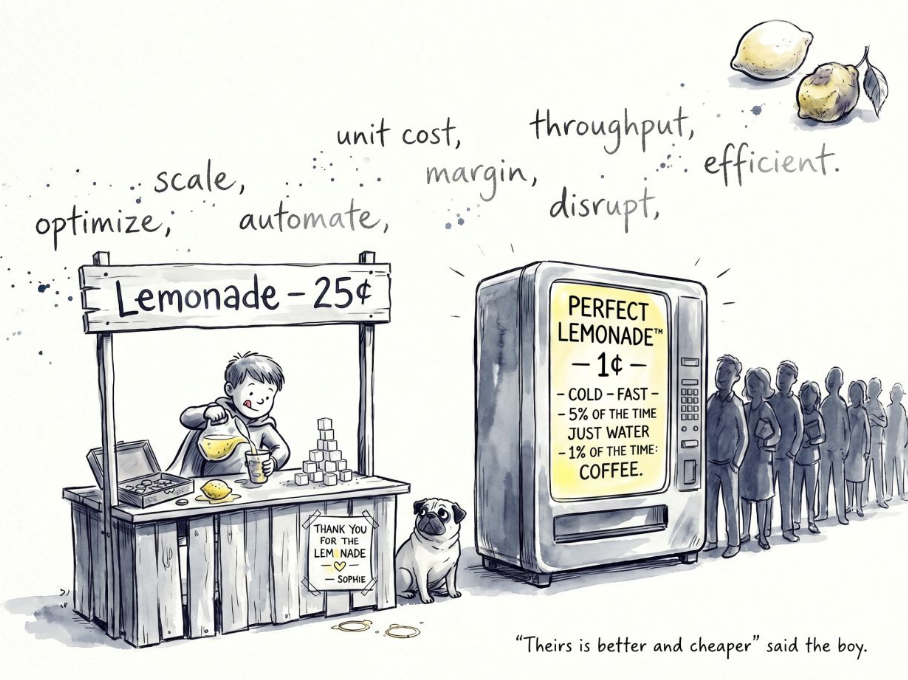
Physician passivity in health tech is not an accident. It is a business model. Understanding the structural incentives is the first step to building outside of them.
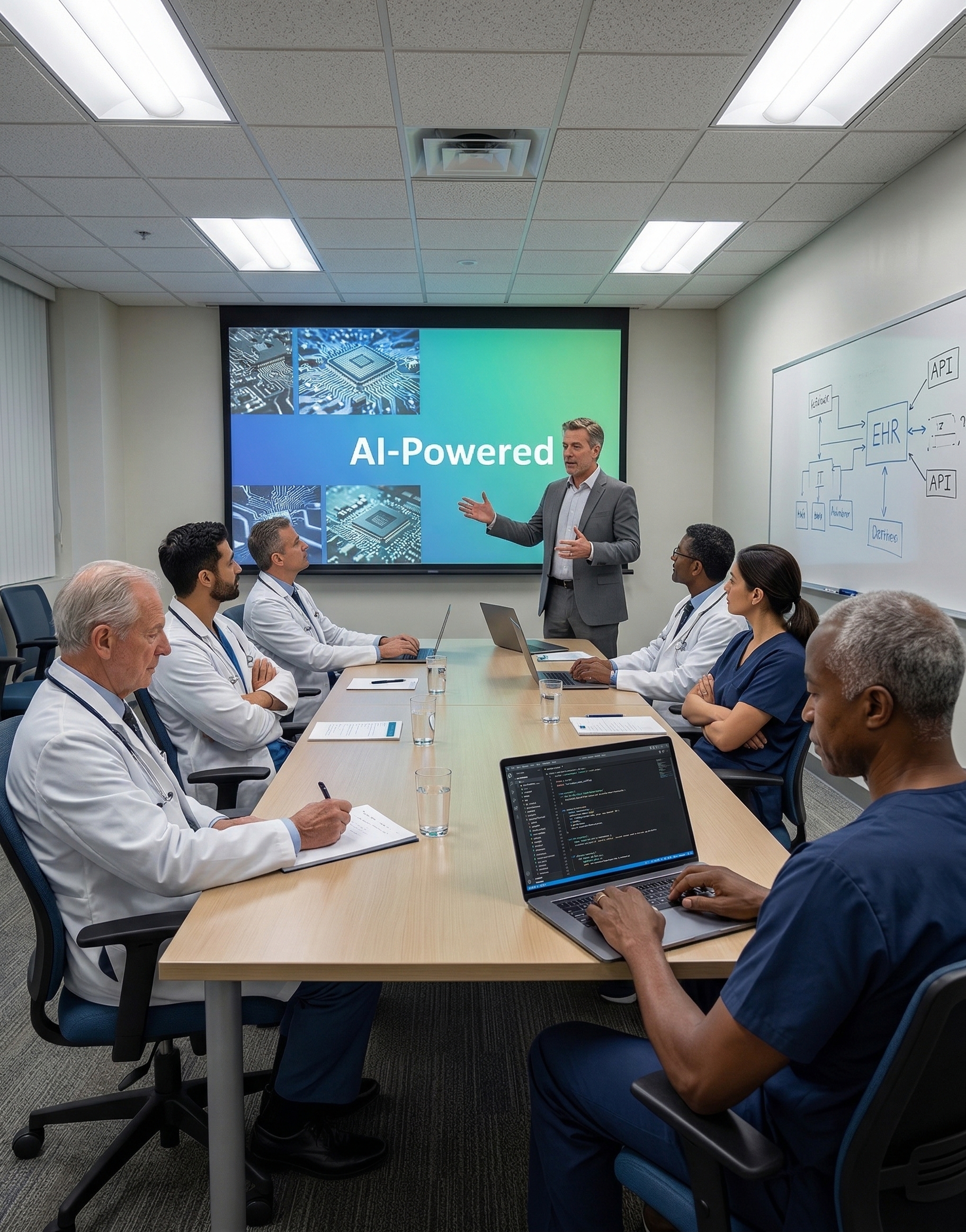
Before you build any AI feature, you must first build the log. The principle every physician-developer needs to internalize before writing a single line of intelligence code.
Every physician who codes started somewhere that had nothing to do with clinical AI. The first build is about identity formation, not impact. Here is why that distinction matters, and where to actually start.

Every physician using an AI tool has heard the liability question. Most of us answer it wrong. The real answer is not about insurance. It is about who was in the room when the tool was designed.
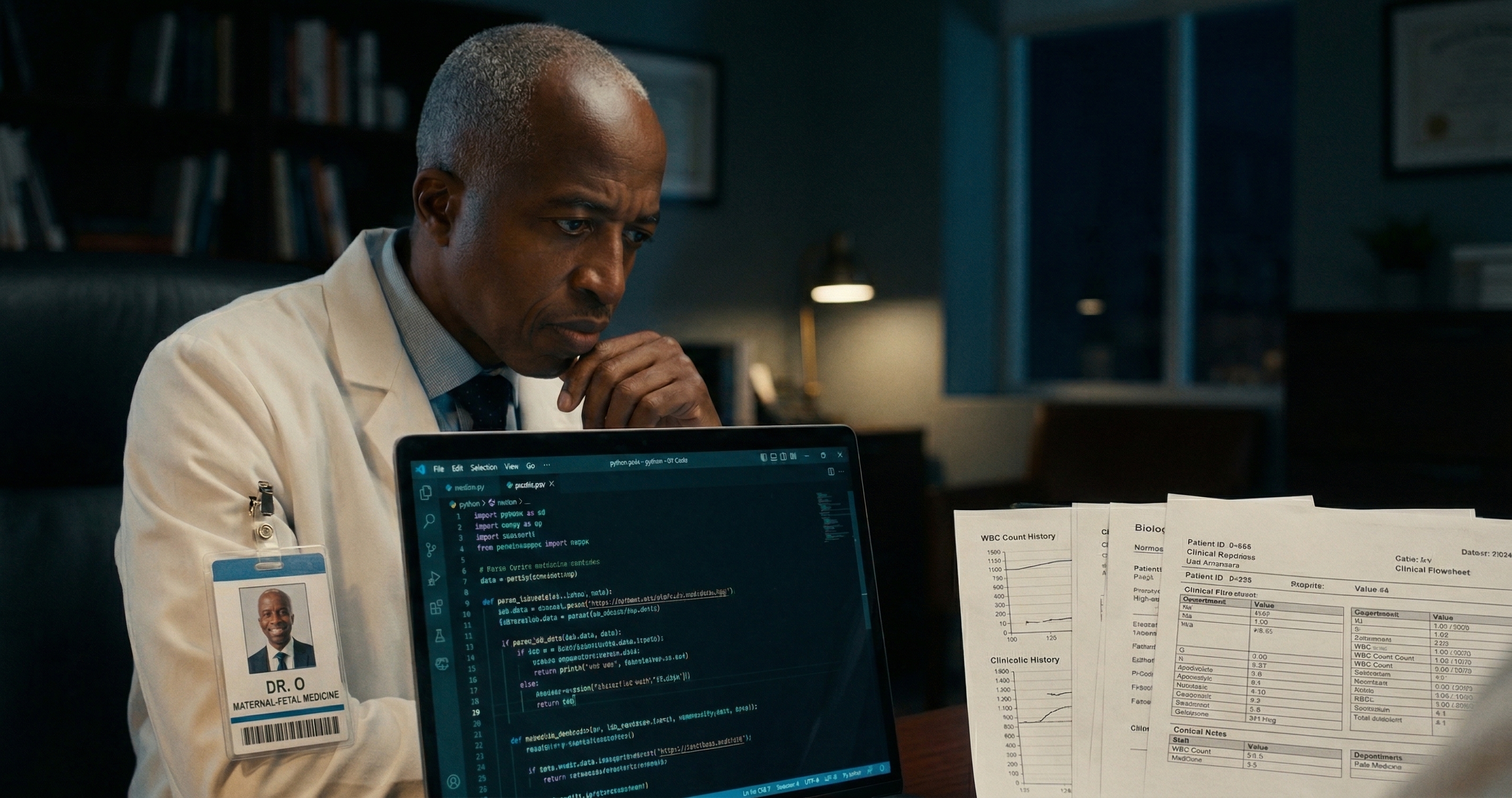
A Maternal-Fetal Medicine specialist describes how his personal AI health system identified low HRV, recommended breathing exercises, and prompted him to build a custom evidence-based breathing app in a single afternoon. A case study in disposable software, physician agency, and the future of personal health technology.
By Dr. Chukwuma Onyeije, MD, FACOG | Maternal-Fetal Medicine Specialist & Medical Director, Atlanta Perinatal Associates
It was a Tuesday evening consult. A doctor called with a patient at 31 weeks small for gestational age, elevated umbilical artery resistance, and a wo...
Maternal-Fetal Medicine Specialist | Founder, CodeCraftMD | Atlanta Perinatal Associates
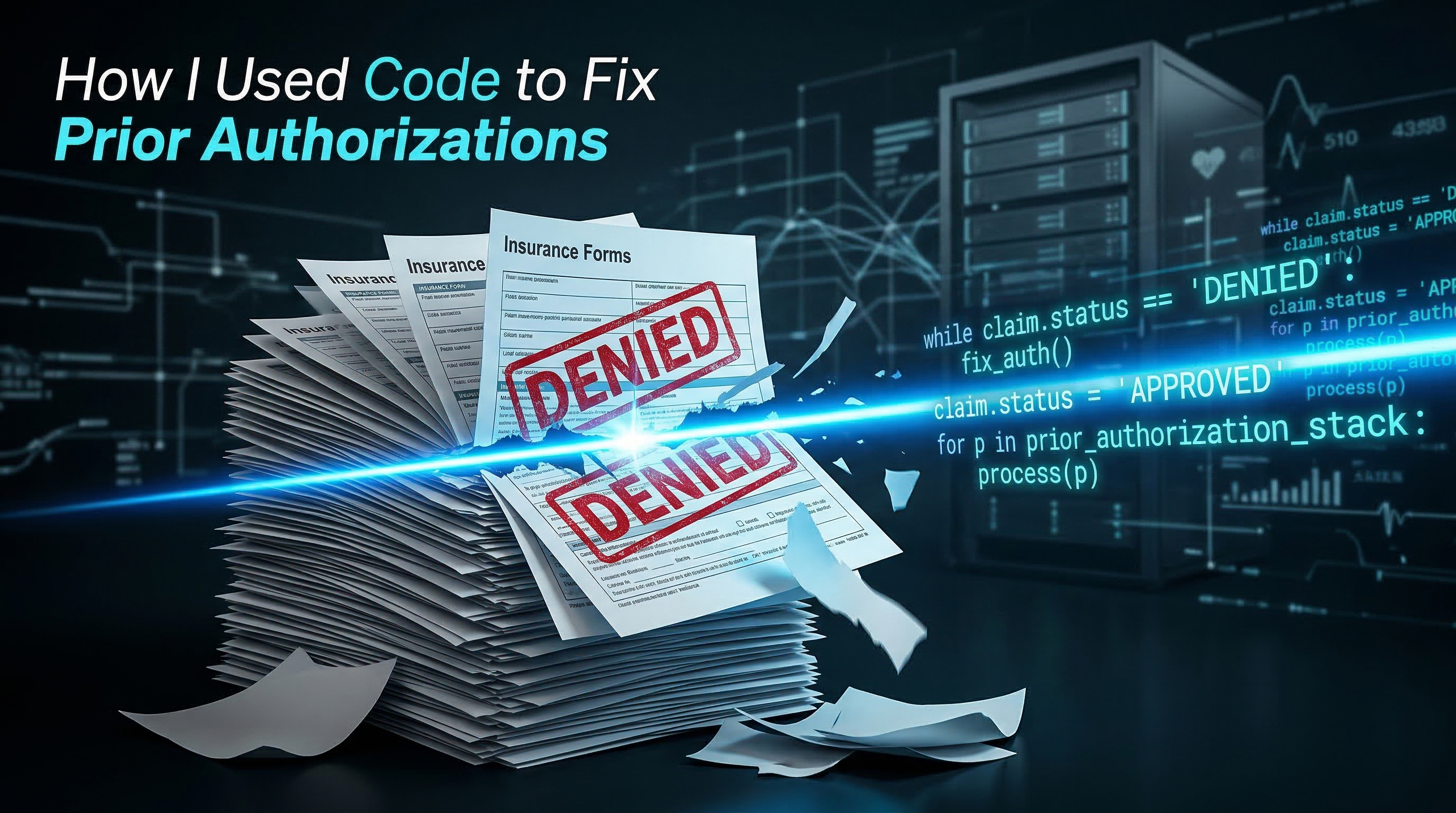
Specifically, the Prior Authorization (PA).
I've noticed something interesting in physician circles lately: there's significant hand-wringing about whether using ChatGPT or other LLMs constitutes ...
Medical Director, Atlanta Perinatal Associates | Founder, CodeCraftMD
By Dr. Chukwuma Onyeije, MD | January 19, 2026
It was 11:47 PM on a Saturday night, and I was staring at my EMR screen trying to remember whether 'threatened abortion' was O20.0 or O03.4. I had just ...
Medical Director, Atlanta Perinatal Associates | Creator of CodeCraftMD & PreEclampsiaWatch
By Dr. Chukwuma Onyeije | MaternalFetal Medicine
> Keywords: AI clinical documentation, ambient transcription, EvidenceMD, CodeCraftMD, physician automation, clinical workflow, medical billing automati...
When algorithms and clinical intuition clash, who do you trust? A physician-programmer shares the moment data pointed one wayand instinct saved a life....
> Human progress isnt the result of smarter people its the result of smarter layers.
Ive recently started reading Why Machines Learn by Anil Ananthaswamy, a book that traces the elegant mathematics behind modern artificial intelligence....
In an era where AI and automation promise to revolutionize healthcare, a 19th-century economic principle reveals a hidden risk:Jevons' Paradox. This ph...
Discover how containerization is transforming medical imaging for busy clinicians who code. Learn how Docker and Singularity can enhance reproducibility...