Ambient Documentation Is Not Transcription
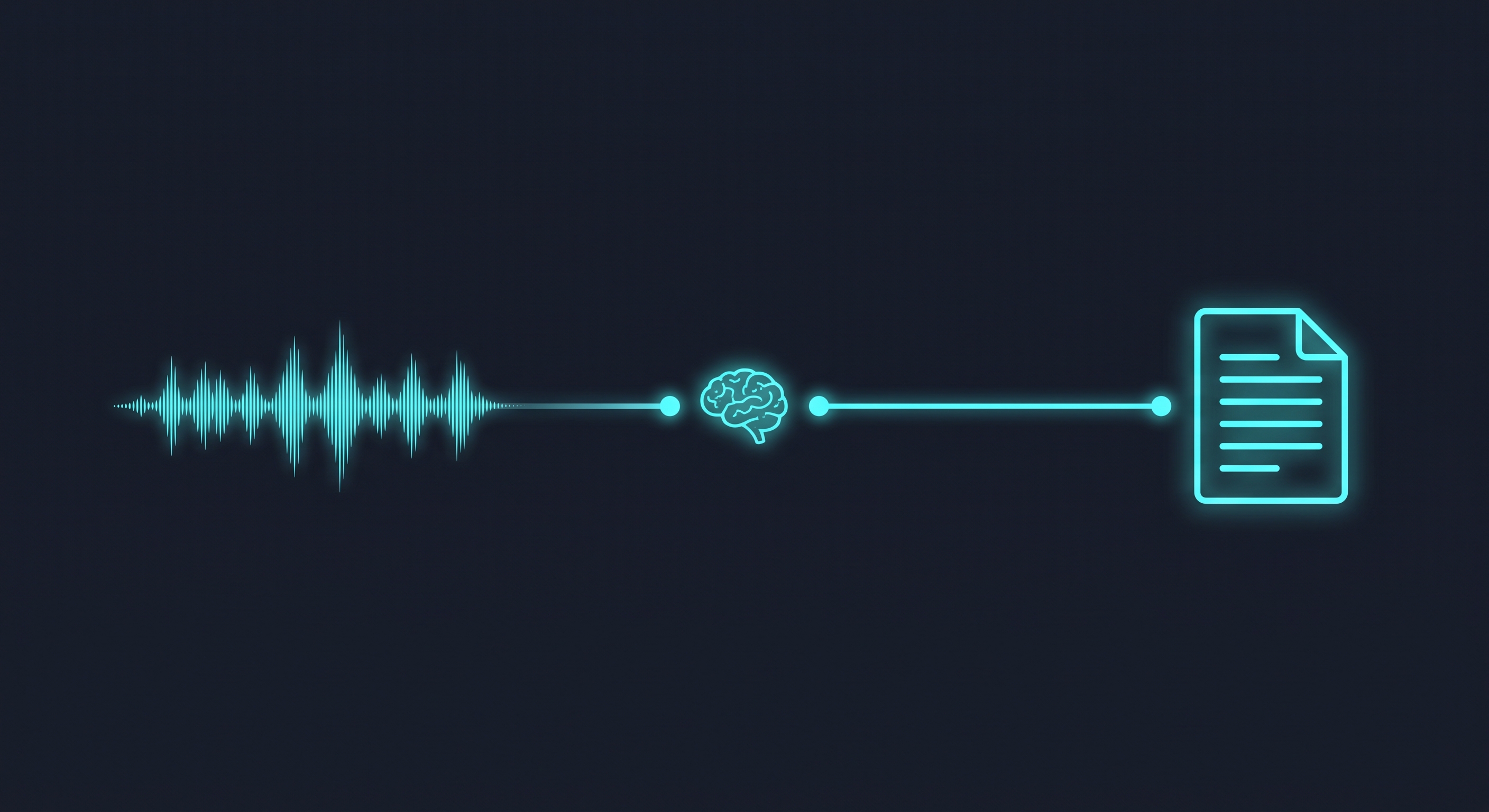
A transcript and a clinical note are not the same object. Understanding the pipeline between them is the difference between using ambient AI and trusting it blindly.
In This Lesson
Read with a defined objective.
Learning objectives
- Describe the conversation-to-record pipeline stage by stage.
- Distinguish transcription from ambient documentation.
- State why generated output is a draft, not the medical record.
Prerequisites
No prior lesson is required. Begin with the problem in front of you.
Use AI in Medicine Ambient Clinical Documentation
Listen to this post
Ambient Documentation Is Not Transcription
On this page 4 sections
Course lessons 10 lessons
In this course
Ambient Clinical DocumentationA transcriptionist in 2003 typed exactly what I said. If I mumbled a drug name, the report mumbled it back at me in text form. The system had one job: convert sound into words.
Ambient documentation in 2026 does something categorically different, and conflating the two is the fastest way to misuse it.
A Pipeline, Not a Microphone
Ambient clinical documentation is best understood as a pipeline: conversation, capture, transcription, language processing, structured draft, clinician review, medical record. A modern system may do considerably more than speech-to-text. It can distinguish speakers, identify clinically relevant concepts inside ordinary conversation, organize history into sections, generate assessment-and-plan language, and format the result according to a preferred note structure.
That last part is the one physicians underestimate. The system is not just hearing you. It is interpreting you, organizing you, and in some cases inferring things you did not explicitly say but that seem consistent with what you did say.
Where Traditional Dictation Started, and Where Ambient Starts
Traditional dictation begins with a physician deliberately dictating a report, after the encounter, in a controlled voice, for a listener whose only job is transcription.
Ambient documentation begins with the clinical conversation itself, while it is happening, in the physician’s ordinary speaking voice, directed at the patient rather than at the machine.
Cognitive Scaffolding, Not Just Recording
Ambient tools can also support the thinking that happens before the patient ever enters the room. A clinician can verbalize the reason for referral, the relevant history, and the specific questions that need answers, and have that captured and organized before the encounter starts.
That turns the system from a recorder into something closer to scaffolding for clinical thought. It is a meaningful upgrade from dictation, and it is also exactly why the output deserves more scrutiny than a transcript ever did. A transcript can only be wrong about what was said. A generated draft can be wrong about what was meant.
The Boundary That Does Not Move
The generated output is not automatically the medical record. It is a draft that requires professional review, every time, without exception, regardless of how good the platform’s marketing sounds.
That boundary is the entire reason this course exists as a workflow course rather than a product tutorial. The pipeline will keep improving. The boundary between draft and record belongs to the clinician, and it should stay there.
Look at your current workflow and find the exact point where a transcript stops being raw material and becomes something you are willing to sign. If you cannot locate that point precisely, that is the first thing to fix.
Related articles
The One-Week Ambient Challenge
A seven-day self-audit for physicians using an approved ambient documentation system, built around three questions that matter more than words per minute.
Build an Ambient Documentation Lab Before You Buy One
You can learn the entire ambient documentation pipeline with a phone, a fictional patient, and a general-purpose AI assistant, before spending a dollar on a clinical platform.
Your First Ambient Note Is Not Your Final Workflow
Most physicians stop optimizing an ambient documentation system the moment it produces a usable note. That is the moment the real work should start.
Maternal-Fetal Medicine Specialist