Build an Ambient Documentation Lab Before You Buy One
You can learn the entire ambient documentation pipeline with a phone, a fictional patient, and a general-purpose AI assistant, before spending a dollar on a clinical platform.
In This Lesson
Read with a defined objective.
Learning objectives
- Run a five-minute mock ambient documentation experiment using only fictional patient data.
- Write a prompt that constrains a general-purpose model to the transcript's actual content.
- Evaluate a generated note for accuracy, omissions, and invented content.
Prerequisites
- What ambient clinical documentation is (Lesson 3).
Use AI in Medicine Ambient Clinical Documentation
Listen to this post
Build an Ambient Documentation Lab Before You Buy One
On this page 3 sections
Course lessons 10 lessons
In this course
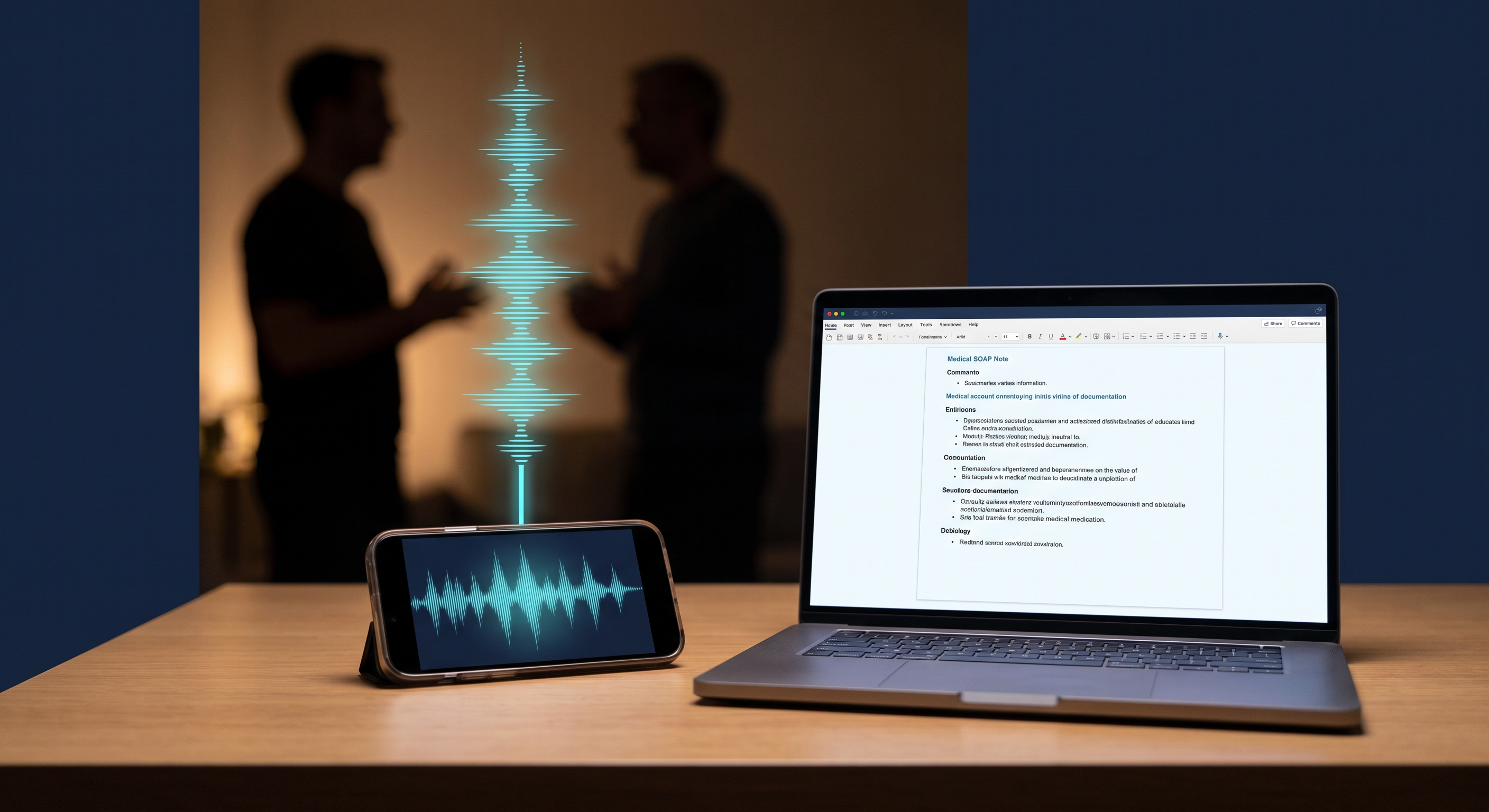
Ambient Clinical DocumentationYou do not need a clinical ambient platform, an IT approval process, or a signed contract to learn how this technology actually behaves. You need five minutes, a phone, and someone willing to pretend to be a patient.
I built my own version of this lab before I trusted any commercial platform with a real encounter. It is the single fastest way to understand what these systems do well and where they quietly fail.
The Five-Minute Experiment
Use a fictional patient only. Ask a colleague, a friend, or a family member to play the part. Invent a simple mock clinical scenario. Record a five-minute interview using an ordinary phone recording or transcription feature. Save the transcript.
Paste the fictional transcript into a general-purpose language model and ask it to produce a SOAP note or a history and physical. Then compare the generated note against what actually happened in the conversation. Mark every omission, every incorrect inference, every unnecessary statement, and every formatting problem you find. Revise your instructions and run it again.
A Prompt Worth Starting With
For a fictional case, try something close to this instruction: convert this mock clinical interview into a structured SOAP note, do not invent facts, if information is absent either omit it or identify it as not provided, and separate the patient’s reported history clearly from the clinical assessment.
Watch what the model does with that instruction. It will usually organize information well. It will sometimes smooth over a gap in the story with something plausible sounding that nobody actually said. That gap between plausible and true is the entire reason this lab exists.
What to Actually Measure
Look past whether the note reads well. Measure accuracy, organization, missing facts, invented facts, how long the editing takes, whether the assessment and plan are actually useful, and whether the patient’s own story survives the transformation into clinical prose.
Run this exercise once, honestly, and you will know more about how a language model handles a clinical conversation than most physicians who have already adopted a commercial platform without ever checking its failure modes directly.
What did the model do surprisingly well in your test, and what required your clinical judgment to catch? Write both answers down before you run the next version of the experiment.
Related articles
The One-Week Ambient Challenge
A seven-day self-audit for physicians using an approved ambient documentation system, built around three questions that matter more than words per minute.
Your First Ambient Note Is Not Your Final Workflow
Most physicians stop optimizing an ambient documentation system the moment it produces a usable note. That is the moment the real work should start.
Teach the Tech, Not the Vendor
Ambient documentation vendors will change, merge, and disappear. A ten-point evaluation framework that outlasts any single product.
Maternal-Fetal Medicine Specialist