Teach the Tech, Not the Vendor
Ambient documentation vendors will change, merge, and disappear. A ten-point evaluation framework that outlasts any single product.
In This Lesson
Read with a defined objective.
Learning objectives
- Apply a ten-point, vendor-neutral evaluation framework to any ambient platform.
- Distinguish a current workflow snapshot from a permanent product endorsement.
- State the portability test for a documentation workflow.
Prerequisites
No prior lesson is required. Begin with the problem in front of you.
Use AI in Medicine Ambient Clinical Documentation
Listen to this post
Teach the Tech, Not the Vendor
On this page 3 sections
Course lessons 10 lessons
In this course
Ambient Clinical DocumentationI get asked, often, which ambient documentation platform I recommend. I understand why the question gets asked that way. I think it is the wrong question, and answering it directly would do the reader a disservice.
Vendors will change. Features will converge. Pricing will change. EMR integrations will evolve. The product I prefer today may not be the product I prefer next year, and it is very unlikely to be the product a resident should prefer five years from now. The durable skill is not learning one interface. The durable skill is learning how ambient documentation fits into clinical work, in a way that survives the interface changing underneath it.
A Vendor-Neutral Evaluation Framework
Evaluate any ambient system against these ten criteria, in this order of consequence.
Clinical accuracy. Does the draft faithfully represent the encounter, not an approximation of it?
Editing burden. How much work is required before the note is actually usable?
Workflow friction. How many steps are required before, during, and after the encounter?
Customization. Can the note structure and instructions match your specialty and your own style, or does every note sound like the vendor’s default voice?
Integration. How does the output actually reach the clinical record, and how many hands does it pass through to get there?
Privacy and governance. Is the system appropriate for the intended clinical use and your organization’s requirements, not just generally reputable?
Reliability. What happens when connectivity, recording, or processing fails mid-encounter?
Portability. Can your workflow survive if you change vendors, or have you quietly built your entire documentation habit around one company’s specific behavior?
Cost. Does the benefit actually justify the expense, measured honestly?
Patient experience. Does it help you become more present, or does it just move the friction somewhere the patient cannot see?
A Living Section: What I Use Now
I currently use Heidi for clinical ambient documentation and Fieldy for appropriate non-clinical conversation capture. I am naming them because specificity is more useful than vague reassurance, and because this course would be worse if I pretended to have no opinion.
Treat that sentence as a dated workflow snapshot, not an endorsement with any shelf life. If a better tool exists by the time you read this, use the better tool. The framework above is what should decide that, not the name I just wrote down.
Portability Is the Real Test
The clearest sign that you have learned the tech and not the vendor is whether you can describe your entire documentation workflow out loud without naming a product. If you cannot, your templates and habits are probably locked to a specific interface, and you will pay for that the day you have to switch.
Name the one specific improvement that would make you leave your current documentation tool for another one. If you cannot name it, you have not actually evaluated your current tool. You have just gotten used to it.
Related articles

The One-Week Ambient Challenge
A seven-day self-audit for physicians using an approved ambient documentation system, built around three questions that matter more than words per minute.
Build an Ambient Documentation Lab Before You Buy One
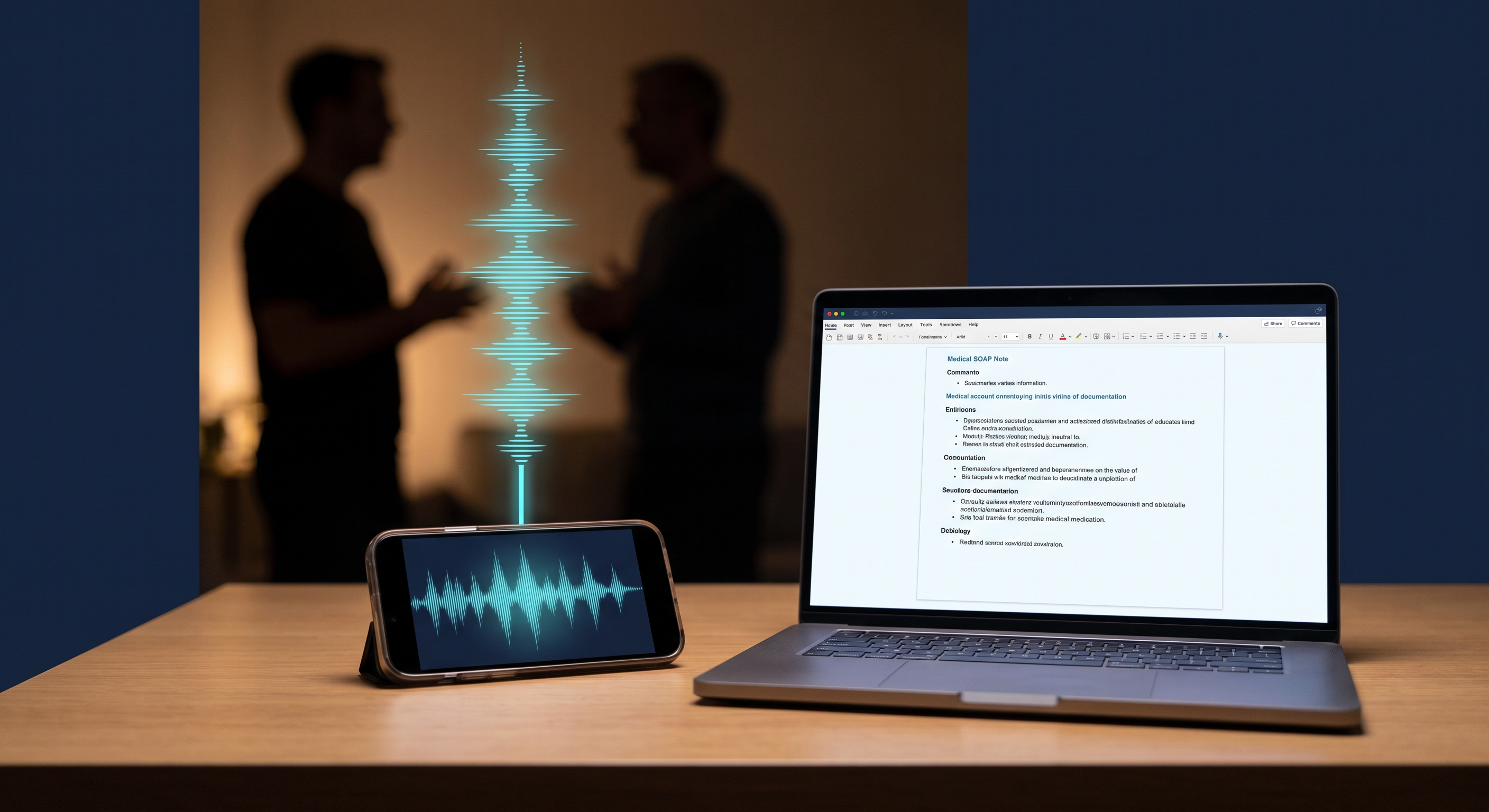
You can learn the entire ambient documentation pipeline with a phone, a fictional patient, and a general-purpose AI assistant, before spending a dollar on a clinical platform.
Your First Ambient Note Is Not Your Final Workflow
Most physicians stop optimizing an ambient documentation system the moment it produces a usable note. That is the moment the real work should start.

Maternal-Fetal Medicine Specialist