Ambient Documentation Was Never About Speed
Ambient clinical AI is usually sold as a time-saver. The real change it offers is different: it can give the physician's attention back to the patient.
In This Lesson
Read with a defined objective.
Learning objectives
- Distinguish documentation speed from documentation attention.
- Explain why the computer can function as a third participant in the exam room.
- Estimate your own current documentation burden as a baseline.
Prerequisites
No prior lesson is required. Begin with the problem in front of you.
Use AI in Medicine Ambient Clinical Documentation
Listen to this post
Ambient Documentation Was Never About Speed
On this page 4 sections
Course lessons 10 lessons
In this course
Ambient Clinical DocumentationA patient was still gathering her coat when I opened the laptop to start the note. She was still in the room. I had already stopped looking at her.
That habit did not start with ambient AI. It started long before it, with every system that asked me to document while the patient was still present. Ambient documentation is usually introduced as a way to fix that habit by making documentation faster. That framing undersells what is actually at stake.
The Problem Was Never Speed
Clinical documentation has always competed with the physician’s attention. Paper charts competed for it. Templates competed for it. The EMR competed for it, click by click. Each new tool promised to save time, and some of them did. None of them solved the deeper problem, which is that the record and the encounter were fighting for the same finite resource: my attention, in the room, in real time.
Ambient documentation is the first tool I have used that treats this as the actual problem. Instead of asking me to type while a patient speaks, it listens to the clinical conversation and produces a draft afterward. The time saved is real. It is also not the point.
The Third Participant in the Room
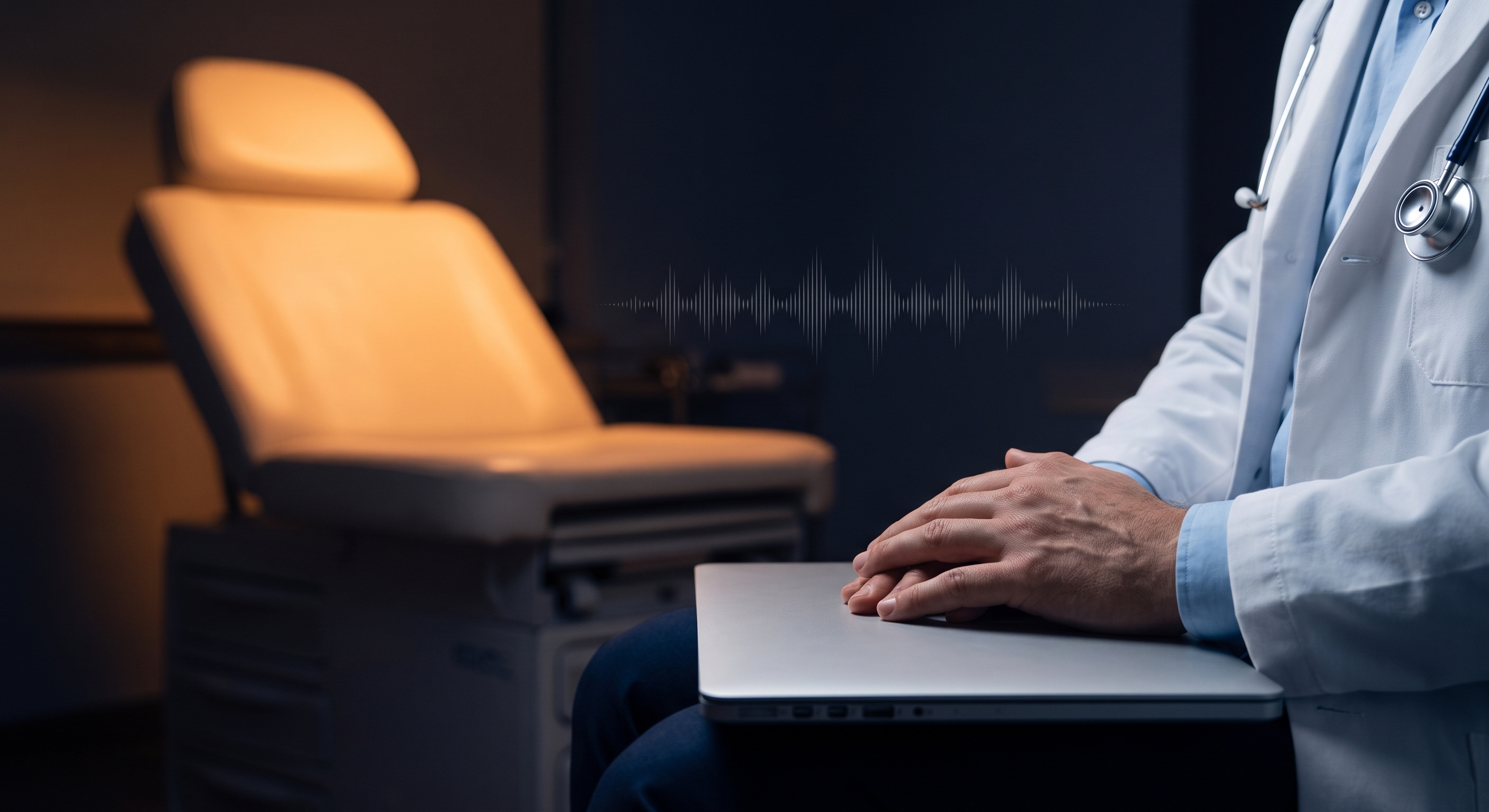
For years, the computer has effectively been a third participant in the exam room. It did not speak, but it shaped the conversation. It decided when I looked up and when I looked down. It decided which of the patient’s sentences got a follow-up question and which got compressed into a checkbox.
A system that listens instead of demanding input removes that third participant, or at least moves it out of the physician’s direct line of sight. That is a different kind of tool than a faster typist. It is closer to a colleague who takes notes so the two of you can actually talk.
What Ambient AI Is Not
Ambient AI is a documentation assistant. It is not a clinical decision-maker, and it does not become one by getting faster or more fluent. The distinction matters because the vendors selling these systems are moving quickly, features are converging, and it is easy to mistake a well-organized draft for a clinical judgment that has already been made. It has not been made. A draft is a draft until a clinician reads it and decides it is correct.
It is also worth naming plainly that ambient capability is becoming a baseline feature of clinical software rather than a novelty. That shift means the real skill to build is not familiarity with one company’s interface. The real skill is understanding the workflow well enough that it survives the next vendor, the next acquisition, and the next feature release.
An Honest Starting Point
Before adopting any ambient workflow, estimate how much time you actually spend documenting during and after a typical clinical session. Most physicians underestimate it. Write the number down. You will want it later, not to prove that ambient AI saved you minutes, but to notice whether you spent those minutes differently.
That is the real experiment this course is built around. Not whether the note gets written faster. Whether you get the patient back.
If documentation required less of your manual attention, decide now what you would do with the time you got back. If the answer is “more clicks somewhere else,” the tool has not helped you. If the answer is “listen longer before I speak,” it has.
Related articles

The One-Week Ambient Challenge
A seven-day self-audit for physicians using an approved ambient documentation system, built around three questions that matter more than words per minute.
Build an Ambient Documentation Lab Before You Buy One
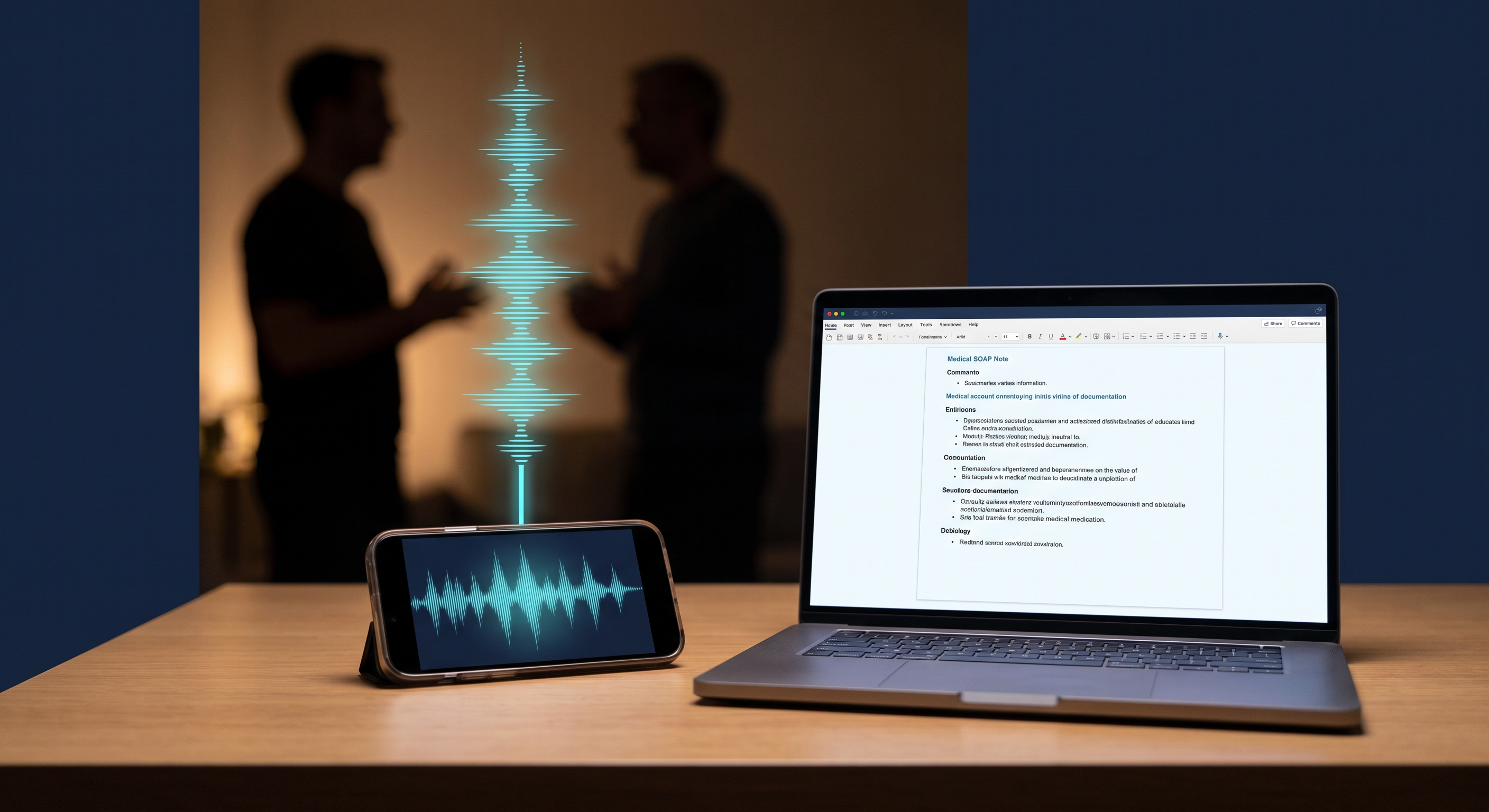
You can learn the entire ambient documentation pipeline with a phone, a fictional patient, and a general-purpose AI assistant, before spending a dollar on a clinical platform.
Your First Ambient Note Is Not Your Final Workflow
Most physicians stop optimizing an ambient documentation system the moment it produces a usable note. That is the moment the real work should start.

Maternal-Fetal Medicine Specialist