I Built InboxDetox in Two Evenings — This Is What Disposable Software Looks Like
InboxDetox is an AI-powered email unsubscribe manager built in two evenings and deployed to Railway. It is on GitHub. Take it.
Listen to this post
I Built InboxDetox in Two Evenings — This Is What Disposable Software Looks Like
On this page 7 sections
On the evening of March 24, I opened my Gmail inbox, saw 1,137 subscription emails sitting in the scan queue, and decided I was done managing them by hand.
By the end of the next evening, InboxDetox was running on Railway.
What InboxDetox Does
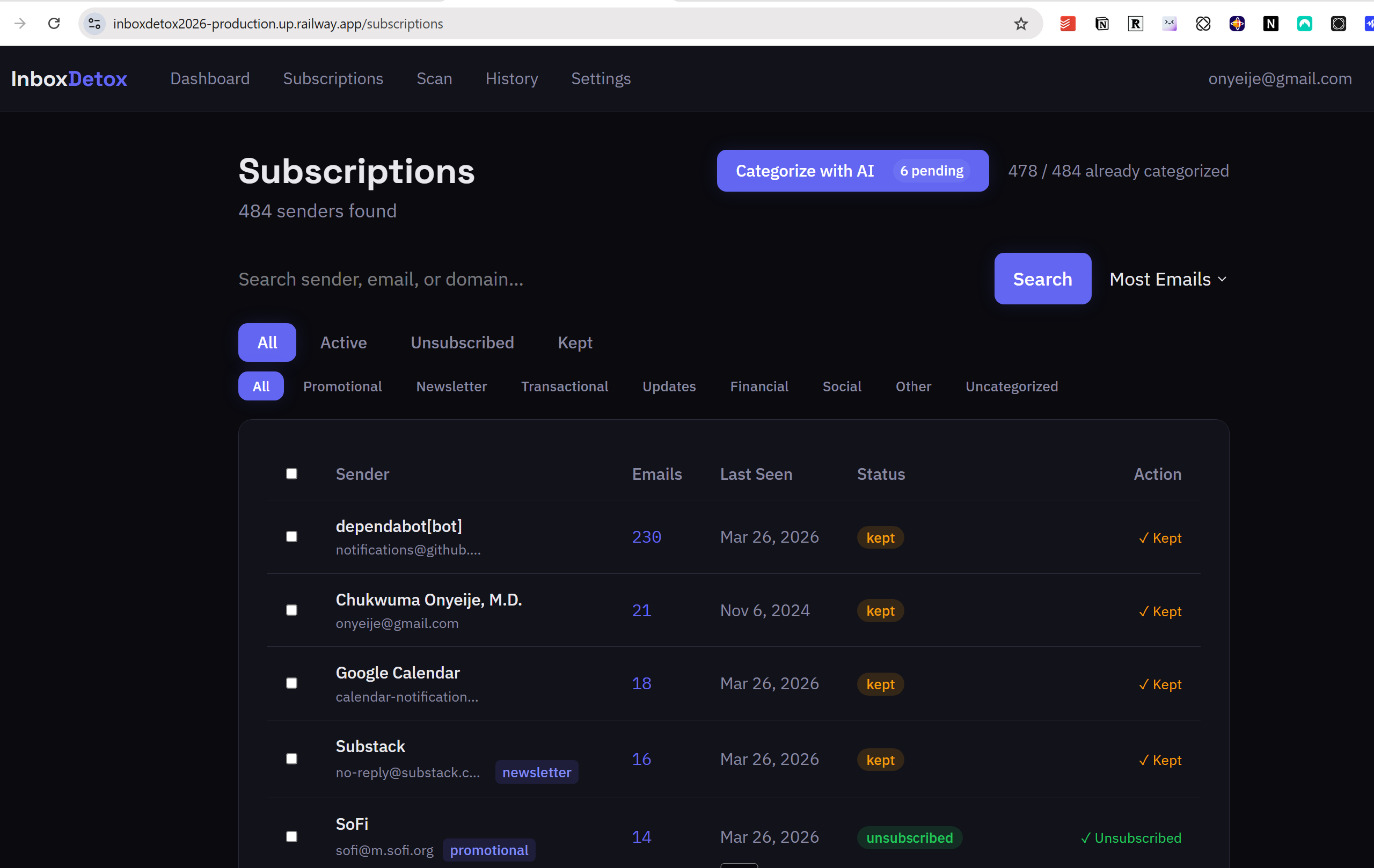
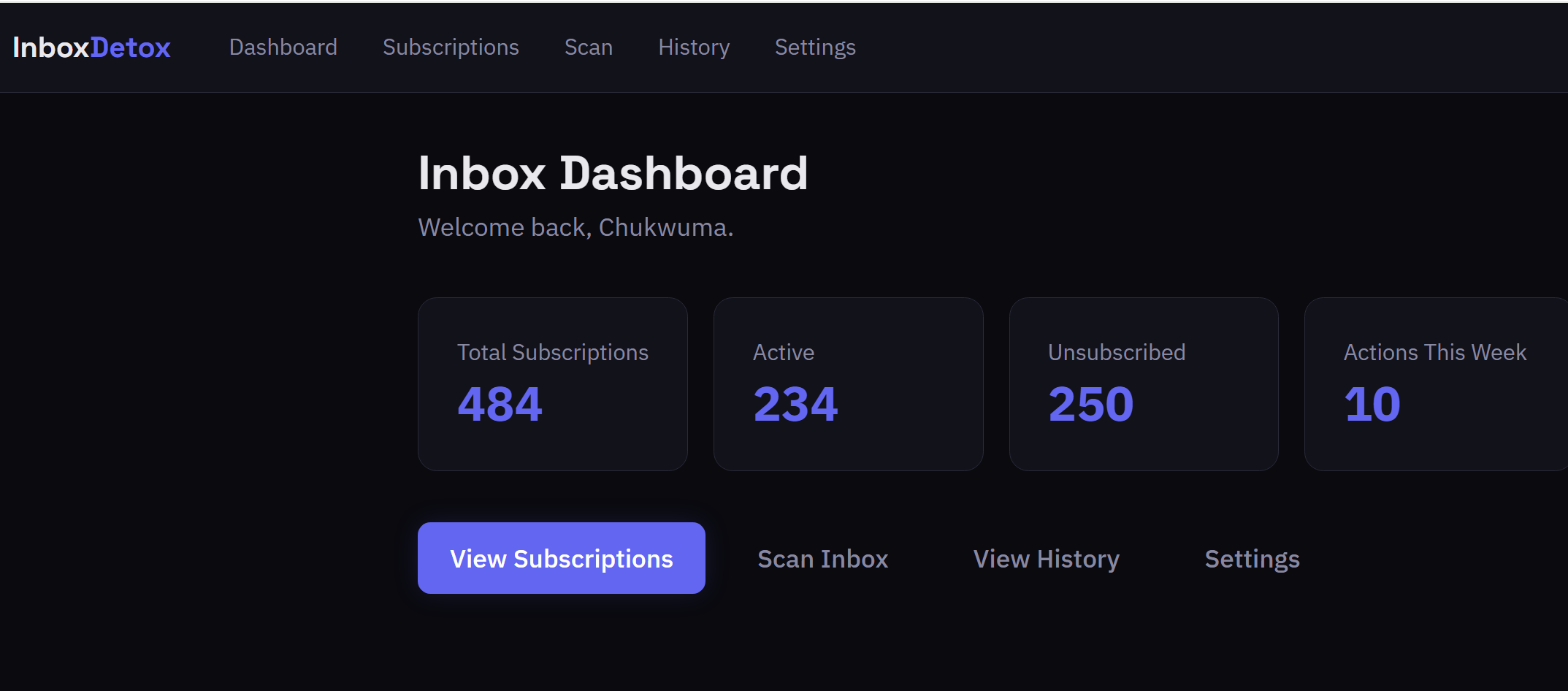
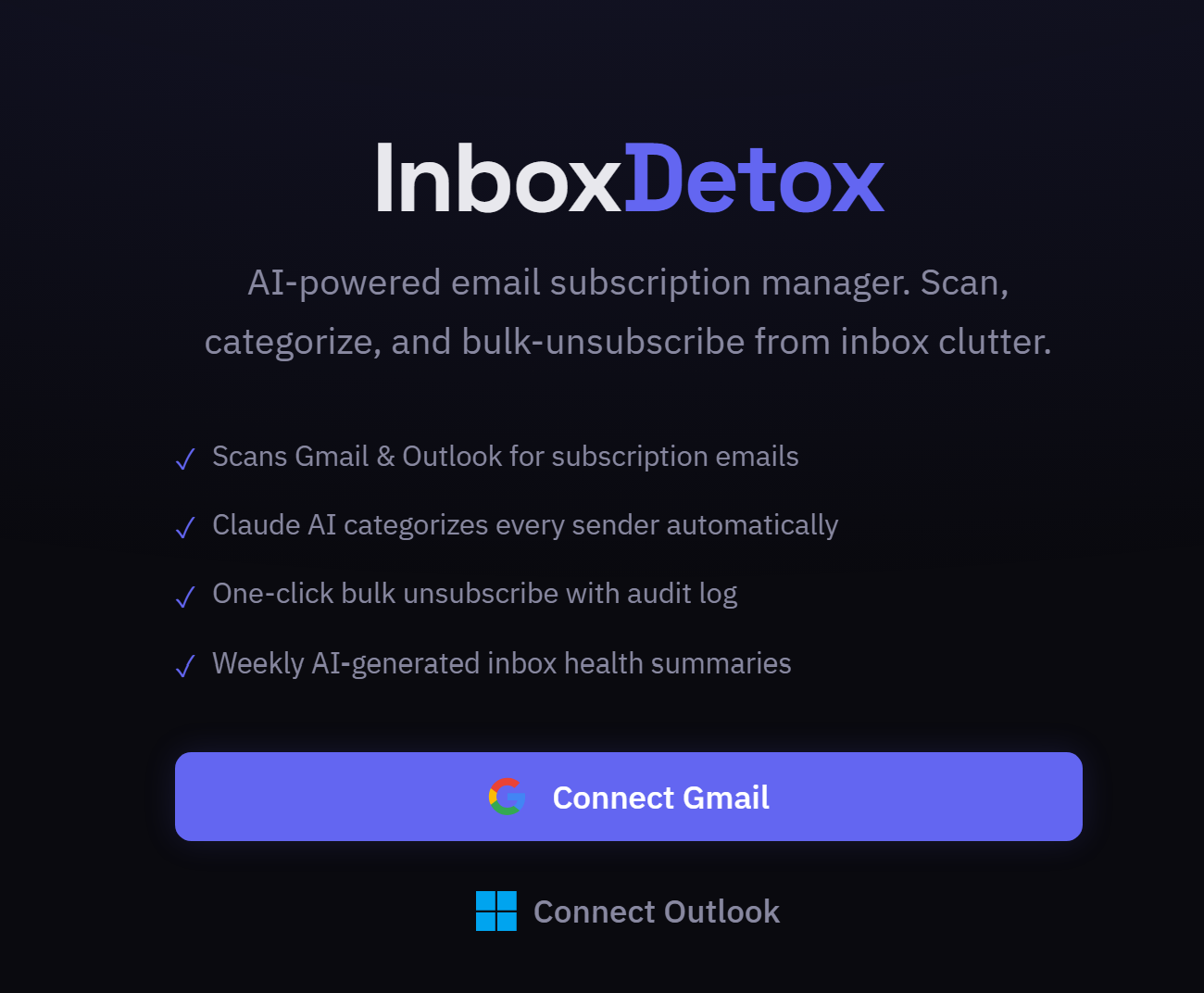
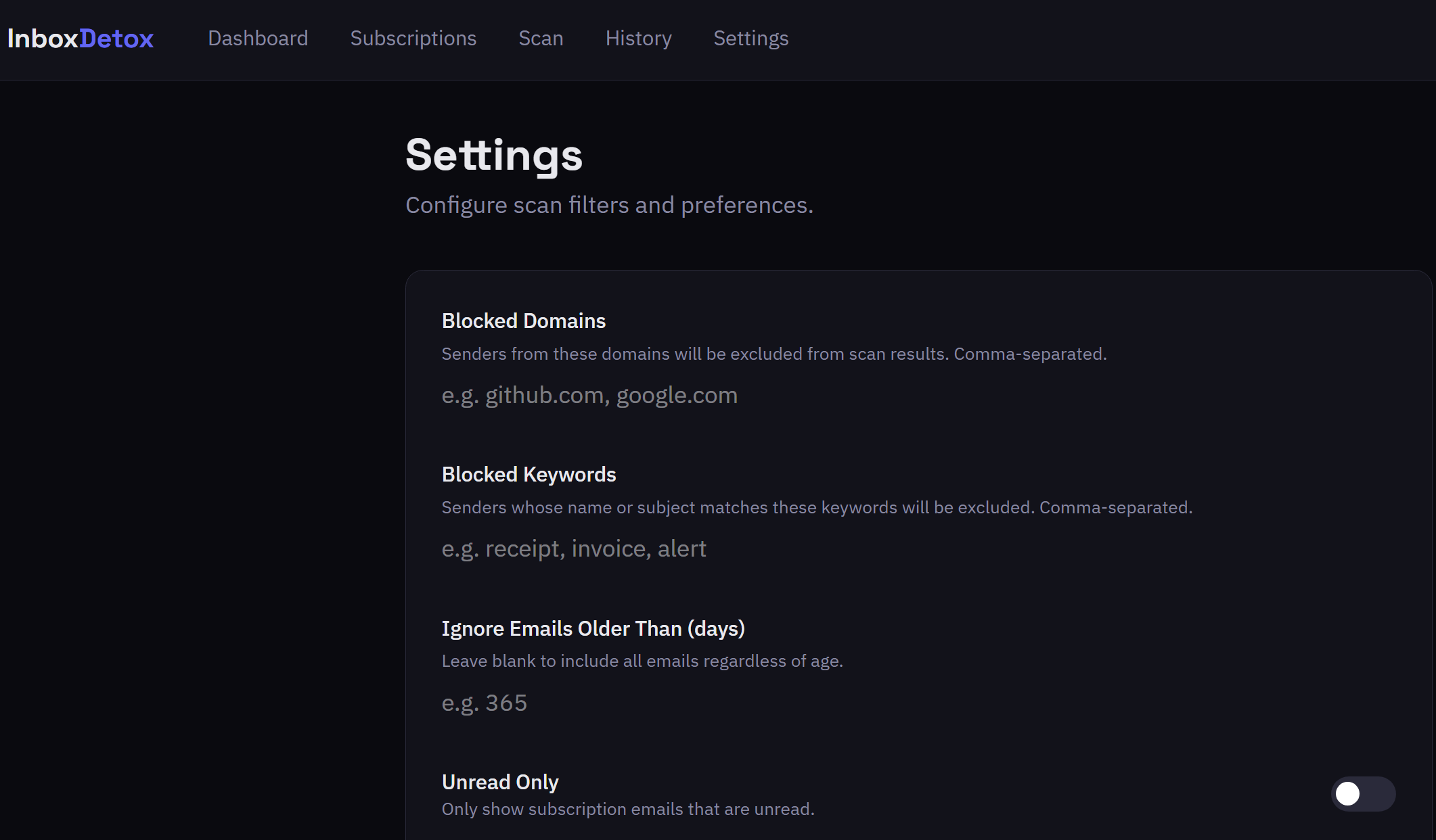
It is a self-hosted web app that connects to your Gmail or Outlook account, scans your inbox, and uses Claude to categorize every subscription sender it finds. From a dashboard, you decide: keep it, or unsubscribe. Bulk actions are available. Every decision is logged.
That is the whole product. There is no SaaS tier. There is no waitlist. There is no growth roadmap. You clone the repo, configure your environment variables, and run it.
What I Built It With
The stack is straightforward.
- Framework: Next.js 16 (App Router)
- Auth: NextAuth v5 with Google OAuth and Microsoft Entra ID
- Database: PostgreSQL on Railway via Prisma v7
- AI: Anthropic Claude (
claude-sonnet-4-5) - Email APIs: Gmail API, Microsoft Graph API
- Deployment: Railway with a Dockerfile builder
The AI categorization layer is the only part that required judgment calls. Claude receives a batch of sender names and subject line samples and returns structured labels: newsletters, promotional, SaaS trial, financial, medical, and so on. The categorization feeds the filter UI so you can bulk-decide by category rather than row by row.
The rest of the app is standard Next.js plumbing. Nothing exotic.
Two Evenings Is a Real Number
I want to be clear about what two evenings means in practice.
It means no tests. It means the UI is functional, not polished. It means I
hit a prisma generate failure during the Railway deploy and fixed it with
a Dockerfile change rather than investigating why the postinstall hook was not
running. It means I moved on.
Two evenings is enough time to build something that solves a real problem for one user: me. It is not enough time to build something you hand to a thousand users and support indefinitely.
That is the point.
This Is Disposable Software
In a recent post, I argued that disposable software is the learning foundation for physician-developers. Builds where the goal is learning, not deployment. Projects with zero clinical stakes designed to develop the muscle memory that eventually produces tools that matter.
InboxDetox is disposable software with one working deployment.
It solves a problem I actually have. It uses a stack I wanted to practice. It gave me a Railway deployment under my belt, a Prisma v7 adapter pattern I can now reproduce, and a NextAuth v5 configuration I will reuse. Every one of those things transfers directly to the next build.
The app itself? It may run for six months and then I may delete the Railway service without ceremony. That outcome is not failure. That outcome was always the plan.
The Honest Assessment
InboxDetox will not unsubscribe from every sender. Some subscription emails
do not include a proper List-Unsubscribe header, which means the unsubscribe
action falls back to a best-effort redirect rather than a clean API call.
That is a Gmail API constraint, not a fixable bug.
The AI categorization is also imperfect. Claude is accurate on obvious categories. It is less reliable on senders that blend promotional and transactional content. I did not build a feedback loop into the model. That would have been a third evening.
What works well: the scan itself, the dashboard, the bulk keep/unsubscribe flow, and the Railway deployment. That is enough for what this is.
It Is on GitHub
If InboxDetox solves a problem you have, you can use it.
The source code is at github.com/chukwumaonyeije/InboxDetox2026. The README covers environment variable setup, OAuth configuration for both Google and Microsoft, and Railway deployment. You will need your own Anthropic API key and your own database.
Fork it. Improve it. Add the feedback loop I skipped. Add proper unsubscribe handling for the edge cases I left as a known limitation. Make it yours.
That is the other thing disposable software is good for: it ships something someone else can pick up.
What This Actually Proves
Physician-developers often wait for the right problem before they start building. The right problem, the right scope, the right tool, the right weekend.
Two evenings with a clear constraint produces a working application faster than six months of planning for the perfect one.
The honest question is not whether InboxDetox is production-ready. It is whether building it produced something transferable. Every pattern I practiced here goes directly into the next build. So does the Railway deployment workflow. So does the NextAuth v5 configuration I now have memorized.
That is what disposable software actually delivers. Not the app. The fluency.
Related articles

I Didn't Download an App. I Described My Problem to an AI and It Built One for Me.
A Maternal-Fetal Medicine specialist describes how his personal AI health system identified low HRV, recommended breathing exercises, and prompted him to build a custom evidence-based breathing app in a single afternoon. A case study in disposable software, physician agency, and the future of personal health technology.

The Protocol-to-Website Industrial Complex:
By Dr. Chukwuma Onyeije, MD, FACOG | Maternal-Fetal Medicine Specialist & Medical Director, Atlanta Perinatal Associates

My Slides Became Code: Why I Use Marp for AI-Generated Presentations
Marp lets physician-builders turn reviewed knowledge into version-controlled, AI-assisted teaching decks without surrendering clinical responsibility.

Maternal-Fetal Medicine Specialist