Ambient AI Let Me Stop Interrupting My Patients
When documentation time is scarce, physicians steer patients toward answers that are easy to type. Ambient AI removes the excuse for doing that.
In This Lesson
Read with a defined objective.
Learning objectives
- Explain why documentation constraints push clinicians toward closed questions.
- Apply the open, listen, clarify, focus, summarize sequence.
- Evaluate whether a given ambient workflow makes the technology less visible during the encounter.
Prerequisites
No prior lesson is required. Begin with the problem in front of you.
Use AI in Medicine Ambient Clinical Documentation
Listen to this post
Ambient AI Let Me Stop Interrupting My Patients
On this page 3 sections
Course lessons 10 lessons
In this course
Ambient Clinical DocumentationI used to ask closed questions on purpose. Not because they were clinically better. Because they were faster to type.
“Sharp or dull?” is easier to enter into a note than five sentences of a patient describing pain that started after a specific meal, worsened with a specific movement, and reminded her of something that happened three years earlier. I was not being a bad clinician. I was managing a documentation constraint, and the patient’s narrative was the thing I sacrificed to manage it.
The Trade Nobody States Out Loud
When documentation time is scarce, clinicians unconsciously steer patients toward discrete answers that are easy to record. It is a rational response to a real constraint. It is also a quiet cost, paid in narrative detail that never makes it into the room, let alone the chart.
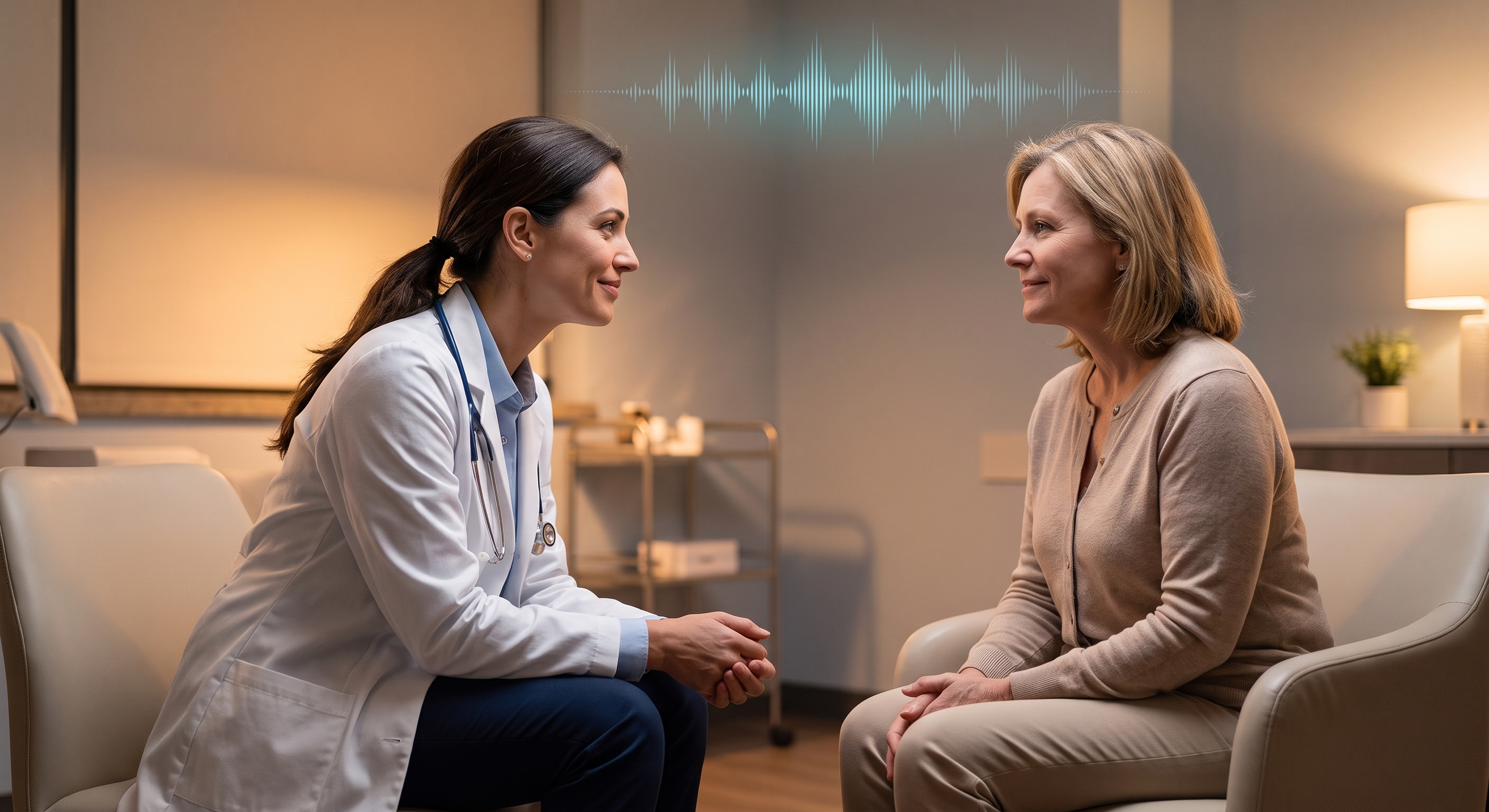
Ambient documentation changes the constraint. When the system can capture and organize natural conversation, the physician can afford to ask a broader question and actually wait for the answer.
Open, Listen, Clarify, Focus, Summarize
A large language model can often extract symptoms, chronology, relevant negatives, medications, and other structured information from ordinary conversational language. That does not eliminate focused questioning. It changes when focused questioning needs to happen.
A useful sequence: open the visit broadly, listen without interrupting, clarify what matters as it comes up naturally, focus in on the specific clinical questions once the story is on the table, then summarize back to the patient before moving on.
What This Actually Trains
Patients notice when they are being steered. They also notice, just as quickly, when someone is actually listening. Neither reaction requires them to know anything about the software running in the background.
The tool does not make you a better listener. It removes one of the structural reasons you had for listening less. What you do with that room is still entirely up to you.
During your next few encounters, notice how quickly you interrupt, and notice what changes when you are no longer required to type while the other person is still speaking.
Related articles

The One-Week Ambient Challenge
A seven-day self-audit for physicians using an approved ambient documentation system, built around three questions that matter more than words per minute.
Build an Ambient Documentation Lab Before You Buy One
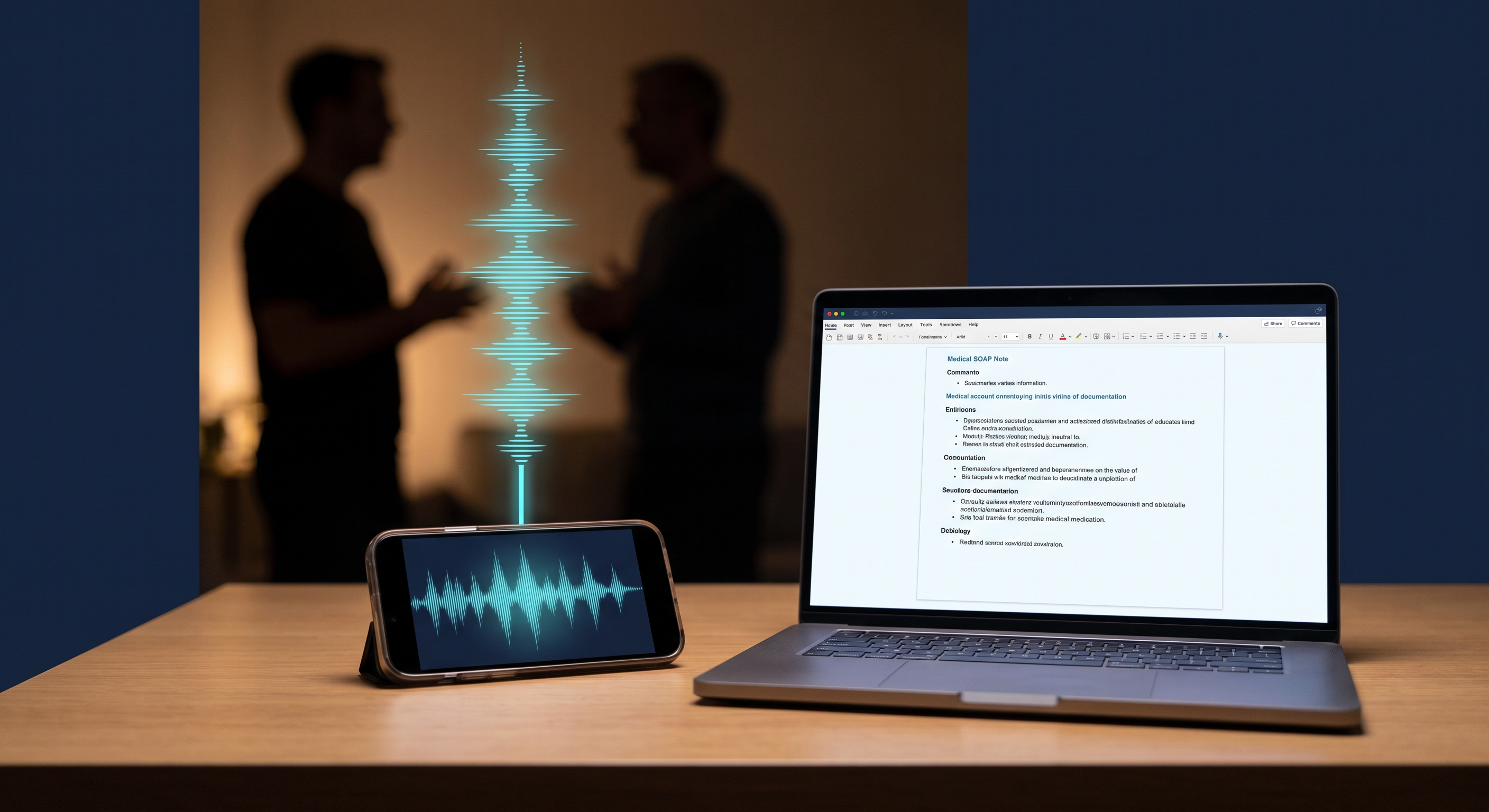
You can learn the entire ambient documentation pipeline with a phone, a fictional patient, and a general-purpose AI assistant, before spending a dollar on a clinical platform.
Your First Ambient Note Is Not Your Final Workflow
Most physicians stop optimizing an ambient documentation system the moment it produces a usable note. That is the moment the real work should start.

Maternal-Fetal Medicine Specialist