AI's Next Breakthrough Is Not a Bigger Brain. It Is a Memory You Can Trust.
The AI race has been about model size for years. The real bottleneck is memory: trustworthy, auditable knowledge that persists across years, not conversations. Medicine will feel this shift first.
Listen to this post
AI's Next Breakthrough Is Not a Bigger Brain. It Is a Memory You Can Trust.

On this page 9 sections
I looked at four ultrasounds before I told a patient to deliver last week.
Not four data points on one screen. Four separate studies spread across five weeks, each with its own growth curve, its own Doppler numbers, its own note from whichever specialist was on service that day. I held all four in my head at once. I watched the umbilical artery resistance climb from study to study. I watched the estimated fetal weight fall further below the curve each time. I connected that pattern to a blood pressure trend that had been climbing in the chart for three weeks.
No single ultrasound made that decision. The pattern did.
That is memory. Not the kind computer scientists usually mean when they say it. The kind a physician builds by holding a patient’s whole story in mind long enough to see what any single visit cannot show.
Most AI systems cannot do this yet. That gap is about to become the entire industry.
I. We Have Been Measuring the Wrong Thing
For several years, the AI conversation has fixated on one number: how intelligent is the model.
Every release promised a higher benchmark score, a longer context window, sharper reasoning. Those gains are real. They are also no longer the bottleneck.
The hard problem was never generating a brilliant answer. It is ensuring the answer rests on knowledge that is accurate, traceable, and current. That is why the frontier is shifting from Large Language Models to what researchers are calling Agentic Knowledge Systems.
Physicians already lived through this exact transition once. The electronic health record was not revolutionary because it digitized paper. It mattered because it created a longitudinal memory of patient care. AI is about to go through the same evolution, on the same timeline physicians will recognize, because we already built the first version of it.
II. Retrieval Is Not Memory
Most AI systems today run on Retrieval-Augmented Generation. Search the documents, pull the relevant chunks, feed them to the model, generate an answer. It works surprisingly well for a single question. It has one real limitation: the system does not remember.
Every conversation starts almost from scratch. The model has no real sense of how the information evolved, whether two sources disagree, what changed since last time, or why one piece of evidence outranks another.
For a casual question, that is fine. For medicine, it is not close to fine.
I did not simply retrieve today’s ultrasound report for that patient. I synthesized years of history: laboratory trends, a prior pregnancy, evolving Doppler studies, published evidence, and institutional protocol, into one coherent read of where this pregnancy was heading. Retrieval finds a document. Memory understands a trajectory. Those are different jobs, and right now, most AI systems can only do the first one.
III. Memory Has to Become Infrastructure, Not Context
The systems that will matter next are starting to treat memory as permanent infrastructure instead of a temporary scratchpad. Instead of stuffing facts into an opaque vector database, they maintain structured, inspectable knowledge that records where a fact came from, when it entered the system, what evidence supports it, who touched it, and how confidence in it has shifted over time.
Call it version control for institutional knowledge. Every conclusion becomes reproducible. Every recommendation becomes explainable. Every change becomes auditable.
Go back to that patient. If she asked me why I was recommending delivery that day, I did not give her a probability score. I told her that fetal growth had declined across four studies, that the umbilical artery Dopplers had progressively worsened, that her blood pressure was escalating, and that current guidelines supported delivery under exactly those conditions. I could point to where each piece of that reasoning came from, because I had lived through the timeline myself.
An AI system with real memory infrastructure could do the same thing. Not a confidence interval. A traceable chain of reasoning back to its source. That is the bar clinical AI has to clear, and it is a much higher bar than answering a single question well.
IV. The Single Super-Agent Is Already Obsolete
The most advanced systems are quietly abandoning the one-giant-model approach. Instead of handing every responsibility to a single enormous model, builders are assigning specialized agents to individual tasks: one extracts facts, one identifies entities, one validates evidence, one resolves conflicts, one updates long-term memory, one performs quality assurance.
That should sound familiar. It is how a hospital works. Radiology reads the images. Pathology reads the tissue. Obstetrics manages the pregnancy. Neonatology takes the baby. No physician practices every specialty at once, and no serious clinical team asks one person to.
I described the same anatomy inside a single automated workflow in You Are Still Prompting. You Should Be Building Agents. An Analyst identifies what matters, a Planner sequences the work, an Operator executes it, an Auditor checks it before it reaches a human. The pattern scales from one clinical workflow to an entire knowledge system for the same reason it scales from one physician to a hospital: the most capable intelligence rarely comes from a bigger brain. It comes from better division of labor.
V. When the Knowledge Itself Is the Attack Surface
This is the part that should worry every physician-developer paying attention.
We have spent years worrying about prompt injection: an attacker slipping a malicious instruction into a model’s input. The next generation of threats targets something more fundamental than an instruction. It targets the knowledge itself.
Researchers call it memory poisoning. Imagine a system with flawless reasoning. Now imagine someone quietly inserts a false fact into its knowledge graph. The system does not hallucinate. It reasons perfectly, from a false premise, and the output looks exactly as confident as the output built on a true one.
I made a version of this argument in Fluent Answers Are Not Clinical Judgment: fluency is not evidence of correctness. Memory poisoning is the same failure mode wearing infrastructure clothing. A corrupted fact sitting inside a well-organized knowledge graph is more dangerous than an obvious hallucination, precisely because everything downstream of it looks rigorous.
This is why provenance has become one of the hottest problems in enterprise AI. Cryptographic verification. Permission-aware memory. Immutable audit logs. Governance frameworks that define exactly what a system is allowed to know, modify, or recommend. None of that is optional in a clinical setting. The future does not just need intelligent AI. It needs AI whose knowledge you can interrogate the same way you would interrogate a colleague’s differential.
VI. What This Looks Like in Maternal-Fetal Medicine
At Atlanta Perinatal Associates, we routinely manage pregnancies where no single visit tells the whole story. Fetal growth restriction develops over time. Preeclampsia evolves over weeks. Placental insufficiency reveals itself through a pattern spread across a dozen reports, not one.
Today’s AI is good at answering an isolated question about a single scan. Tomorrow’s agentic systems need to recognize the evolving narrative: fetal growth velocity, Doppler progression, maternal blood pressure trend, laboratory trajectory, medication changes, genetics, prior physician assessments, and current guideline-based thresholds, all connected into one continuously updated clinical memory rather than a folder of disconnected reports.
That is not a better search engine. That is a different category of decision support, and it is the version of AI that would have actually shortened the fifteen minutes I spent reconstructing that patient’s timeline in my head.
VII. The Fragmentation Problem Has Not Gone Away
None of this is close to solved, and the reason has nothing to do with model quality.
Clinical notes are inconsistent. Abbreviations vary by institution and by author. Data is incomplete. Patients move between systems that do not talk to each other. Knowledge sits scattered across PDFs, faxes, scanned documents, and EHR modules that were never designed to reference one another.
Building trustworthy memory out of that mess is an information architecture problem before it is an AI problem. I have made the case before that the physicians who win this decade will be the ones who build the knowledge infrastructure itself, not just the ones who prompt a model well. See Building the Physician’s Knowledge Flywheel for what that infrastructure actually looks like when you build it yourself instead of waiting for a vendor to ship it.
The organizations that solve the fragmentation problem, not the ones that ship the largest model, will define the next decade of clinical AI.
VIII. Augmentation, Not Replacement
Too much of the AI-in-medicine conversation is still about whether AI will replace physicians. That is the wrong question, and it always has been. See Doctors Who Code: Build Systems, Not Just Models for the longer version of that argument.
The real opportunity is a system that never forgets a laboratory trend, never misses a prior ultrasound, never loses a consultation, never loses institutional knowledge when a colleague leaves the practice, and never makes you reconstruct a timeline that already exists somewhere in the chart. That is not a system replacing a physician’s judgment. That is a system finally giving that judgment a memory as good as the story it is trying to follow.
The Question That Actually Matters Now
For years the question was: can AI perform this task.
The question that matters now is: can you trust the knowledge that informed the answer.
Not a bigger model. A better memory. Not a more autonomous agent. A more accountable one. Not a faster answer. A traceable one.
The winners of this decade will not be the teams with the smartest model. They will be the teams whose AI remembers responsibly.
Build the memory before you trust the answer.
Related articles

Physicians Need to Learn the Harness, Not Just the Model
DeepSeek Harness shows why physicians must understand the context, tools, permissions, logs, and human checkpoints that turn an AI model into a working system.
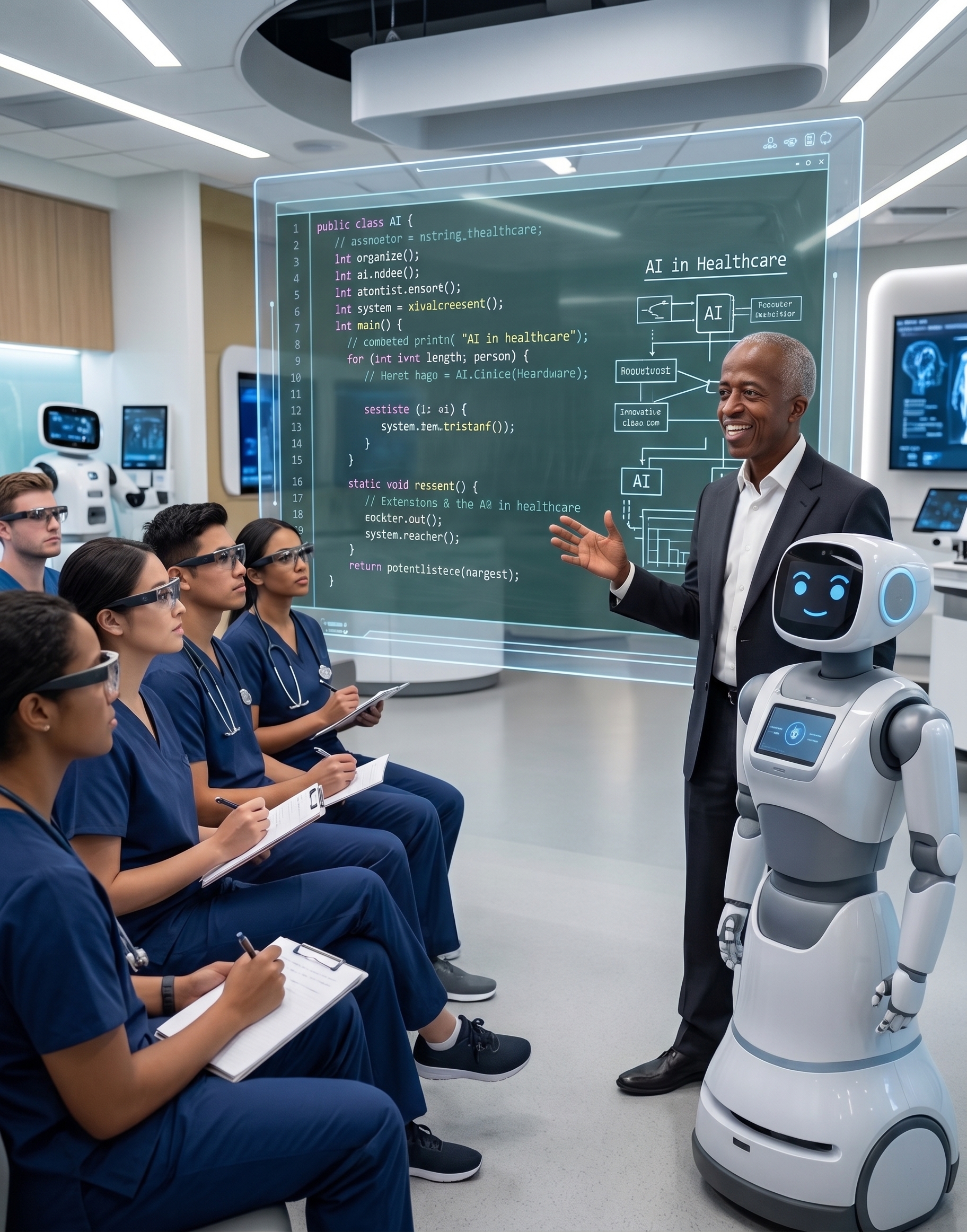
Medical Education Does Not Need an AI Course. It Needs a New Clinical Curriculum.
Preparing physicians for agentic AI requires more than an elective. Medical education must redesign how students reason independently, delegate work, verify machine output, and retain clinical judgment.
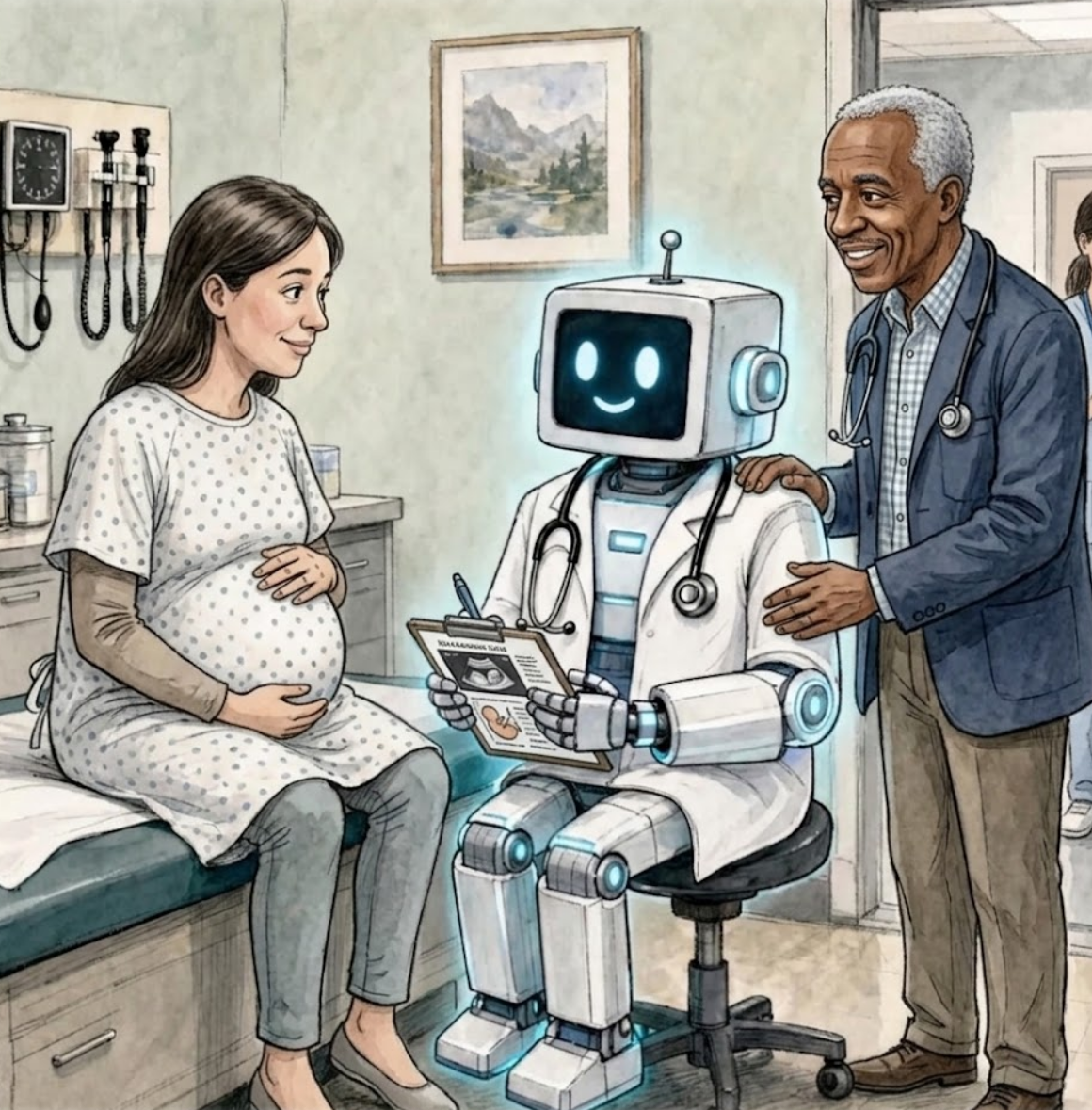
The Physician Above the Loop: Preparing Medicine for Agentic AI
Clinical intelligence is becoming abundant. Physicians must learn to delegate, verify, contextualize, and judge the work of increasingly autonomous clinical AI systems.
Maternal-Fetal Medicine Specialist