From Search Engines to Answer Engines: Who Assembles the Clinical Picture?
Define the clinical question before building an AI interface, and learn what a useful answer must preserve.
· 6 min read
Tag
15 posts
Define the clinical question before building an AI interface, and learn what a useful answer must preserve.
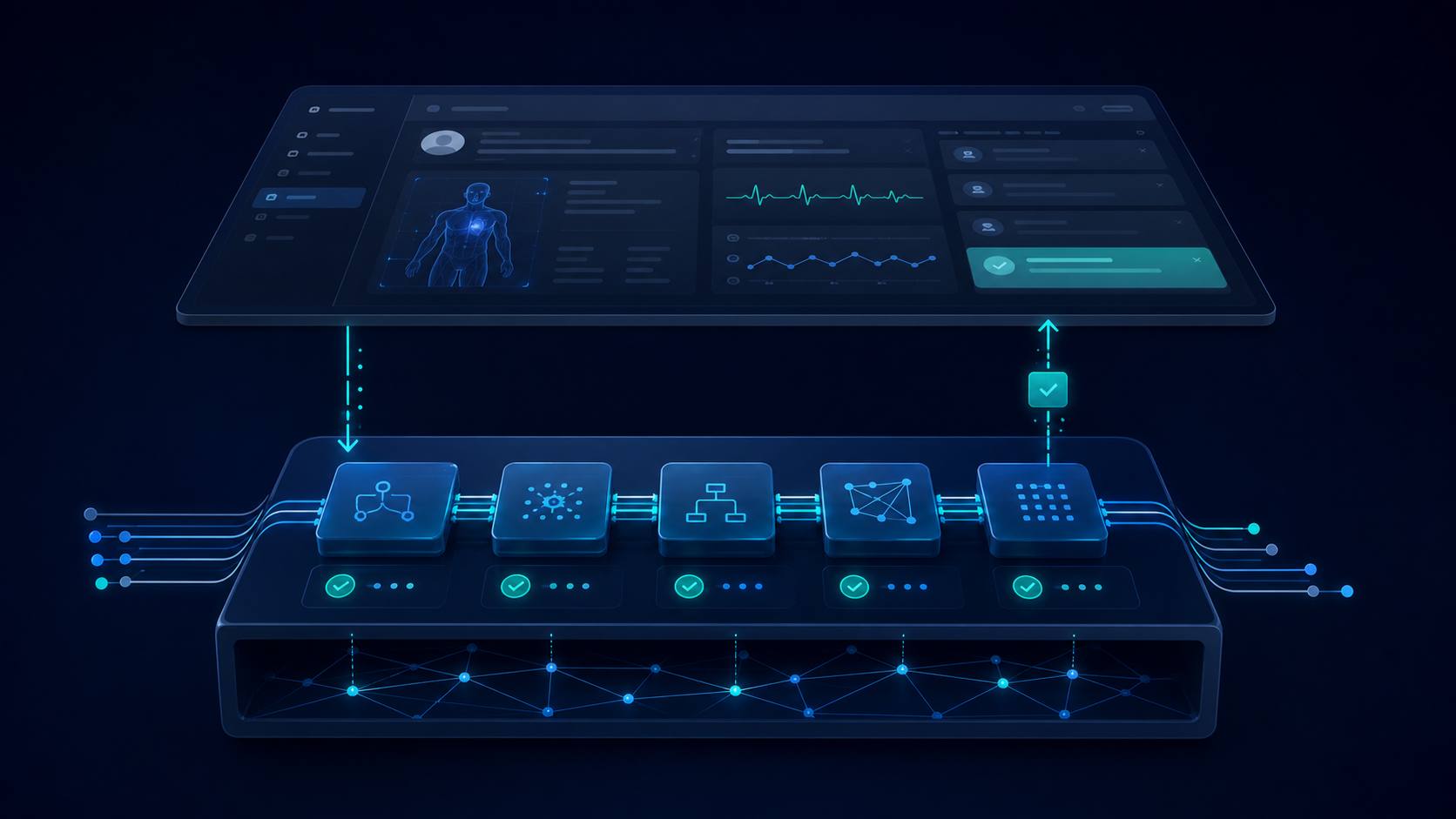
A reliable clinical application separates guideline logic from presentation, tests expected behavior, and carries provenance into every recommendation.
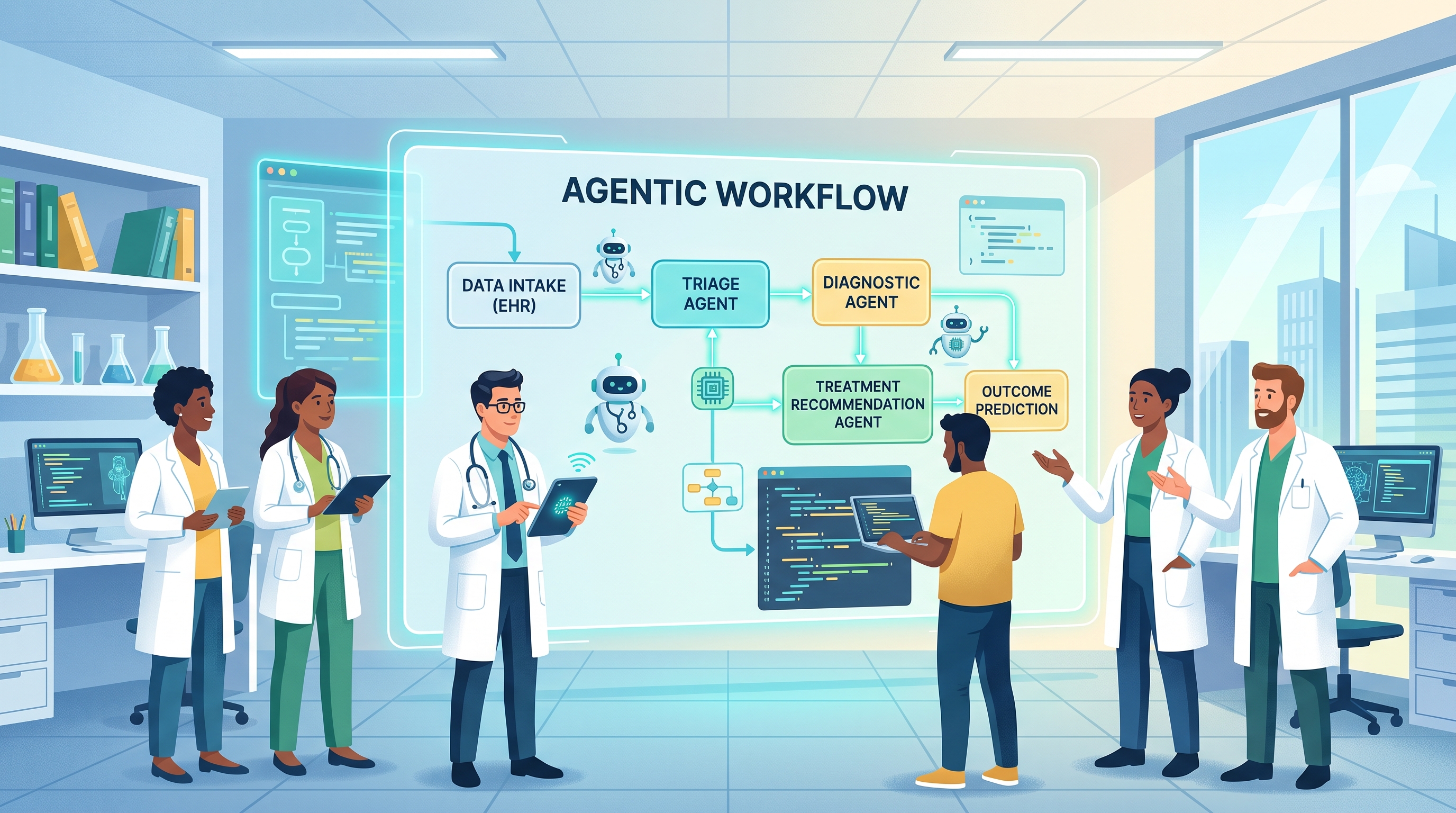
A physician-developer's practical guide to giving an AI agent one bounded software assignment and requiring a plan, tests, review evidence, and a stopping condition.

Clinical evidence describes populations. Physician-developers must preserve its limits before translating it into protocol logic or software.

AI agents are making implementation cheaper. In healthtech, the advantage moves to clinicians who can preserve clinical truth and supervise the architecture.
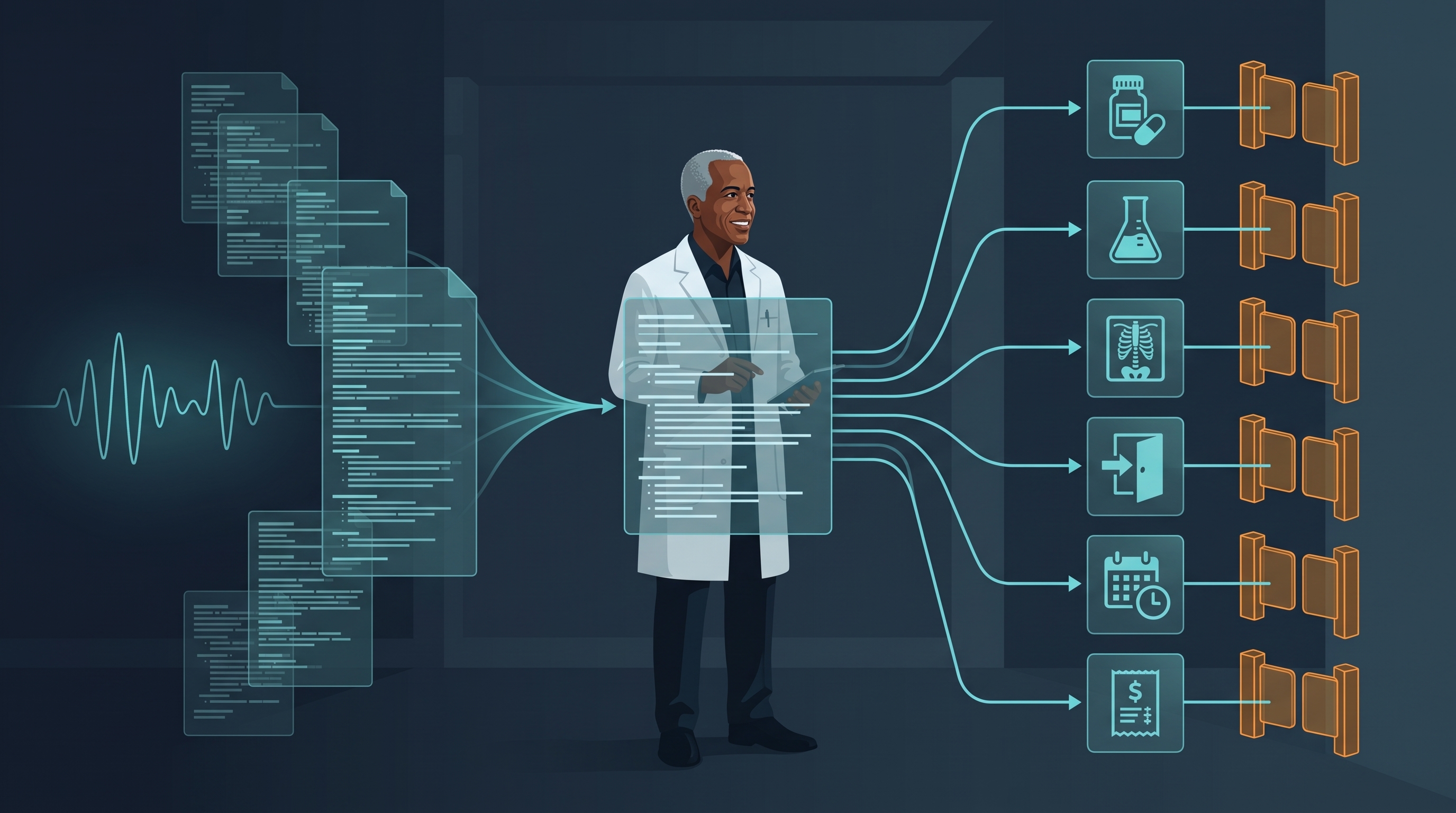
Ambient clinical AI is moving beyond note generation into an encounter layer that prepares orders, prescriptions, coding, and follow-up while keeping consequential decisions visible to the physician.

Doctors Who Code began as a blog encouraging physicians to learn programming. It is now a learning platform for physicians who want to use AI with judgment and build clinical tools that improve care.

Clinical AI earns workflow trust only when its answers are grounded in current, local, auditable knowledge. Retrieval is not a feature. It is infrastructure.
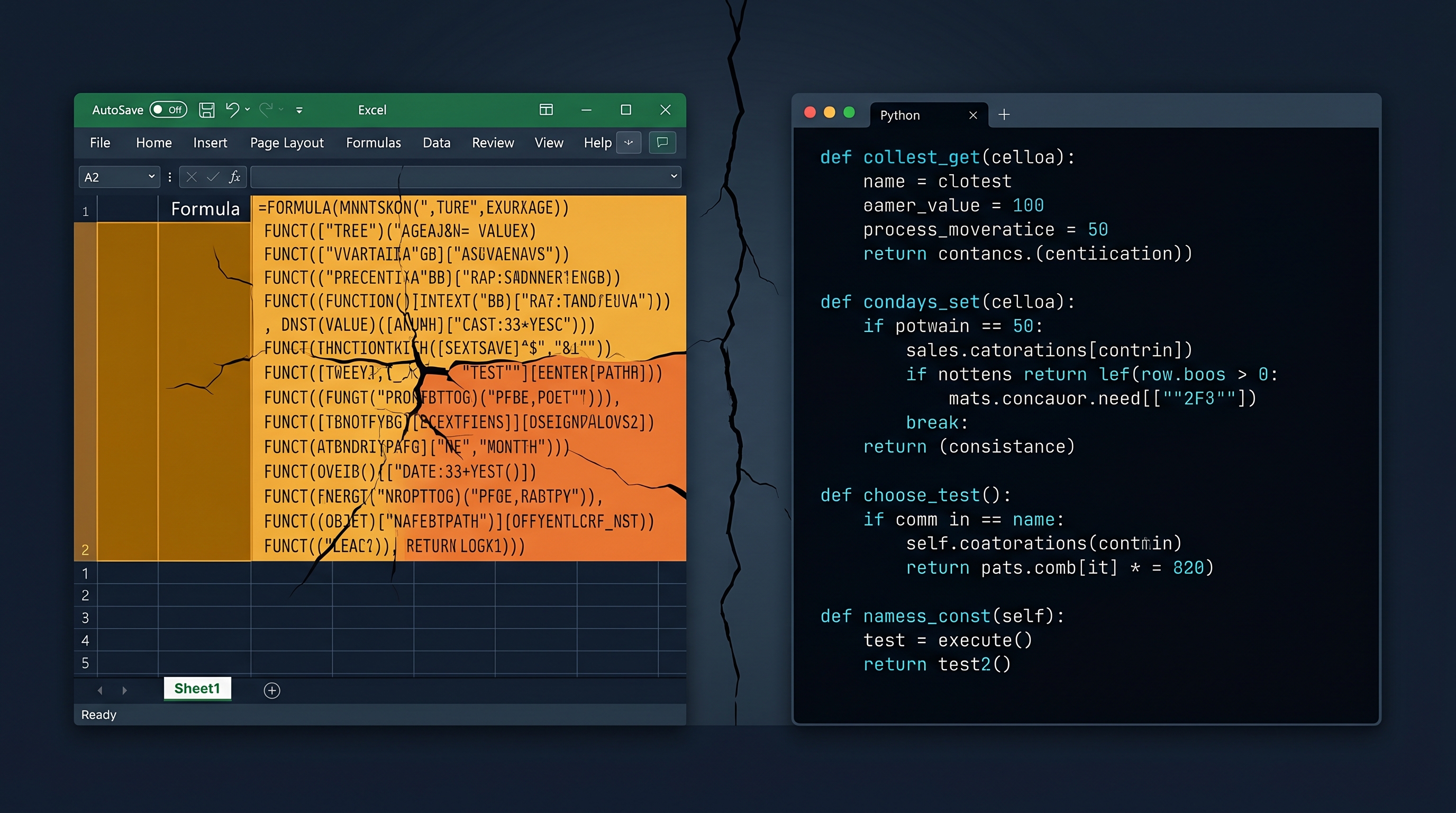
A clinical calculator is not safer because it is written in code. It becomes safer when its expected behavior is explicit, checked, and protected from silent drift.
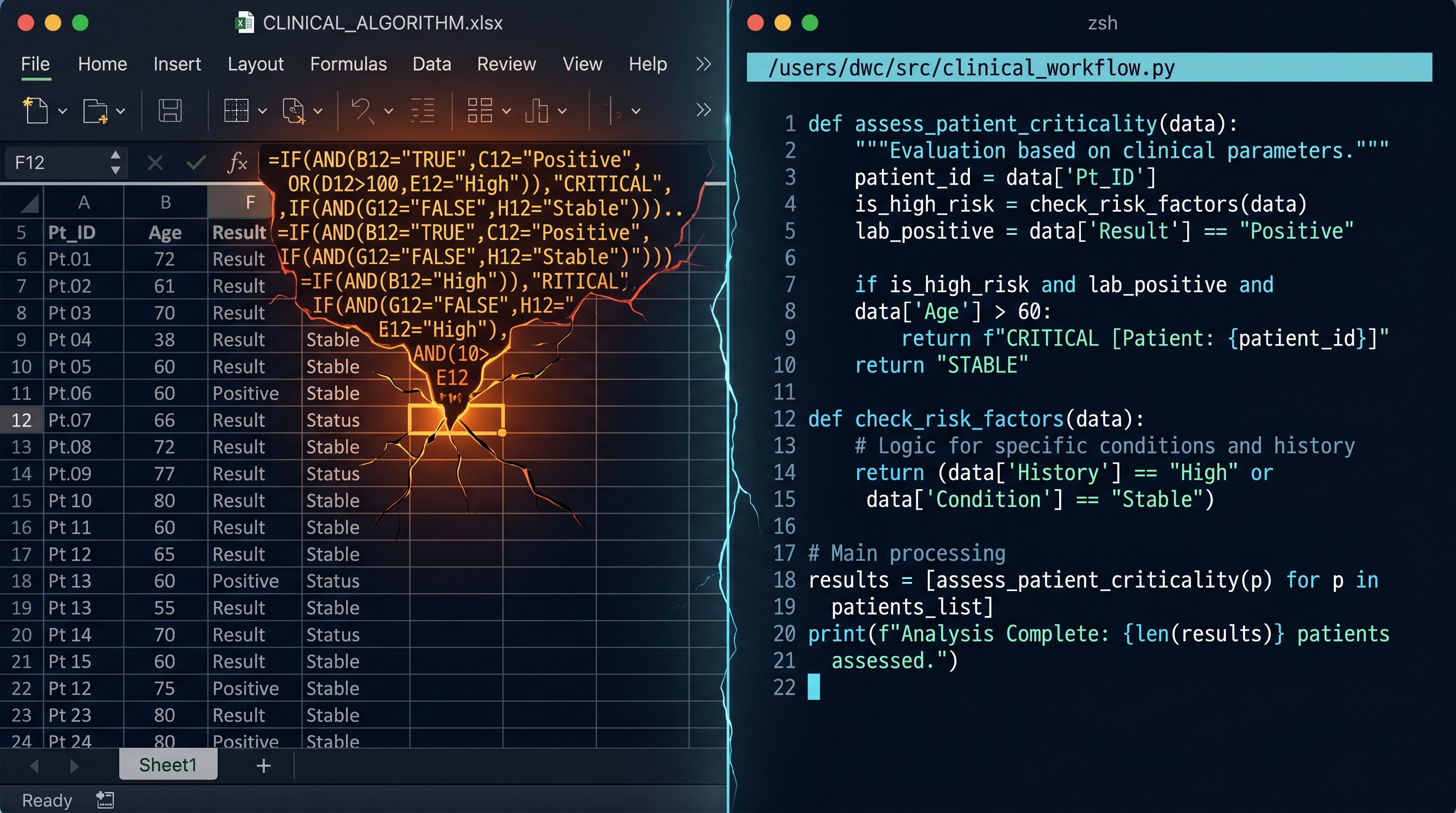
Excel is often the right first move for a physician-builder. The problem begins when clinical logic stays trapped in a container that can no longer safely hold it.

A short introduction to a DoctorsWhoCode series on spreadsheets, tests, and retrieval as the basic discipline of physician-built clinical software.

Clinical software cannot afford vague inputs. TypeScript gives physician-developers safer contracts, clearer data shapes, and fewer silent failures.
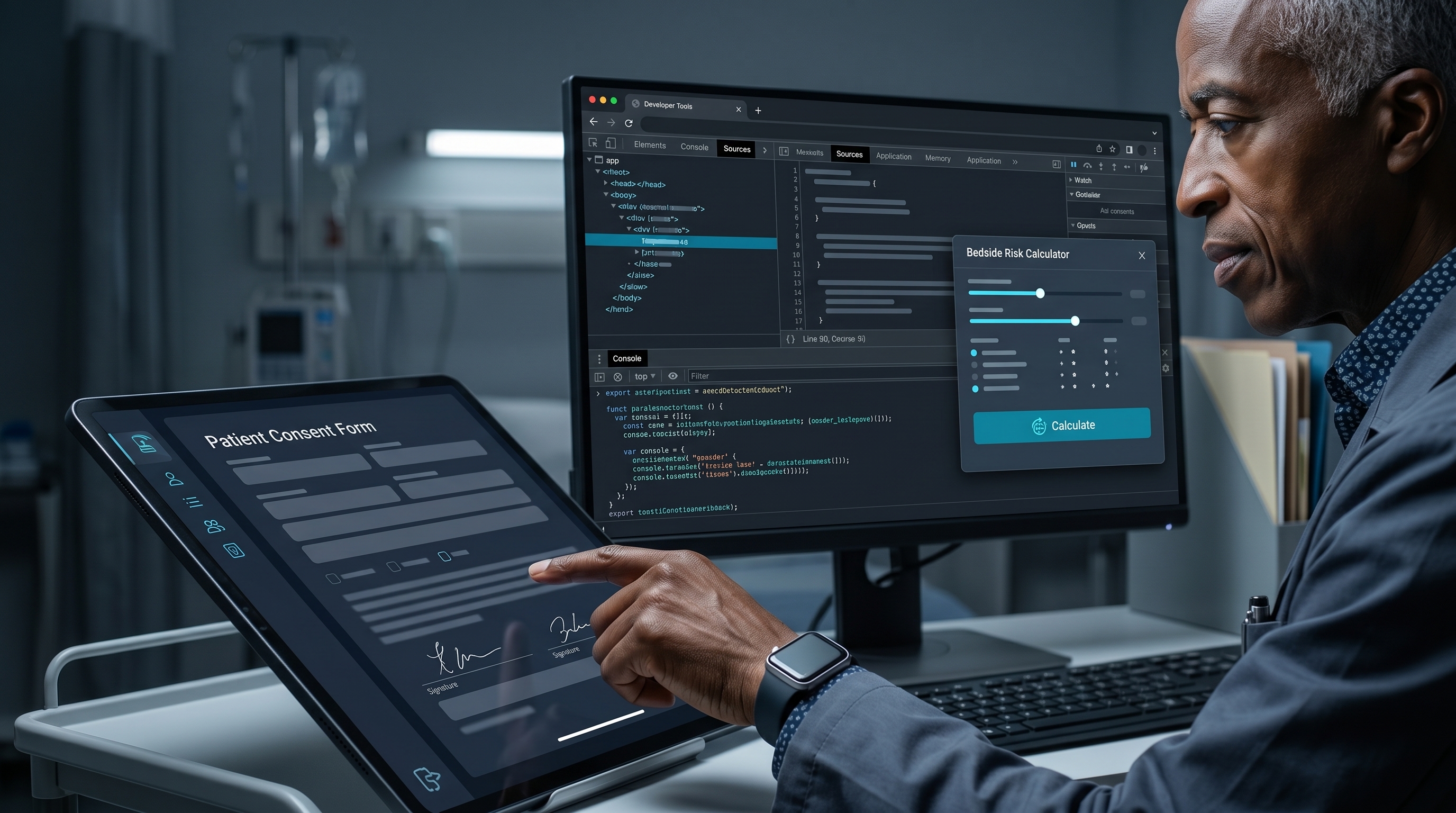
Every patient portal, tablet consent form, and browser-based clinical tool already runs JavaScript. This is where physician-developers start changing what medicine feels like on a screen.

A practical 10-part Doctors Who Code series for physicians who want to build and ship clinical tools with the modern web stack, from JavaScript to deployment.
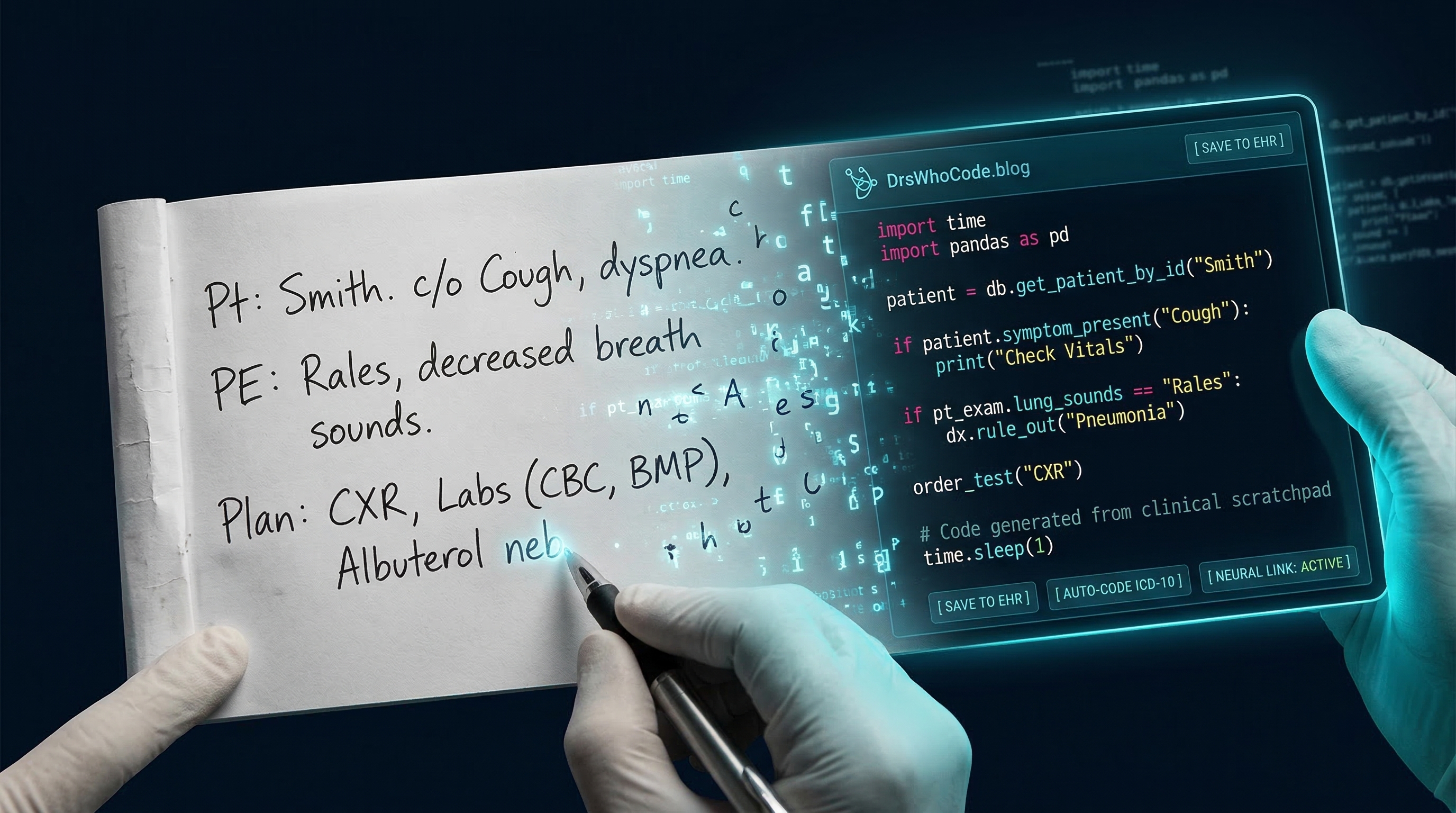
For the past two decades, medical software has been synonymous with monolithic platformsEpic, Cerner, and their ilkmassive systems designed to serve e...