The Microphone Finally Got Smart: Dictation Before and After the LLM Era
Dragon NaturallySpeaking trained physicians to talk like machines. Ambient AI scribes are starting to listen like clinicians. Here is what changed after 2022 and why it matters for every doctor taking care of patients.
Listen to this post
The Microphone Finally Got Smart: Dictation Before and After the LLM Era
On this page6 sections
The microphone finally got smart
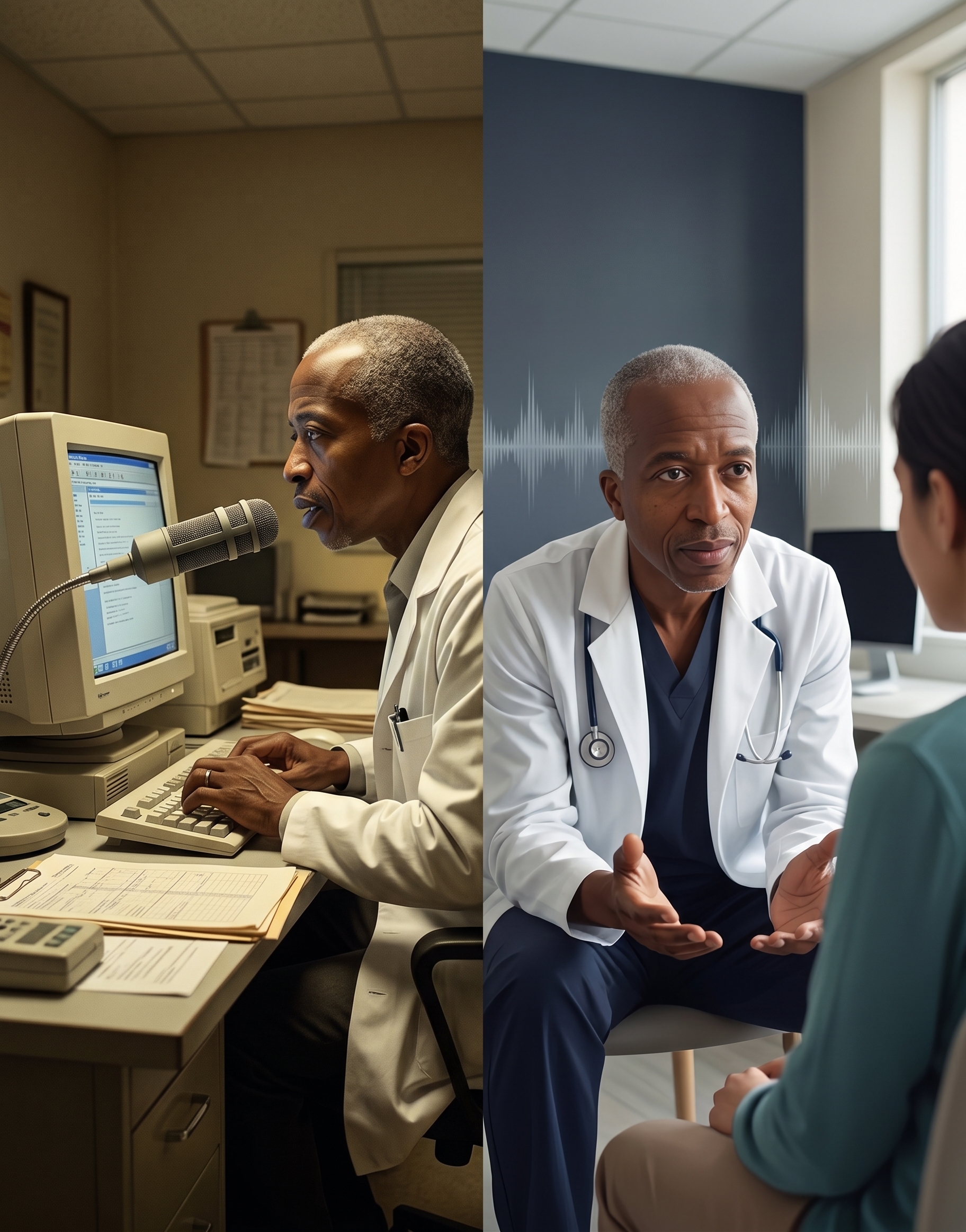
I spent years talking to my computer like I was giving a deposition.
Slow. Deliberate. Comma. New paragraph.
I trained Dragon NaturallySpeaking, and Dragon trained me right back. It trained me to flatten my accent, shorten my sentences, pause at punctuation, and speak in a rhythm no patient would ever recognize as human conversation.
If you dropped your voice at the end of a sentence the way people naturally do, Dragon might cut you off or misfire. You adapted. The machine did not.
That era did not end because microphones improved.
It ended because the architecture changed.
Dragon Was Never The Note
Dragon NaturallySpeaking, now carried forward in cloud form through Nuance Dragon Medical One, was impressive for its time.
It listened for speech patterns. It matched phonemes against a language model trained on medical vocabulary. If you mastered it, you could move faster than a typist. Radiology built entire reporting workflows around that bargain.
But Dragon had a hard ceiling.
It was a transcription engine, not a comprehension engine.
It heard your words. It did not understand your clinical intent. If you said, “The patient is a 34-year-old G2P1 presenting for her anatomy scan,” Dragon could write that sentence. It did not know that the next useful part of the note might include fetal biometry, placental location, cervical length, counseling, and follow-up.
It did not infer.
It did not structure.
It did not help you think.
Every sentence you wanted in the note, you had to speak. Every heading. Every transition. Every correction. The cognitive load did not disappear. It moved from your fingers to your throat.
And for many physicians, especially physicians with accents that did not fit the default training data, the system made the wrong demand. It asked the clinician to become easier for the machine to understand.
That is the old model of medical software in one sentence.
The doctor adapts to the tool.
What Changed After 2022
Large language models changed the problem underneath the microphone.
The breakthrough was not simply better speech recognition, though the speech layer improved dramatically. The real shift was that transcription became connected to context.
A language model can take messy human conversation and infer structure. It can recognize that a patient is describing the history of present illness. It can separate medication history from assessment. It can understand that “let’s check an A1c and repeat the glucose in six weeks” belongs in the plan.
That is a different category of software.
Ambient scribes built on this foundation, including Nuance DAX Copilot, Suki, Nabla, Abridge, and DeepScribe, do not merely record words. They listen to the encounter and draft the clinical artifact that should come out of it.
The physician speaks to the patient.
The scribe listens.
The note appears.
That sounds simple because good workflow often sounds simple after someone has absorbed the complexity for you. But this is not a marginal upgrade from Dragon. It is a shift from dictation to documentation generation.
The Patient Feels The Difference
This is where the technology becomes clinical.
The old documentation model pulled the physician’s attention out of the room. You either typed during the encounter, which patients notice, or you finished notes later, which turns the workday into a long tail of unpaid reconstruction.
Dragon helped with the typing problem. It did not solve the attention problem.
Ambient documentation changes the direction of the physician’s gaze.
When the system listens in the background, the physician can face the patient. Full eye contact. No keyboard choreography. No awkward pause while the template catches up to the conversation.
The note becomes a byproduct of a real clinical encounter instead of a competing task running beside it.
That matters in every specialty. It matters even more in high-stakes rooms.
In maternal-fetal medicine, a consultation may be the first moment a family truly confronts a serious fetal diagnosis. They do not need a physician performing clerical work in front of them. They need presence, clarity, and judgment.
Documentation that protects that presence is not a convenience.
It is part of the care.
Ambient Transcription Has Become Ordinary
One underappreciated part of this shift is how mainstream the transcription layer has become.
Open Microsoft Word on a modern Windows machine and use Dictate. Open Google Docs and use Voice Typing. Tap the microphone on an iPhone keyboard. These tools now handle natural speech, infer punctuation, and work without the long ritual of training.
They are not clinical scribes.
That distinction matters.
Consumer dictation can capture words. A clinical scribe must understand the shape of a medical encounter. But the raw speech-to-text layer has become good enough that physicians can start experimenting without waiting for a budget committee.
You can dictate into Google Docs today and get a usable first draft. It will not produce a polished SOAP or APSO note by itself. It will not know your specialty-specific preferences. But it shows the direction of travel.
The microphone is no longer the hard part.
For physician-developers, that changes the build surface. Apple, Google, Microsoft, OpenAI, and others are turning transcription into infrastructure. The interesting work now lives one layer up: clinical structuring, specialty-specific summarization, follow-up extraction, diagnosis-aware reasoning, coding support, patient instructions, and verification.
That is where doctors who code should be paying attention.
The Gap That Still Matters
Ambient scribes are not documentation systems yet.
They are documentation drafting systems.
That difference is not semantic. The physician still reviews, edits, and signs the note. That is exactly how it should be. The model does not carry the license, does not know the patient the way the physician does, and does not bear professional responsibility for what enters the chart.
The failure modes are real.
Ambient systems can hallucinate clinical content that was not said. They can misattribute intent when multiple people are speaking. They can struggle with dense subspecialty language. They can produce a note that sounds polished while hiding a clinical error inside fluent prose.
That is the new danger.
Old dictation made errors that looked ugly.
LLM documentation can make errors that look confident.
So the physician’s role does not shrink. It moves.
We become reviewers of generated clinical artifacts, designers of safer workflows, and owners of the final meaning. The best use of AI in documentation is not blind delegation. It is supervised drafting with better architecture around the doctor.
Dictation Is Becoming Documentation
The direction is clear.
Dictation is becoming documentation generation. The physician’s voice is moving from input channel to collaborative signal. The note is becoming a structured artifact that the AI drafts and the physician refines, rather than a blank page the physician builds from scratch after clinic.
For physicians who have spent years fighting documentation burden, this may be the most clinically meaningful AI development of the last decade.
More meaningful, on most days, than diagnostic AI.
Because documentation burden touches every encounter. Every patient. Every evening stolen by the chart.
Dragon taught us to speak to machines.
The machines finally learned to listen.
Related articles
The Future of Clinical Documentation: A Practical AI Tech Stack for Physicians Who Code
> Keywords: AI clinical documentation, ambient transcription, EvidenceMD, CodeCraftMD, physician automation, clinical workflow, medical billing automati...
The Ambient Scribe Is Disappearing
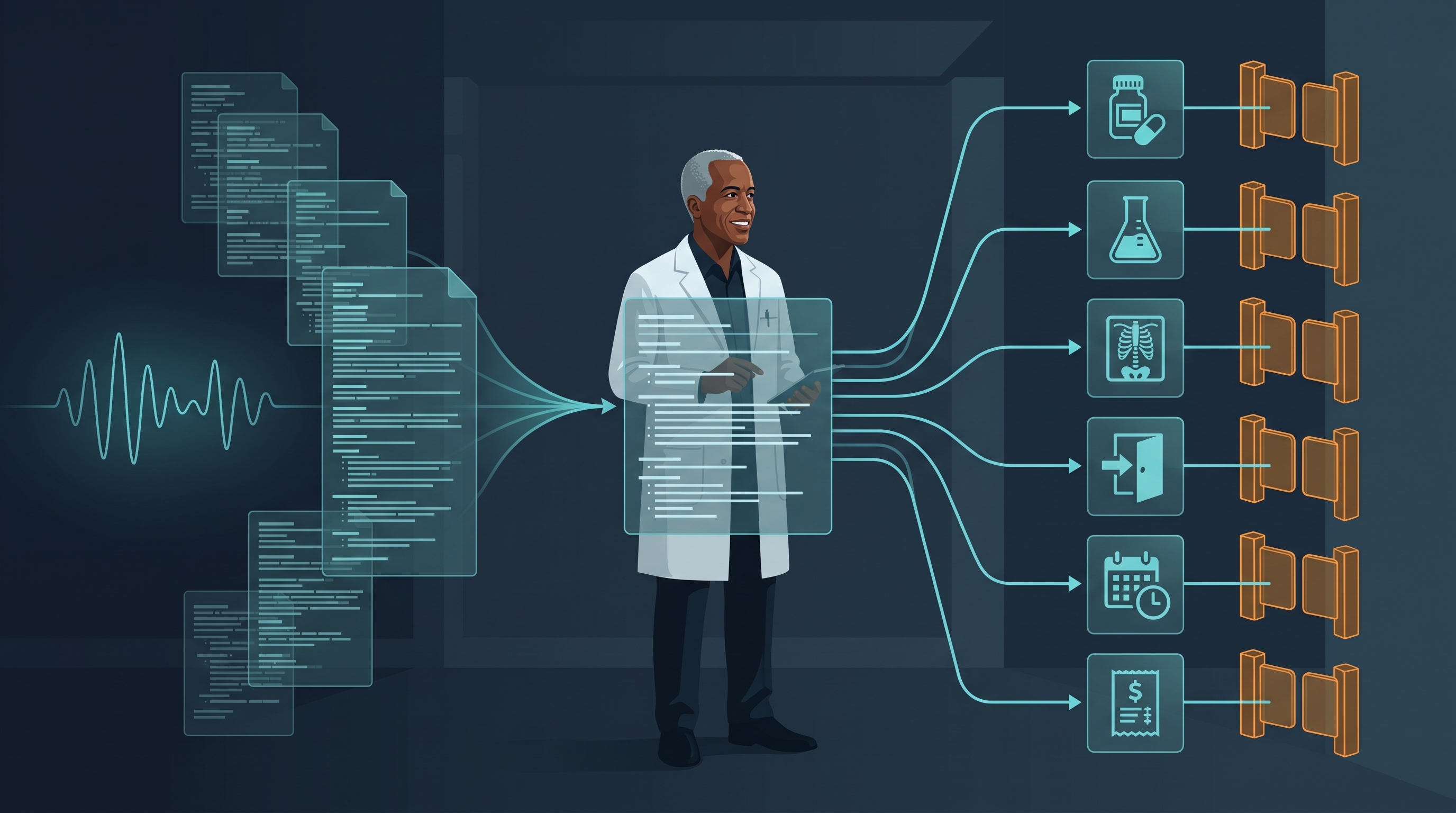
Ambient clinical AI is moving beyond note generation into an encounter layer that prepares orders, prescriptions, coding, and follow-up while keeping consequential decisions visible to the physician.
Medical Education Does Not Need an AI Course. It Needs a New Clinical Curriculum.
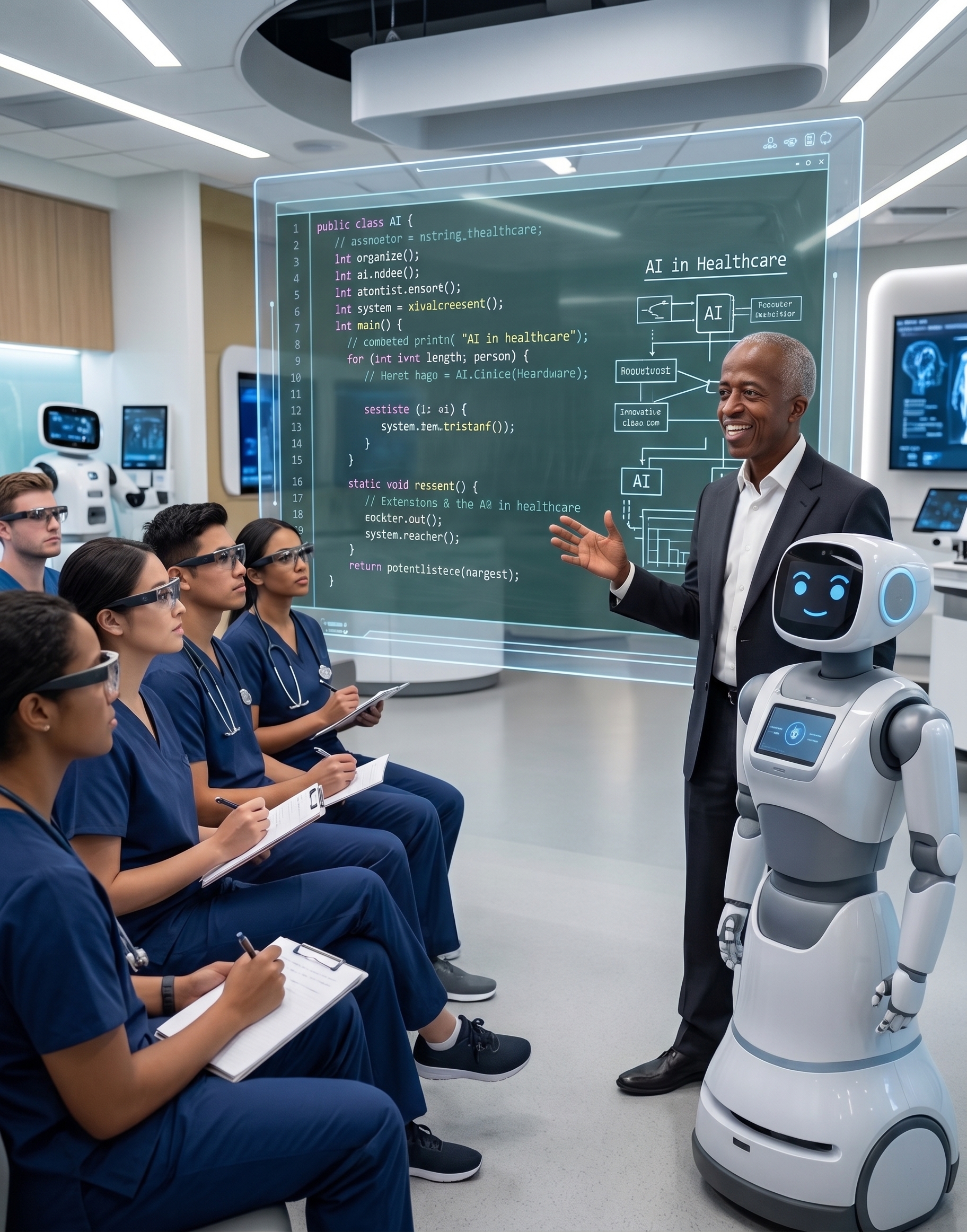
Preparing physicians for agentic AI requires more than an elective. Medical education must redesign how students reason independently, delegate work, verify machine output, and retain clinical judgment.
Maternal-Fetal Medicine Specialist