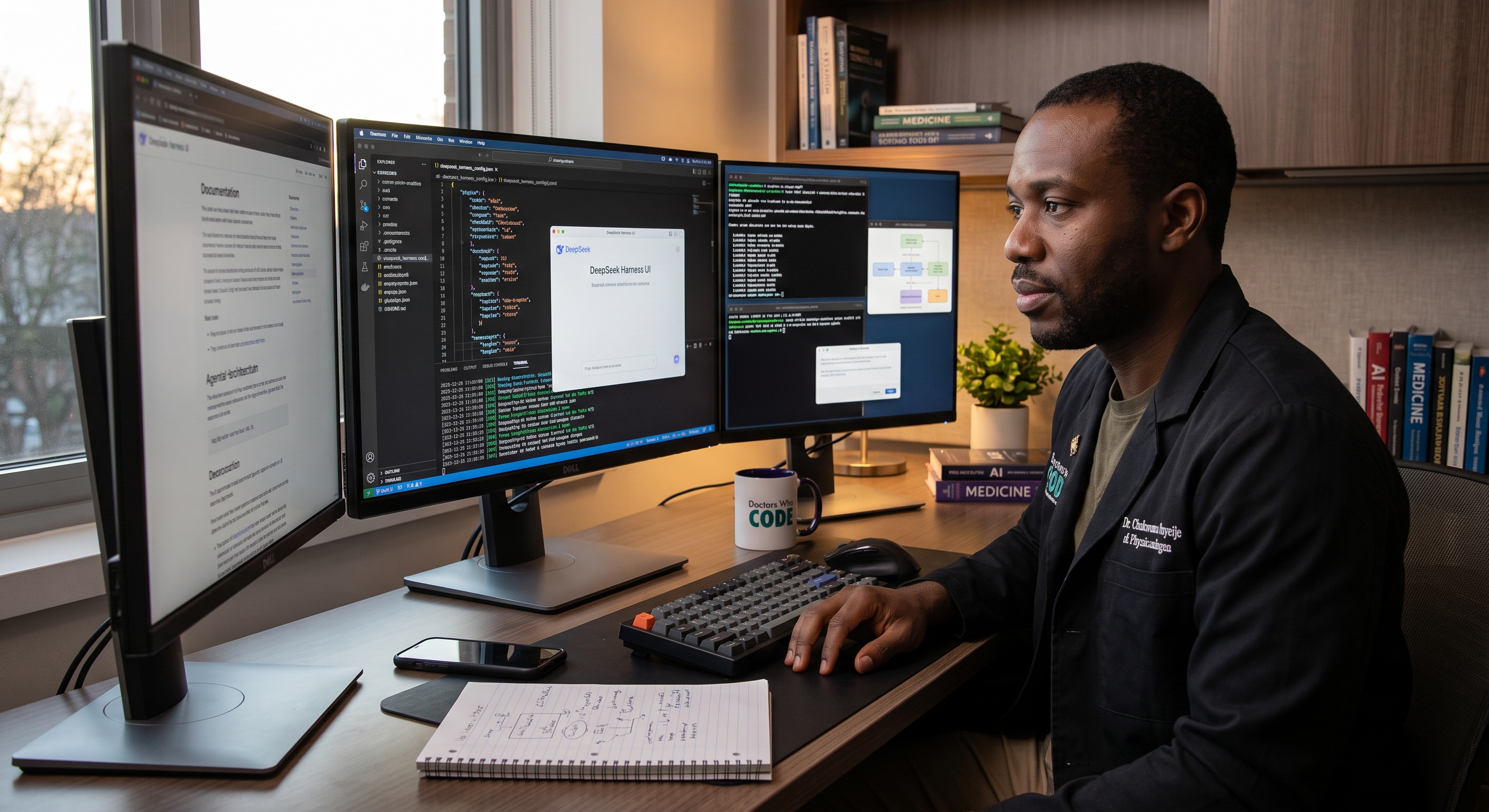
Physicians Need to Learn the Harness, Not Just the Model
DeepSeek Harness shows why physicians must understand the context, tools, permissions, logs, and human checkpoints that turn an AI model into a working system.
· 11 min read
Tag
10 posts
DeepSeek Harness shows why physicians must understand the context, tools, permissions, logs, and human checkpoints that turn an AI model into a working system.
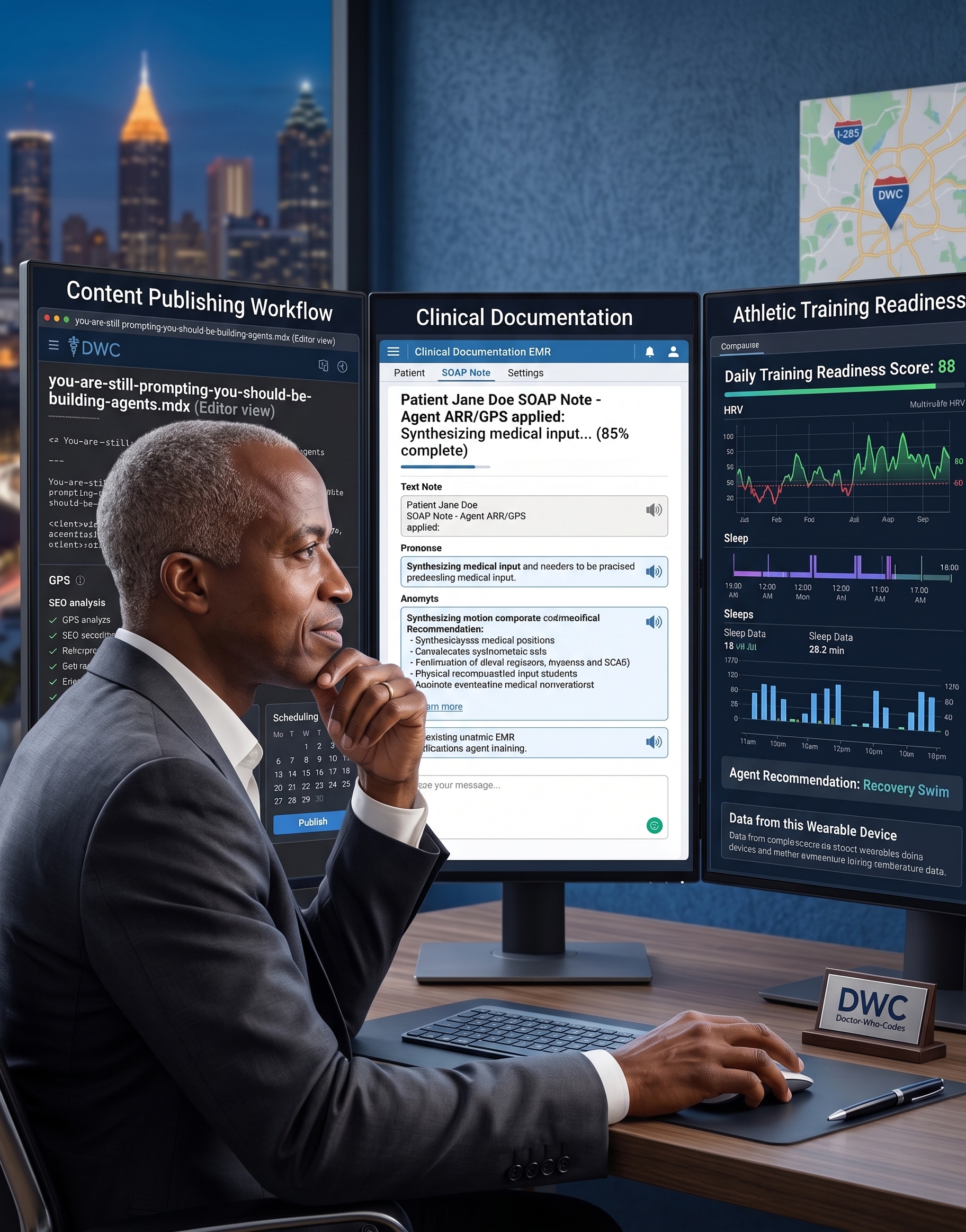
Prompting has a ceiling. Once you hit it, you are coordinating every step manually while the AI handles individual tasks. Here is the framework and three live workflows I use to cross that line.
Complete a clinical AI design canvas and turn it into a small, testable specification for an accountable workflow.
Turn a clinical instruction into a bounded workflow with explicit approval, execution states, and recovery from failure.
Design clinical AI answers that expose sources, missing context, and disagreements without asking clinicians to reconstruct the chart.
Define the clinical question before building an AI interface, and learn what a useful answer must preserve.
A physician-developer's practical guide to giving an AI agent one bounded software assignment and requiring a plan, tests, review evidence, and a stopping condition.

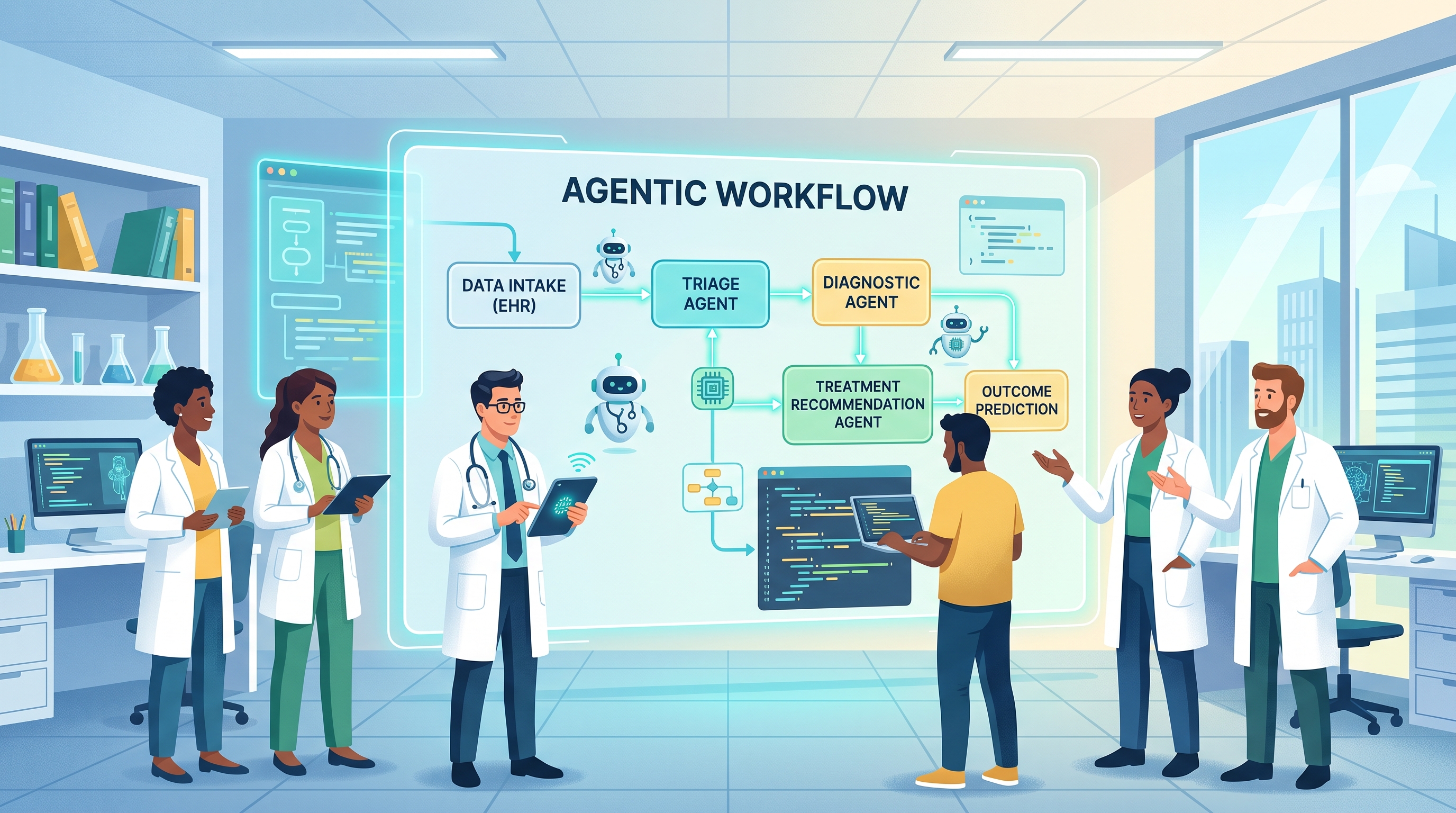
A clinical AI workflow needs more than a model and a prompt. Build the smallest system that can scope, retrieve, generate, verify, challenge, approve, execute, and audit the work.

Clinical prompting is not a contest for better wording. It is the work of defining sources, context, objectives, prohibitions, and evaluation before a model generates anything.
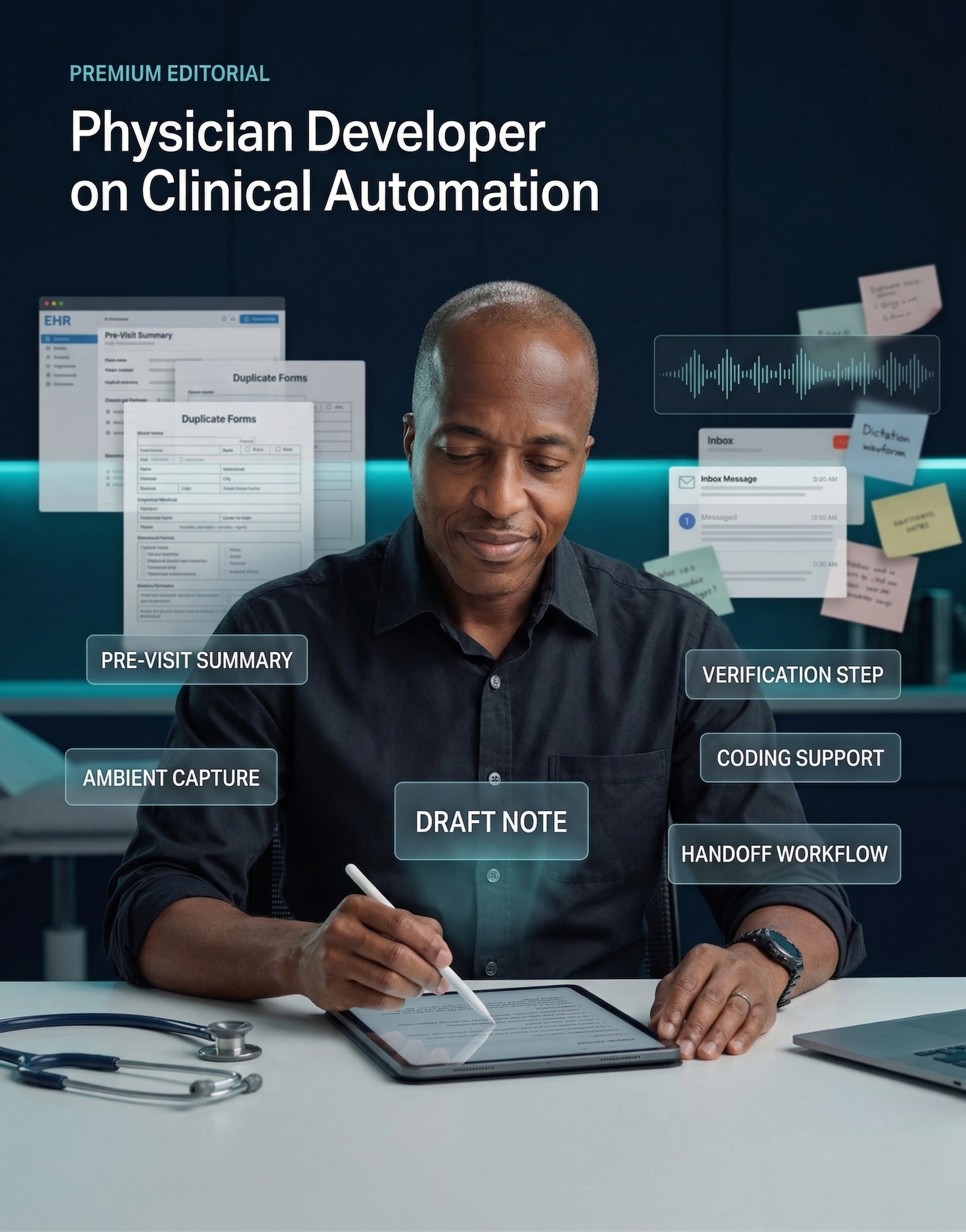
Documentation automation is not a typing solution. It is a workflow design problem. For physicians and physician-developers, the real goal is protecting clinical judgment from administrative drag.