The Referral System Is Broken for the Same Reason the Triage Line Is Broken
Nobody lost your fax. The system was designed to lose it. Referral failures are not clerical accidents. They are the predictable result of clinical infrastructure built for a different era.
Listen to this post
The Referral System Is Broken for the Same Reason the Triage Line Is Broken

On this page 13 sections
A colleague sent a referral last Tuesday.
Her staff faxed it, cover sheet and all, to my office. By Thursday, when she called to confirm I had received it, my staff had no record of it. Maybe it landed in a fax queue and never got processed. Maybe it got misfiled. Maybe it never arrived at all.
Her patient was 28 weeks with a new finding on anatomy scan. She needed MFM evaluation. She waited.
I have been on both sides of this scenario more times than I can count. As the referring physician, I have sent referrals into a void and heard nothing back. As the specialist receiving referrals, I have seen patients arrive with no clinical context, no prior records, and no clear explanation of what question I was supposed to answer.
This is not a staffing problem. It is not a technology problem. It is an architecture problem.
It is also the same pattern I wrote about in my recent piece, Your Patients Are Already Using ChatGPT to Decide Whether to Call You. The referral system and the triage line fail for the same reason. We built them in a different era, they stopped matching reality, and nobody rebuilt them.
The Framing Is Wrong
Last month I argued that patients are not turning to chatbots because they prefer AI to physicians. They are turning to chatbots because the triage line does not answer. A 38-minute hold time at 10:47 PM is not a staffing shortage. It is a system still running on 1990s assumptions in a world that expects immediate response.
The chatbot wins on availability, not on accuracy. It wins because it is the only thing there.
The referral problem has the same diagnosis.
Referring clinicians are not sending patients into broken workflows because they love fax machines. They are doing it because the fax machine is still the default handoff layer between practices that do not share infrastructure. The system persists not because it works, but because no one has replaced it.
What Actually Happens to a Referral
Let me describe what a typical referral still looks like in 2026.
A primary care physician or OB identifies a patient who needs specialist evaluation. She documents her concern in the chart. Her staff generates a referral, attaches relevant records, and faxes it to the specialist’s office. The fax goes to a general number shared by the entire practice. Someone receives it, prints it, and places it in a pile for routing. A coordinator reviews the pile, decides the referral is appropriate, and contacts the patient to schedule.
At every step, information degrades. The clinical context that was clear to the referring physician becomes a stack of paper that the specialist receives cold. The reason for referral is whatever fit in the note, not the nuanced clinical picture that actually prompted the consult. The patient arrives knowing she was sent for a “high-risk consultation” but not knowing what the specialist is looking for or what question is being asked.
That is when everything works.
When it does not work, the fax never arrives, arrives incomplete, goes to the wrong number, or sits unrouted because the coordinator had a busy week. The patient waits six weeks. The referring physician hears nothing. The specialist eventually sees the patient without adequate preparation. Everyone does their best with inadequate information and inadequate infrastructure.
This is still standard workflow in 2026.
The Architecture Is the Problem
I signed Offcall’s referral manifesto this week because the core claim is right. Referrals are broken everywhere and for everyone. But I want to add a layer that matters if we are serious about fixing them.
The referral system is not broken because of bad actors. It is broken because the architecture was designed for a world that no longer exists.
When fax-based referral workflows were built, they made sense. Practices had lower patient volumes. Communication expectations were slower. The alternative to fax was a phone call or physical mail. A two-week turnaround felt normal because everything else moved at the same pace.
None of those conditions hold now.
Patients live inside an information environment where every other part of life provides immediate feedback. They order groceries and get real-time tracking. They book travel and get instant confirmation. They message friends and get read receipts. Then they enter a medical referral workflow that treats them like a piece of paper and offers no visibility, no confirmation, and no timeline.
The triage line made sense in the same era. One phone number, one nurse, one queue. It handled the volume it was designed for. It no longer handles the volume it receives, and it has no asynchronous pathway for lower-acuity concerns.
Both systems share the same failure mode. They were designed for a different era, they were never redesigned, and now they run at the edge of what they can handle while the world around them changed completely.
The Information Problem Is Worse Than the Logistics Problem
Most conversations about referral failure focus on logistics. The fax gets lost. The referral never arrives. The patient is left in limbo. Those failures are real.
But there is a second failure that gets less attention. Even when the referral arrives, it usually arrives without the information the specialist actually needs.
I am an MFM specialist. When I receive a referral for a high-risk pregnancy, the questions I need answered before the visit are specific. I need the complete obstetric history, not just the current pregnancy. I need baseline laboratory values. I need the exact ultrasound finding that triggered the referral, ideally with measurements and images. I need to know whether the referring physician wants co-management or a one-time consultation.
A fax referral gives me almost none of that. It tells me a patient is coming. It gives me her name, her age, and a one-sentence reason for referral. The rest I reconstruct when she arrives, which means I spend the first part of the visit doing intake work that should have been done before she walked through the door.
That is a physician-time problem. It is also a patient-safety problem. There is clinical information I would act on differently if I received it before the visit instead of discovering it during the visit.
Fixing transmission alone does not fix the information architecture. What you need is structured intake that captures the right clinical data at the point of referral, routes it to the specialist, and gives the specialist what she needs to prepare.
That intake has to be authored by a clinician. Not by a software engineer guessing at what an MFM specialist needs to know. The branching logic for maternal-fetal medicine is different from the branching logic for cardiology or endocrinology. The specialist is the person who knows what the intake should collect.
Why Vendors Have Not Fixed This
The obvious question is why this is still unsolved. Electronic health records have been mandatory for years. We have FHIR APIs, interoperability standards, and a multi-billion dollar health IT industry. Why is anyone still losing referrals in a fax queue?
The answer is the same one I give when people ask why the triage line still runs on a phone tree. The people with the resources to fix it do not have sufficient incentive to fix it, and the people with the incentive to fix it do not have the resources.
EHR vendors have built referral modules. I have used them. In most cases they are optimized for the billing workflow, not the clinical workflow. They make sure the authorization is captured. They make sure the ICD-10 code is attached. They do not ensure the specialist has the clinical context needed to manage the patient. Billing outcomes are easy to measure. Clinical preparation is harder to measure, so it is not what gets optimized.
Health systems are often more motivated to keep referrals inside their network than to make the referral experience better for patients and physicians. A referral tool that works beautifully inside one network is still worthless when the referral crosses a network boundary, which is where a large share of the failure lives.
Independent practices have the clearest incentive to fix this. If I build a better referral workflow, referring physicians will prefer to send patients to me. My patients will arrive better prepared. My visits will be more efficient. The clinical outcome will be better. The incentive is obvious. The problem is that truly interoperable, specialty-specific infrastructure is expensive for a single practice to build alone.
This is exactly where physician-developers matter. Not because we need to build every layer from scratch, but because we can build the specialty-specific clinical layer on top of the infrastructure that already exists.
What the Receiving End Actually Needs
Most of the conversation about referrals focuses on the sending end. How do we make it easier to send the referral? How do we ensure it arrives? Those are the right questions, but the receiving end is just as important.
Here is what I need as the receiving specialist.
I need structured clinical intake before the patient arrives. Not a narrative paragraph. Structured data capture that asks the specific questions relevant to the referral indication. For fetal growth restriction, I need gestational age at diagnosis, estimated fetal weight percentile, umbilical artery Doppler findings, maternal blood pressure trends, and whether the patient has seen MFM before. That is a short form. It takes minutes to complete. It saves me meaningful time and lets me prepare correctly.
I need the images. Ultrasound images are rarely transmitted with referrals. I routinely see patients referred for an abnormal ultrasound when I have never seen the image that prompted concern. I am reconstructing a clinical picture from a verbal summary of a visual finding. That is a setup for missed information.
I need the question. “MFM consultation” is not a referral indication. Is the referring physician asking me to evaluate a specific diagnosis, co-manage the pregnancy, or provide a one-time opinion and send the patient back? The answer changes how I structure the visit, how I document it, and how I communicate afterward.
I need a communication channel back. Right now, my consultation note goes into the EHR, gets faxed back to the referring office, and lands in another pile. There is no reliable mechanism for me to know whether it was received, read, or acted on. For complex cases, that is a clinical safety gap.
None of these are technically exotic requirements. They can be met with a structured form, secure image transfer, and an asynchronous messaging layer. The hard part is not the technology. The hard part is the clinical specification, and that is work only a physician can do well.
The Liability Question Will Change
I raised a liability inversion in my triage post, and the same logic applies here.
Right now, when a referral gets lost and a patient is harmed, the question usually centers on whether the referring office can document that the referral was sent. The fax confirmation sheet becomes the evidence. If the fax went through, the obligation is treated as discharged.
That framing will not hold as the standard of care evolves.
As AI-assisted referral routing and modern referral infrastructure become more available, the question will shift from “did you send the referral?” to “did you use a system that reliably ensures the referral was received and acted upon?” A practice still relying on a fax-based workflow in a world where safer alternatives exist will face the same question I raised about the triage line. Why was the old system still in place? Why was the patient harmed by an avoidable infrastructure failure?
Practices that build modern referral workflows will have an answer. Practices that stay on the fax will not.
What a Physician-Developer Can Build
Systemic problems create a strong temptation to wait for systemic solutions. That instinct is wrong.
A physician-developer with specialty expertise and basic technical fluency can materially improve the referral workflow in weeks.
Start with a structured referral intake form. Author the questions yourself as the receiving specialist based on what you actually need before a new consult. Build it as a simple web form. Host it at a stable URL. When a referring physician sends a referral, include that URL in your acknowledgment and ask them to complete it. The patient arrives and you have structured clinical context instead of a thin fax.
That alone does not solve the lost-fax problem, but it solves the information problem. It also sends a signal to referring physicians that your practice operates differently.
The next layer is a structured referral acknowledgment. When you receive a referral, send confirmation back to the referring physician that includes the appointment date, the question you plan to address, and anything you still need before the visit. That closes a loop the fax-based system never closes.
The third layer is structured post-visit communication. After the consultation, send a summary organized around the question the referring clinician asked, not around the SOAP format that makes sense inside the chart but not inside a colleague-to-colleague handoff. Did I find what they were worried about? What is the plan? What do they need to do next?
These three layers do not require full EHR integration. They do not require a vendor contract. They require a physician who understands the workflow and can build a form, a lightweight intake pipeline, and a communication protocol.
Is it the complete solution to referral infrastructure in American medicine? No. But it is better than what exists, and it is deployable now.
The Broader Pattern
The referral problem and the triage problem are both instances of a broader pattern I keep returning to on DoctorsWhoCode.blog.
Medicine adopted technology for administrative compliance, not for clinical workflow optimization. We implemented EHRs because the government required them. We implemented portals because payers required them. We implemented prior authorization systems because insurers required them. In each case, the driver was external compliance and the result was infrastructure that satisfies the compliance layer while underserving the clinical encounter.
The triage line was never redesigned because the phone tree met the formal requirement. The referral workflow was never redesigned because the fax met the documentation requirement.
Now the external pressure is coming from somewhere else. Patients are building workarounds. They are using ChatGPT for triage. They are using direct-pay specialists to skip referral queues. They are routing around systems that were not designed for them.
When patients build workarounds, it means we left a gap. When they do it at scale, it means the gap is structural. Structural gaps do not get fixed by educating people about why the workaround is dangerous. Structural gaps get fixed by building something better.
Physicians who build are positioned to do that work. Not because we have more resources than vendors, but because we have the clinical knowledge to specify what the solution actually needs to do.
The fax machine is still winning in 2026. Not because it is the best tool. Because too few of the people capable of building the replacement have built it yet.
That is our problem to solve.
FAQ
Why is fixing fax transmission not enough?
Because transmission is only half the failure. Even when the referral arrives, it often arrives without the clinical context, images, and explicit consult question the specialist needs to prepare.
What should a modern referral workflow include?
At minimum, it should include structured specialty-specific intake, confirmation that the referral was received, a clear status signal for the patient and referring office, and a reliable channel for post-visit communication back to the referring clinician.
Why are physician-developers uniquely positioned to build this?
Because the central problem is not raw software capability. It is clinical specification. The specialist knows what data matters, what questions need branching logic, and what information changes management before the patient ever arrives.
I signed OffCall’s Referral Manifesto and encourage you to read it.
If you are a physician-developer thinking about referral infrastructure or clinical communication tools, reach out at DoctorsWhoCode.blog or find me on X.
Related articles

Your Patients Are Already Using ChatGPT to Decide Whether to Call You
They are not asking it for fun. They are asking it because the triage line puts them on hold for 45 minutes. The threat is not the technology. The threat is the system that made the technology necessary.

The EHR Vendor Wants You to Stay a Consultant
Physician passivity in health tech is not an accident. It is a business model. Understanding the structural incentives is the first step to building outside of them.

The Middle Path, Part I: Doomers, Dismissers, and the Physician Between Them
Assess AI claims through evidence, system design, and accountability. The first lesson in The Middle Path, with a clinical case and self-assessment.
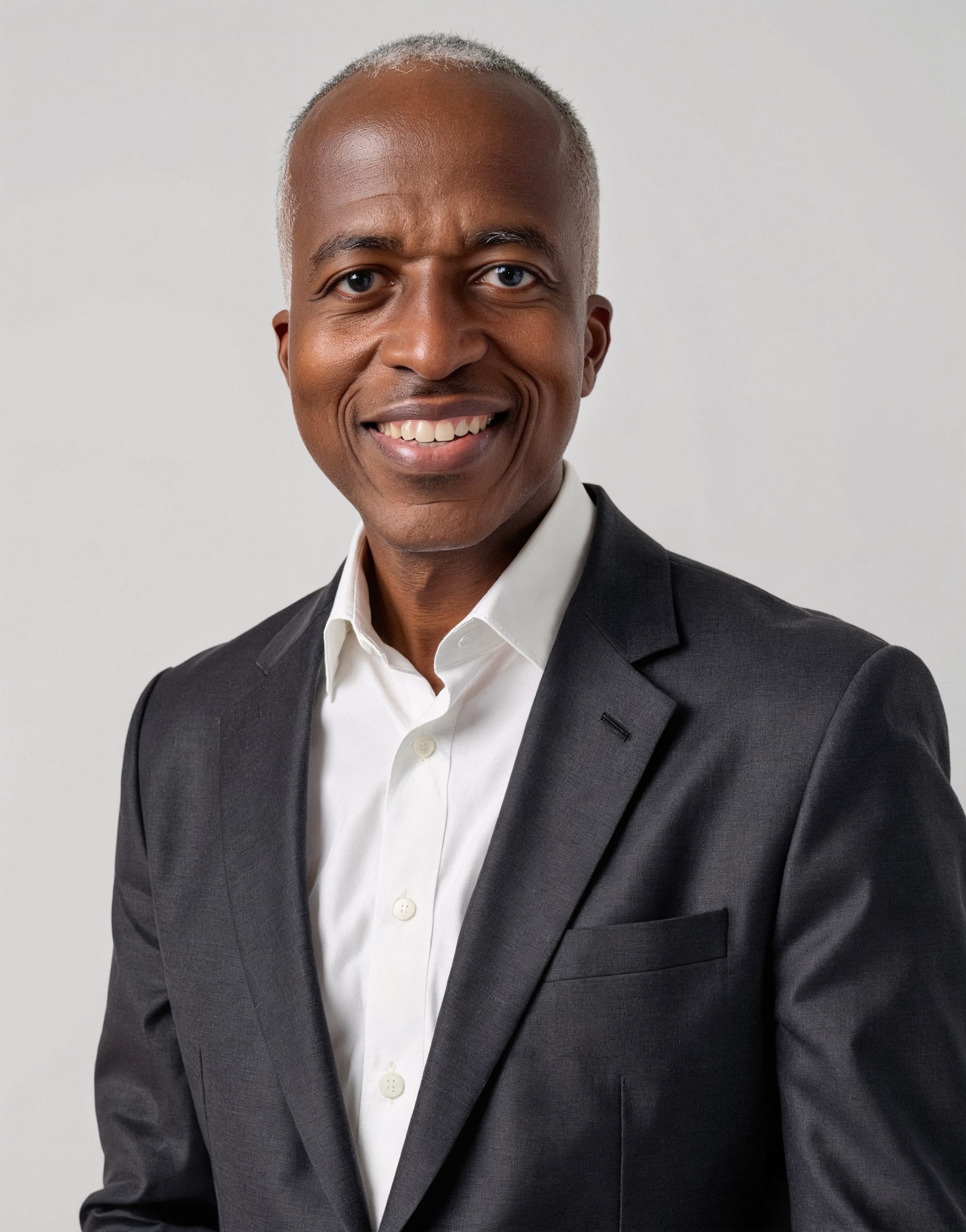
Maternal-Fetal Medicine Specialist