Dear Colleagues, We Can Retire the Typing Olympics
A friendly rant about physicians, AI resistance, and the habit of treating unnecessary suffering as a professional credential. Keep the judgment. Question the workflow.
Listen to this post
Dear Colleagues, We Can Retire the Typing Olympics

My dear colleagues: some of us have turned opposition to artificial intelligence into a subspecialty.
The admission requirements appear modest. Find one hallucinated citation. Announce that medicine is safe from technological change. Return to spending Sunday evening completing Thursday’s notes.
Presumably, maintenance of certification is forthcoming.
I say this with affection. These are my people. We trained in a profession that made suffering feel like evidence of seriousness. We memorized extraordinary amounts of information, endured examinations designed to expose whatever we had missed, and learned to function while tired enough to consider a vending-machine dinner a reasonable nutritional intervention.
That training earned us something real.
It also left some of us suspicious of anything that makes the work easier.
Somewhere along the way, we began treating difficulty as a quality measure.
“I spent twenty minutes writing that note” became a statement of professional virtue. Whether those twenty minutes improved the note, helped the patient, or prevented us from listening to someone at home received less attention.
The keyboard had been served. Tradition was satisfied.
Then AI arrived, offering to do portions of that work, and several members of the profession reacted as though someone had proposed awarding medical degrees with a cereal-box coupon.
“Using that is cheating.”
I have written about this before. Independent performance has a necessary place in training and assessment. Clinical practice asks a broader question: how well did we care for the person who needed us?
The patient with a complicated pregnancy has enough concerns without becoming the unwilling proctor of our lifelong closed-book examination.
She needs an accurate assessment, an understandable explanation, and a physician who notices when the plan does not fit her circumstances.
She has expressed remarkably little interest in our typing technique.
Now, before someone forwards this to the patient safety committee: AI makes mistakes. It invents information. It can omit the detail that changes management. A beautifully organized paragraph can be dangerously wrong.
In Fluent Answers Are Not Clinical Judgment, I described the distance between how authoritative an answer sounds and how accountable its reasoning actually is.
That distance deserves serious scrutiny.
So does the comparison we use.
The relevant human alternative is often a tired physician reconstructing a complicated encounter hours later, with interruptions, incomplete recall, and a dinner getting cold somewhere.
We should compare actual workflows, measure errors, and evaluate the safeguards. Imagining a flawless human physician is an excellent way to win an argument against software. Staffing a clinic with that physician remains challenging.
What troubles me about blanket resistance is how quickly curiosity disappears.
“I found an error” should open an investigation. What failed? Can we detect it? Does correcting it erase the benefit? Should this particular use be abandoned?
Instead, it becomes permission to stop learning.
One bad output, and suddenly we have completed our fellowship in Everything This Technology Will Ever Be Capable Of.
Efficient training program.
Meanwhile, the valuable work is moving.
When producing a first draft becomes cheaper, the ability to recognize a misleading draft matters more. When a system can generate ten plausible answers, someone must identify the missing question. Someone must notice that the guideline population differs from the patient, that the medication history contradicts the recommendation, or that the patient’s priorities change the decision.
Those abilities require knowledge, practice, and attention.
They also require enough humility to keep learning after becoming the expert.
In Skill Loss Is the Wrong Fear, I argued that intellectual dependency deserves particular concern: physicians using systems they cannot meaningfully interrogate.
Refusing to understand those systems leaves us poorly equipped to challenge them.
The vendor will still have a roadmap. The hospital will still have a procurement meeting. Our principled absence will be recorded, if anyone remembers, under “other business.”
Building even a small tool changes the conversation. When I built FGRManager, translating clinical reasoning into explicit logic exposed assumptions I had carried comfortably for years. The work demanded greater precision from me.
There is something wonderfully inconvenient about discovering that learning technology can make you examine your medicine more carefully.
And there is a human reason to do this.
In Ambient AI Let Me Stop Interrupting My Patients, I admitted that I had asked closed questions because the answers were easier to type.
“Sharp or dull?” fits neatly into a note.
A patient’s story takes room.
Ambient documentation gave me more room to listen. I still had to choose to use it. I still had to verify the record.
But protecting the old workflow would also have protected the constraint that was narrowing the conversation.
That deserves a place in our discussion of professional integrity.
So, colleagues, bring your skepticism. Bring your standards. Ask difficult questions about evidence, privacy, bias, failure, and accountability. Reject tools that cannot earn a useful role.
And give yourself permission to discover that a task you suffered to master can become easier without diminishing what you know.
Our patients deserve the attention we worked so hard to develop.
We can let the keyboard have a quieter evening.
Related articles

The One-Week Ambient Challenge
A seven-day self-audit for physicians using an approved ambient documentation system, built around three questions that matter more than words per minute.
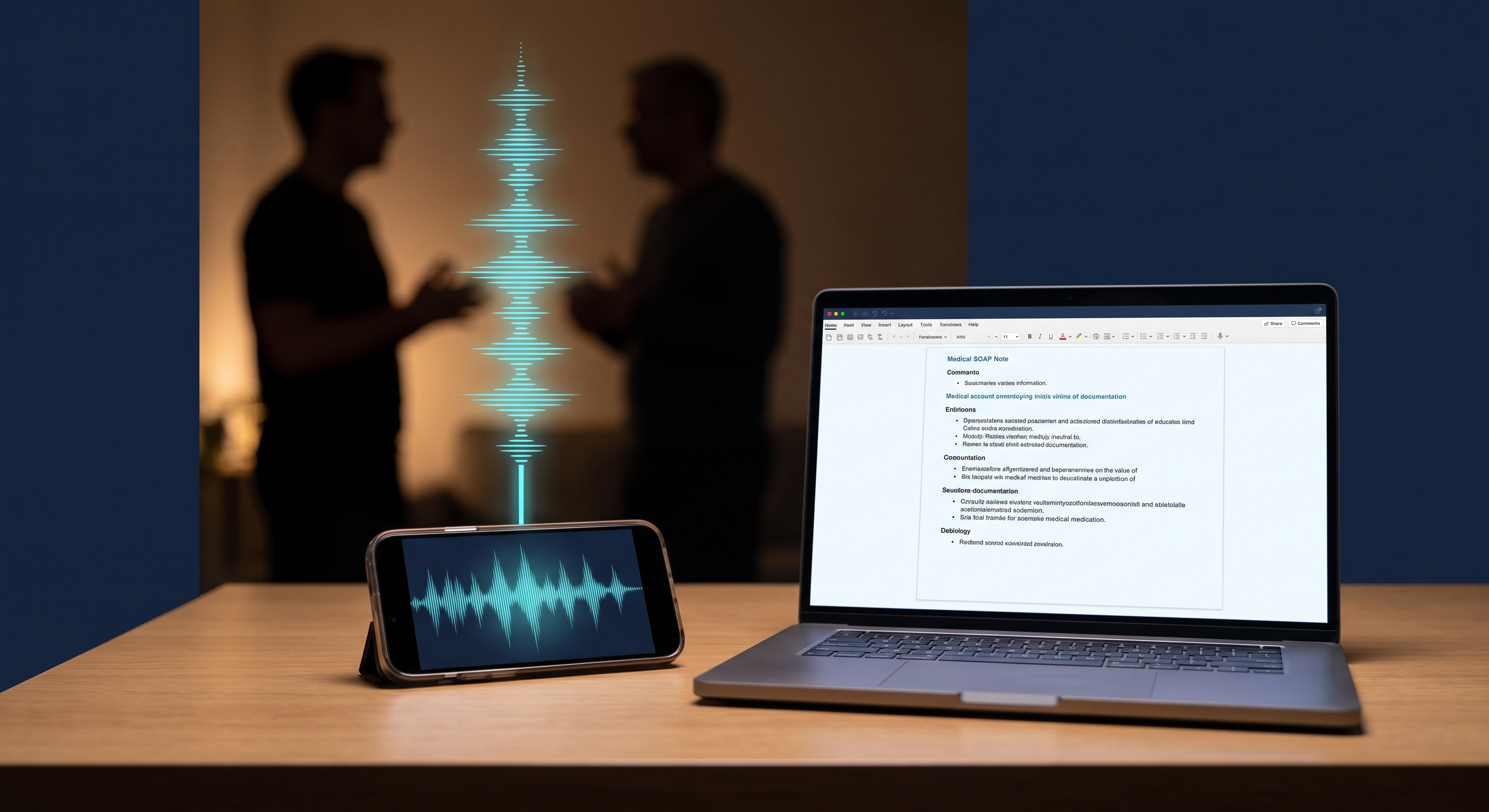
Build an Ambient Documentation Lab Before You Buy One
You can learn the entire ambient documentation pipeline with a phone, a fictional patient, and a general-purpose AI assistant, before spending a dollar on a clinical platform.
Your First Ambient Note Is Not Your Final Workflow
Most physicians stop optimizing an ambient documentation system the moment it produces a usable note. That is the moment the real work should start.
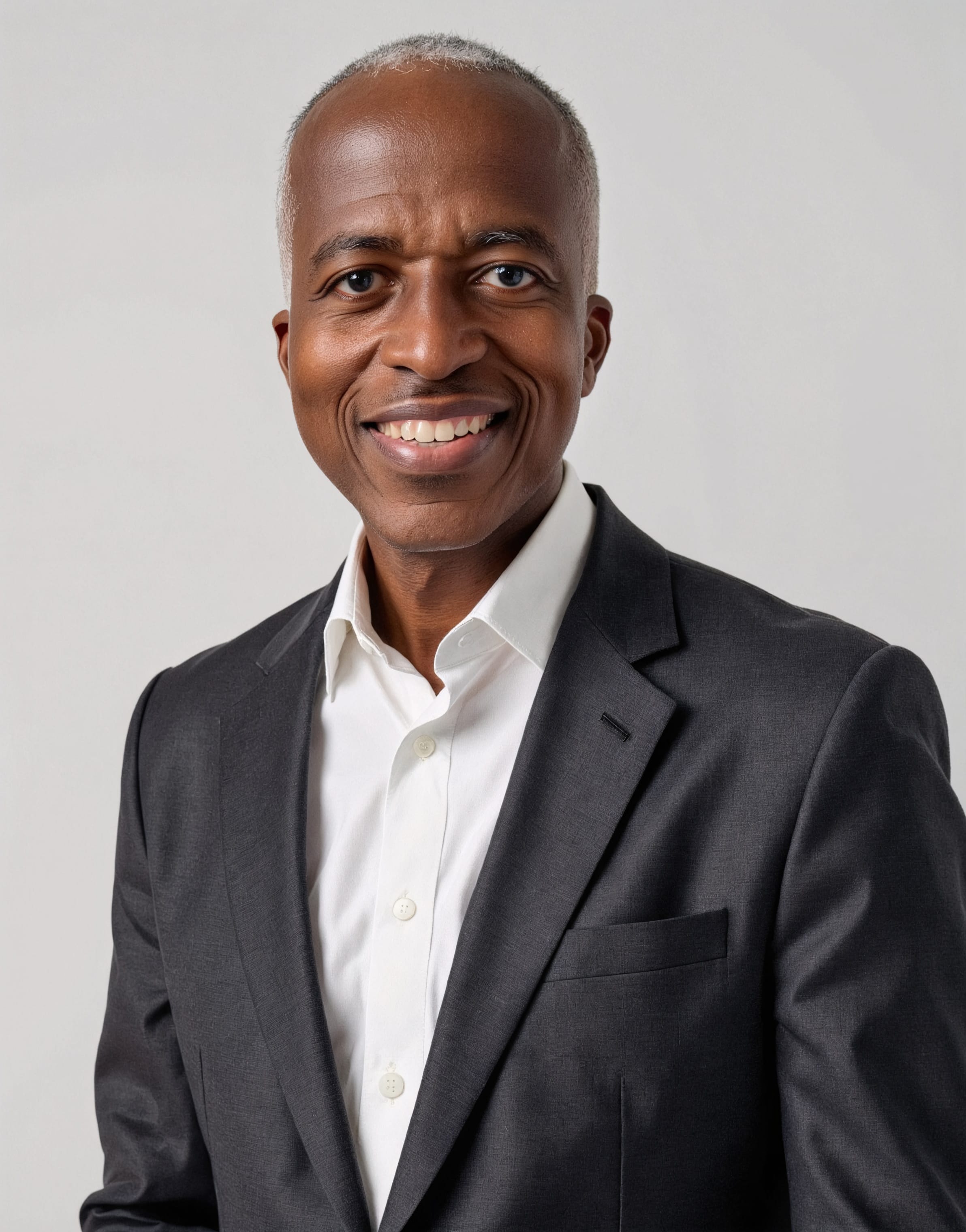
Maternal-Fetal Medicine Specialist